





OEM Kitchen Shears: Practical Sourcing Guide for Kitchenware Buyers
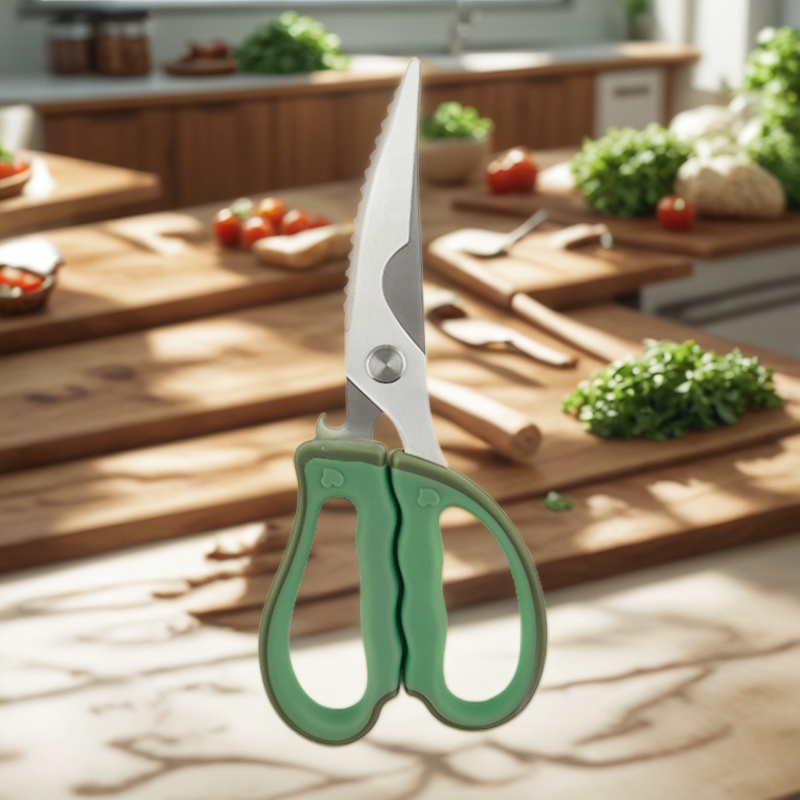
OEM kitchen shears are a small product category with a surprisingly large influence on customer satisfaction. For retailers, importers, promotional buyers, and kitchenware distributors, the right pair of shears can support a broader utensil range, strengthen a private-label offer, or fill a practical gap in a cookware assortment. The original product presentation highlights several useful features: stainless steel blades, an ergonomic soft handle with anti-slip coating, a soft mint green appearance, serrated cutting edges, and integrated bottle opener and nutcracker functions at the pivot point.
For B2B buyers, however, an attractive product description is only the starting point. The better question is whether a supplier can consistently deliver the blade performance, handle comfort, packaging presentation, and quality controls required for your market. This guide explains how to evaluate OEM kitchen shears without relying on vague claims or unnecessary sales language.
Key Takeaways
- Confirm the exact blade material, hardness, edge style, and corrosion-resistance expectations before ordering.
- Evaluate handle comfort with real cutting tasks, especially if the product is marketed as soft handle kitchen shears.
- Check whether multifunction parts such as the bottle opener and nutcracker are useful, safe, and easy to clean.
- Ask suppliers about packaging options, inspection methods, sample lead time, MOQ, and customization limits.
- For private-label programs, request written specifications instead of relying only on product photos.
What Makes OEM Kitchen Shears Different?
OEM kitchen shears are not simply generic scissors placed in a kitchen aisle. They are usually selected or customized for a specific sales channel, brand position, and user expectation. A discount retailer may prioritize a simple, reliable tool with compact packaging. A kitchenware brand may focus on grip comfort, color consistency, and a more polished retail presentation. A promotional buyer may need brand printing, carton labeling, or gift-box packaging.
The product described in the original article is positioned as a pair of multi-functional kitchen scissors. Its useful facts include stainless steel blades, a serrated edge, a soft anti-slip handle, a mint green color, and built-in bottle opener and nutcracker functions. These features can be valuable, but buyers should still confirm all commercial and technical details with the supplier. For example, ask what stainless steel is used, what finish is applied, whether the shears are detachable for cleaning, and what packaging formats are available.
Blade Design and Cutting Performance
The blade is the most important part of any kitchen shear. Stainless steel blades are commonly used because kitchen tools are exposed to moisture, food acids, and repeated washing. The original content states that the blades are stainless steel and include a serrated edge. A serrated edge can help grip slippery foods, trim meat, cut herbs, and handle certain packaging tasks more securely than a fully smooth blade.
For wholesale sourcing, do not stop at the phrase "stainless steel." Ask the supplier to specify the steel type, blade thickness, edge angle, heat-treatment process if applicable, and recommended cleaning method. If the shears are intended for meat or poultry preparation, evaluate whether the blades maintain alignment under pressure. If they are intended for general household use, test them on herbs, food packaging, thin cardboard, and cooked or raw ingredients relevant to your customers.
Handle Comfort and User Safety
The original product description emphasizes an ergonomic handle with a soft anti-slip coating. This matters because kitchen shears are often used when hands are damp, oily, or moving quickly during meal preparation. A comfortable grip can reduce strain during repeated cutting, while an anti-slip surface may improve control.
In B2B evaluation, handle comfort should be checked with different hand sizes. A grip that looks attractive in a product photo may feel too tight, too bulky, or poorly balanced during extended use. Buyers should also inspect the transition between hard and soft materials, because rough edges or weak bonding can affect perceived quality. Color is another sourcing detail: the soft mint green appearance may fit a modern kitchenware range, but private-label buyers should confirm color matching, tolerance, and whether custom colors are available.
Multifunction Features: Useful or Overcomplicated?
Multifunction kitchen shears can create retail appeal because they combine several daily tasks in one tool. According to the original description, this design includes a bottle opener and nutcracker at the pivot point. These features may be convenient for users who want fewer loose tools in a drawer.
Still, every added function should be evaluated carefully. A bottle opener must be positioned so it is intuitive and does not interfere with cutting. A nutcracker section should have enough grip and strength for the intended use, but buyers should avoid assuming performance beyond what the supplier has documented. If you plan to market these shears as multi-functional kitchen scissors, request samples and check whether each function works naturally, safely, and without making the tool difficult to clean.
OEM Buying Checklist
| Item to Check | Why It Matters | Questions to Ask the Supplier |
|---|---|---|
| Blade material | Affects sharpness, corrosion resistance, and durability | What stainless steel grade is used? Is a material report available? |
| Serrated edge | Helps grip meat, herbs, and packaging | Is the serration on one blade or both? Can the edge design be customized? |
| Soft handle | Influences comfort and control | What handle material is used? Is the coating anti-slip when wet? |
| Multifunction pivot | Adds bottle opener and nutcracker utility | How are these functions tested during production? |
| Packaging | Controls retail presentation and shipping protection | What packaging formats, artwork requirements, and carton details are available? |
| Quality inspection | Reduces defect risk in wholesale orders | What cutting, appearance, and assembly checks are included before shipment? |
Packaging, Branding, and Private-Label Details
OEM buyers often need more than the product itself. Packaging, labeling, barcode placement, instruction language, and carton marks can determine whether a shipment is retail-ready. If the shears are sold through e-commerce, protective packaging and clear photography become especially important. If they are sold in supermarkets or houseware stores, hanging cards, blister packaging, or gift boxes may be discussed with the supplier.
Branding should be handled with clear files and written approval. Ask whether logo placement can be applied to the handle, blade, package, or insert card. Also ask about artwork lead time, sample approval steps, color proofing, and whether any additional cost applies. Do not assume that every visual detail in a sample can be changed at the same cost or within the same production schedule.
Quality Control Before Wholesale Orders
Before placing a larger order, request production samples or pre-production samples that match the final agreed specification. Inspect blade alignment, screw or pivot tightness, handle surface quality, edge sharpness, package printing, and the function of the opener and nutcracker. A simple functional test can include cutting herbs, trimming poultry skin or similar food material, opening common packaging, and checking whether the tool rinses clean without trapping debris around the pivot.
For importers and distributors, it is also wise to define acceptable quality limits, inspection timing, and defect categories in writing. Missing details can cause disputes later. If your market has specific safety, labeling, or food-contact requirements, ask the supplier what documents they can provide and verify them through your own compliance process rather than relying on general claims.
FAQ
Are OEM kitchen shears suitable for private-label kitchenware ranges?
Yes, they can be suitable if the supplier can support your required branding, packaging, quality checks, and documentation. Confirm customization options before committing to a wholesale order.
What should buyers confirm about stainless steel blades?
Ask for the exact stainless steel type, blade thickness, edge design, surface finish, and any available material documentation. The term "stainless steel" alone is not specific enough for serious sourcing.
Do multifunction kitchen scissors always sell better?
Not always. Bottle opener and nutcracker functions can add value, but only if they are easy to use and do not compromise comfort, cleaning, or cutting performance.
How should samples be evaluated?
Test cutting performance, grip comfort, pivot strength, appearance, packaging quality, and ease of cleaning. Compare samples against your target retail price point and customer expectations.
What commercial details should buyers ask for?
Ask about MOQ, lead time, packaging choices, logo options, sample cost, payment terms, inspection process, carton information, and available compliance or material documents.
Final Sourcing Advice
OEM kitchen shears can be a strong addition to a houseware assortment when the design is practical and the supplier communicates clearly. The stainless steel blades, serrated cutting edge, soft anti-slip handle, mint green styling, and integrated opener and nutcracker functions described in the original product content give buyers useful points to evaluate. The next step is to turn those features into a written specification, test samples against real kitchen tasks, and ask direct supplier questions before scaling to wholesale production.
