




Multi-Functional Kitchen Scissors: Practical Buying and Sourcing Guide
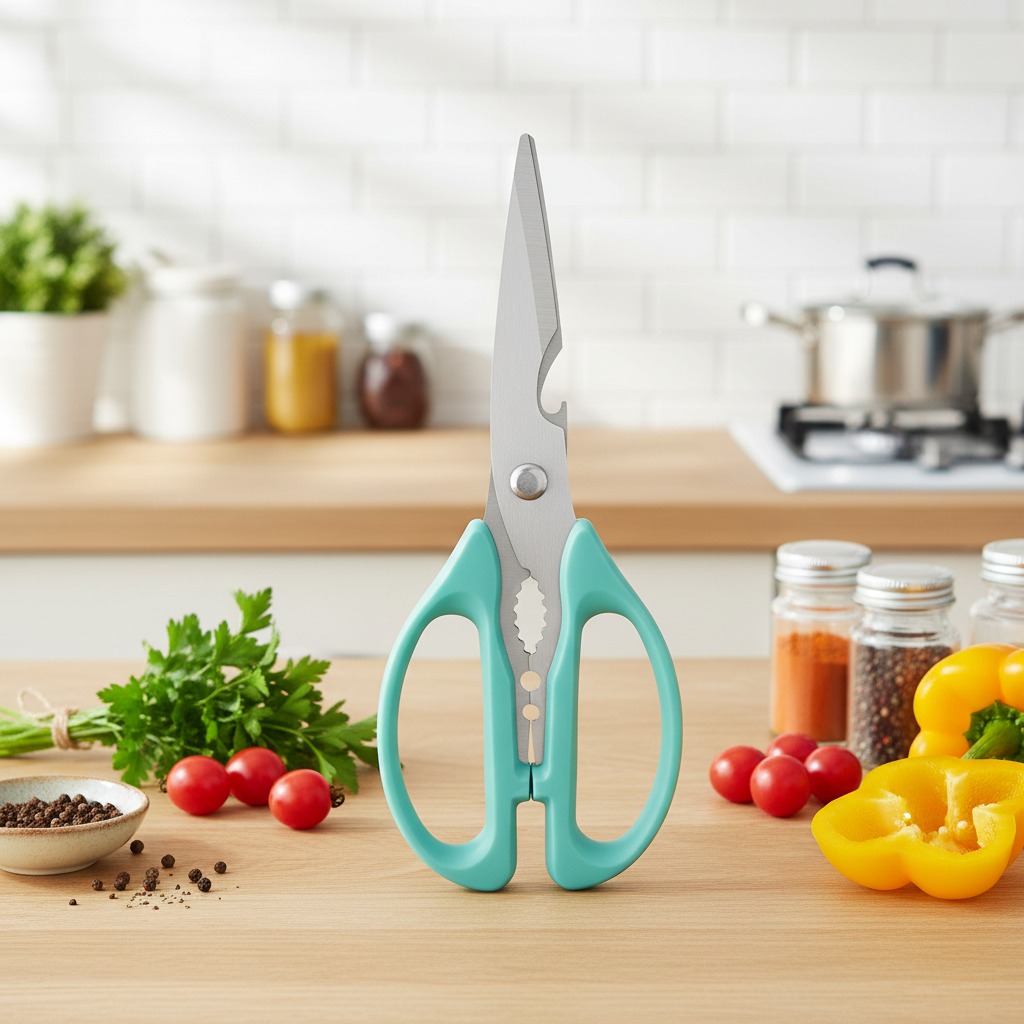
Multi-functional kitchen scissors are useful because they reduce the number of small tools needed during food preparation. Instead of reaching for a knife, nutcracker, bottle opener, and package cutter at different moments, cooks can complete many light-to-medium tasks with one compact tool. For home kitchens, this saves time and drawer space. For catering teams, retailers, and OEM buyers, the value depends on consistent cutting performance, safe handling, easy cleaning, and a design that fits the intended market.
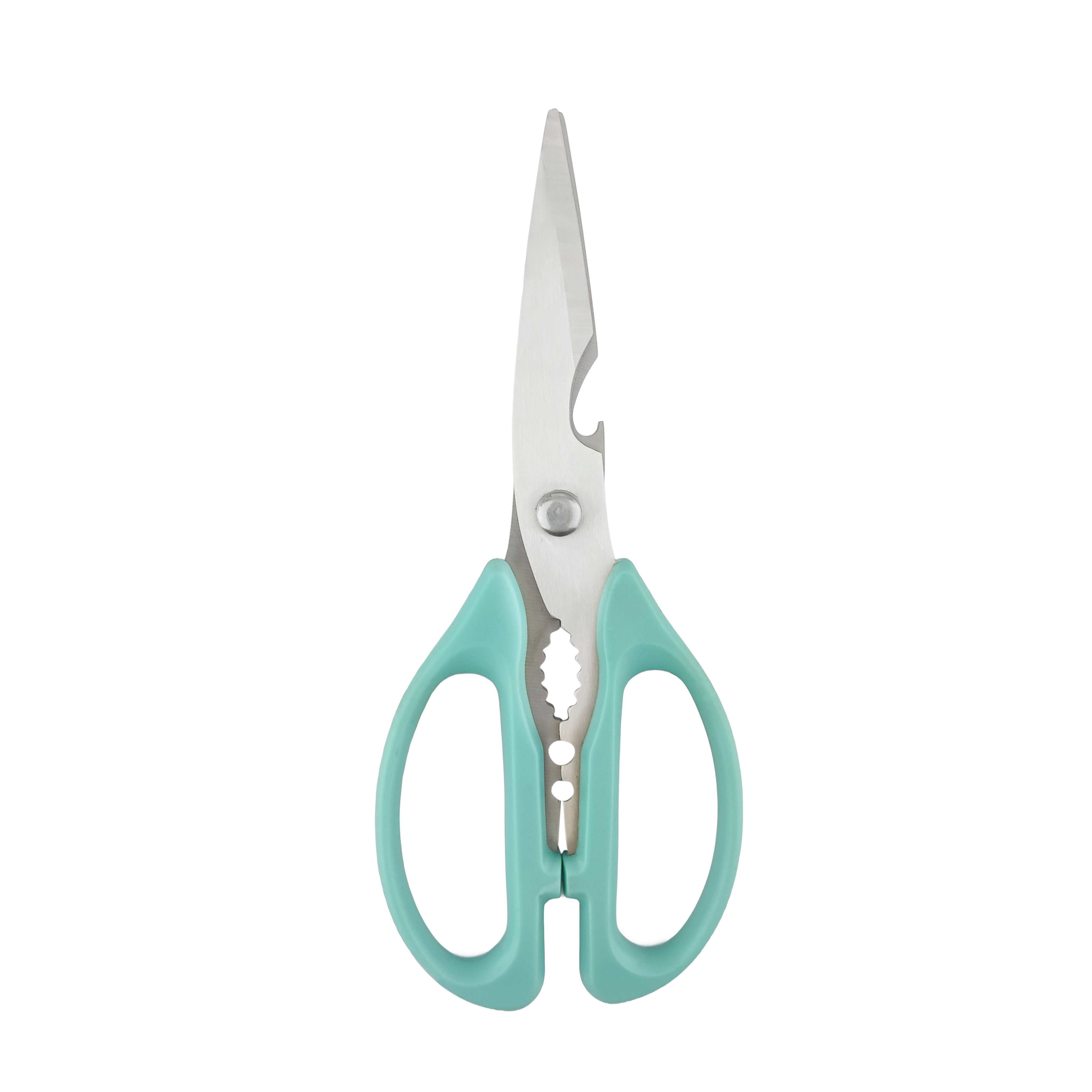
The original product description highlights stainless steel blades, mint green ergonomic handles, suitability for right- and left-handed users, a serrated edge, a sharp pointed tip, an integrated bottle opener, and a nutcracker function. Those are the key facts to evaluate. This guide explains what those features mean in daily use and what commercial buyers should ask before placing a wholesale or OEM order.
Key Takeaways
- Multi-functional kitchen scissors are best for everyday prep tasks such as cutting herbs, opening packages, trimming ingredients, and handling light utility jobs.
- Stainless steel blades and ergonomic handles are useful features, but buyers should still ask about blade thickness, hardness, finishing, and quality control standards.
- Integrated functions such as a bottle opener and nutcracker can add value when they are comfortable, durable, and easy to clean.
- OEM and wholesale buyers should confirm customization options, packaging, lead time, inspection process, and compliance requirements directly with the supplier.
What Multi-Functional Kitchen Scissors Are Designed to Do
Kitchen scissors are not simply office scissors placed in a kitchen drawer. A good pair is shaped for food preparation, grip control, and repeated washing. Multi-functional versions add extra details that make them more versatile: a serrated blade section for tougher surfaces, a pointed tip for precise cuts, a bottle opener for quick utility use, and a nutcracker-style grip area for cracking shells or nuts.
In daily cooking, these scissors can help with snipping herbs, trimming small pieces of poultry, cutting food packaging, portioning dried ingredients, and preparing garnishes. In a professional or semi-professional kitchen, they can also support faster station work when a knife and board are not necessary. However, buyers should match expectations to the tool. Kitchen scissors are convenient for many tasks, but they do not replace a chef knife, poultry cleaver, or dedicated heavy-duty cutter for all applications.
Feature Checklist for Product Selection
When comparing multi-functional kitchen scissors, look beyond the list of functions. The details of the blade, handle, joint, and cleaning method affect the real user experience. The following table can help home users, retailers, and sourcing teams evaluate samples before purchase.
| Feature to Check | Why It Matters | Questions to Ask |
|---|---|---|
| Stainless steel blades | Supports cutting performance and kitchen use. | What steel type, blade thickness, and hardness are used? |
| Serrated edge | Helps grip tougher or slippery materials while cutting. | Is the serration consistent across production samples? |
| Pointed tip | Useful for package opening and precise snipping. | Is the tip protected in packaging for safe retail handling? |
| Ergonomic handle | Improves comfort during repeated prep tasks. | Has the handle been tested with different hand sizes? |
| Right- and left-hand use | Broadens usability for households and food service teams. | Is the grip comfortable in both orientations? |
| Bottle opener and nutcracker | Adds utility when integrated cleanly into the design. | Do these functions feel stable under normal use? |
| Cleaning access | Food residue can collect around joints and textured areas. | Are there cleaning instructions or detachable options? |
How to Use Kitchen Scissors Safely and Effectively
For consumers, the best results come from using kitchen scissors for the right tasks. They are helpful for cutting soft herbs directly into a bowl, trimming thin meat pieces, opening sealed food bags, cutting parchment, and dividing small items for quick prep. The serrated edge mentioned in the original product details is especially useful when a smooth blade might slip.
Use caution with bones, frozen foods, very hard shells, or thick packaging. If the scissors flex, twist, or require excessive force, switch to a more suitable tool. For food safety, wash the scissors promptly after contact with raw meat, seafood, or oily ingredients. Drying them after washing can also help maintain smooth operation and reduce water spots.
- Cut on stable surfaces and keep fingers away from the blade path.
- Use the pointed tip only for controlled, light piercing or package opening.
- Do not use kitchen scissors as a screwdriver, pry bar, or can opener.
- Store them closed, preferably in a sheath, block, or dedicated drawer space.
OEM and Wholesale Sourcing Guidance
For B2B buyers, the question is not only whether a sample looks good. The main concern is whether the supplier can deliver consistent quality across repeat orders. Because the original article mentions OEM kitchen scissors, buyers should treat customization as a discussion point rather than an assumption. Ask which elements can be customized, such as handle color, logo placement, packaging format, barcode requirements, instruction leaflet, or carton labeling.
Commercial buyers should also request clear answers about production tolerances, sample approval, pre-shipment inspection, and after-sales handling. If selling in a regulated market, ask what documentation is available and whether any testing is required for your destination country. Do not rely on broad claims such as “food grade” or “professional quality” unless the supplier can provide relevant documents and product-specific details.
For retailers and importers, packaging matters. A sharp pointed tip needs safe presentation. A multi-function design should be explained clearly on the package without overpromising performance. If the product is intended for supermarkets, homeware stores, or online marketplaces, request photos of retail packaging, inner carton packing, and master carton layout before confirming the order.
Care, Cleaning, and Long-Term Performance
Even durable kitchen scissors perform better when maintained properly. After each use, remove food residue from the blades, handle openings, and any nutcracker or opener areas. Wash with mild detergent and dry fully. If the scissors become stiff at the joint, ask the supplier whether light food-safe lubrication is recommended and what cleaning method is suitable for the product construction.
Sharpening depends on blade design. Serrated sections often require different care from straight edges, so users should not grind them aggressively with general sharpeners. For B2B buyers, care instructions should be part of the product file. Clear care guidance reduces returns, improves reviews, and helps end users understand the tool’s limits.
FAQ
Are multi-functional kitchen scissors suitable for both home and commercial kitchens?
Yes, they can be useful in both settings for quick prep and utility tasks. Commercial users should test samples under real working conditions before bulk purchase.
Can these scissors replace a kitchen knife?
No. They are convenient for snipping, trimming, and opening packages, but knives are still better for slicing, chopping, and heavy prep work.
What should OEM buyers confirm before ordering?
Confirm available customization, sample lead time, packaging options, inspection criteria, carton details, documentation, and the supplier’s process for handling quality issues.
Is stainless steel enough to guarantee quality?
No. Stainless steel is a useful material, but buyers should also ask about steel type, blade thickness, heat treatment, edge finishing, and consistency between samples and mass production.
How should kitchen scissors be cleaned after cutting raw food?
Wash them promptly with detergent, clean around the joint and handle details, rinse thoroughly, and dry completely before storage.
Final Buying Advice
Multi-functional kitchen scissors are most valuable when the design supports real kitchen habits: controlled cutting, comfortable grip, simple cleaning, and useful extra functions. The stainless steel blades, mint green ergonomic handles, serrated edge, pointed tip, bottle opener, and nutcracker described in the original article give buyers a clear starting point for evaluation. For consumers, choose based on comfort and the tasks you actually do. For OEM and wholesale buyers, request samples, test every function, and document specifications before confirming production.
