




Enhance Your Kitchen with OEM Kitchen Scissors
OEM kitchen scissors are a practical product category for houseware brands, importers, distributors, promotional buyers, and retailers building a private label kitchen tool range. Unlike ordinary office scissors, kitchen scissors are designed for food preparation tasks such as cutting herbs, opening food packaging, trimming poultry, or handling small daily kitchen jobs. For B2B buyers, the goal is not only to find a usable pair of scissors, but to choose a design, supplier, packaging format, and quality control process that fits the target market.
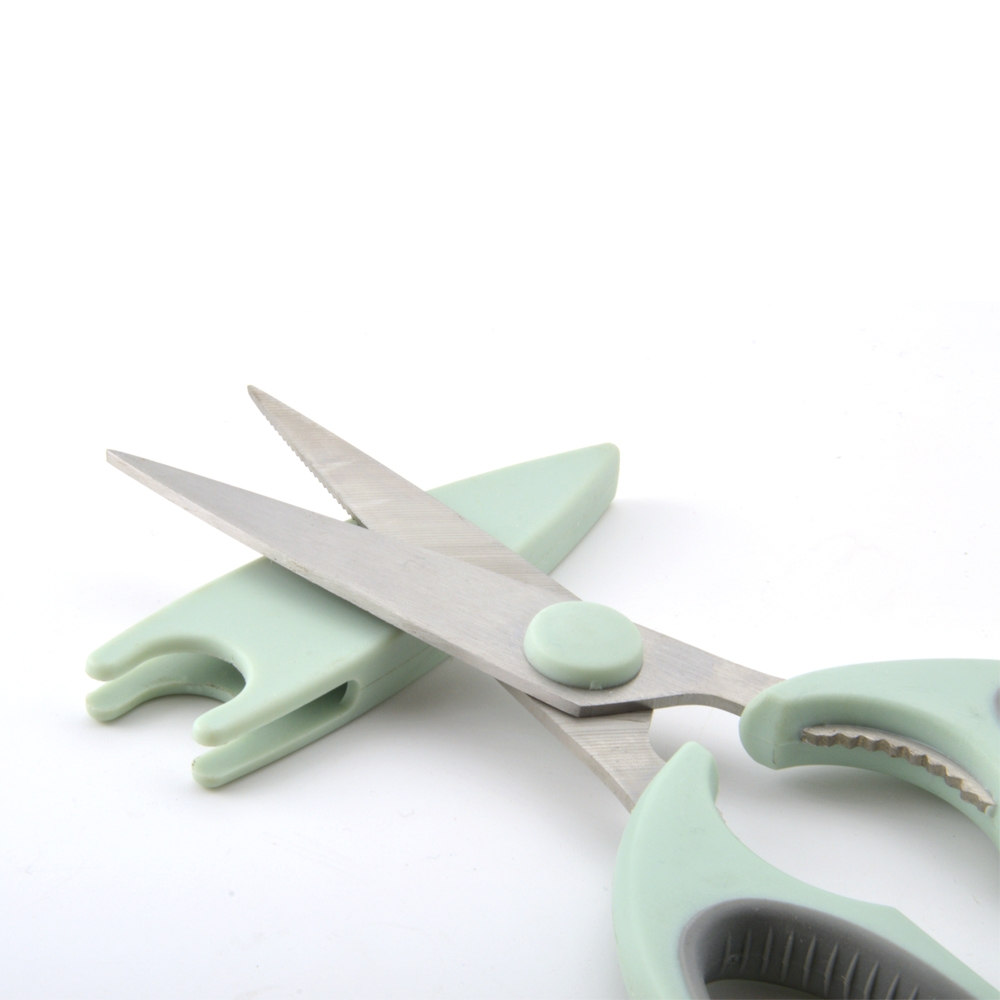
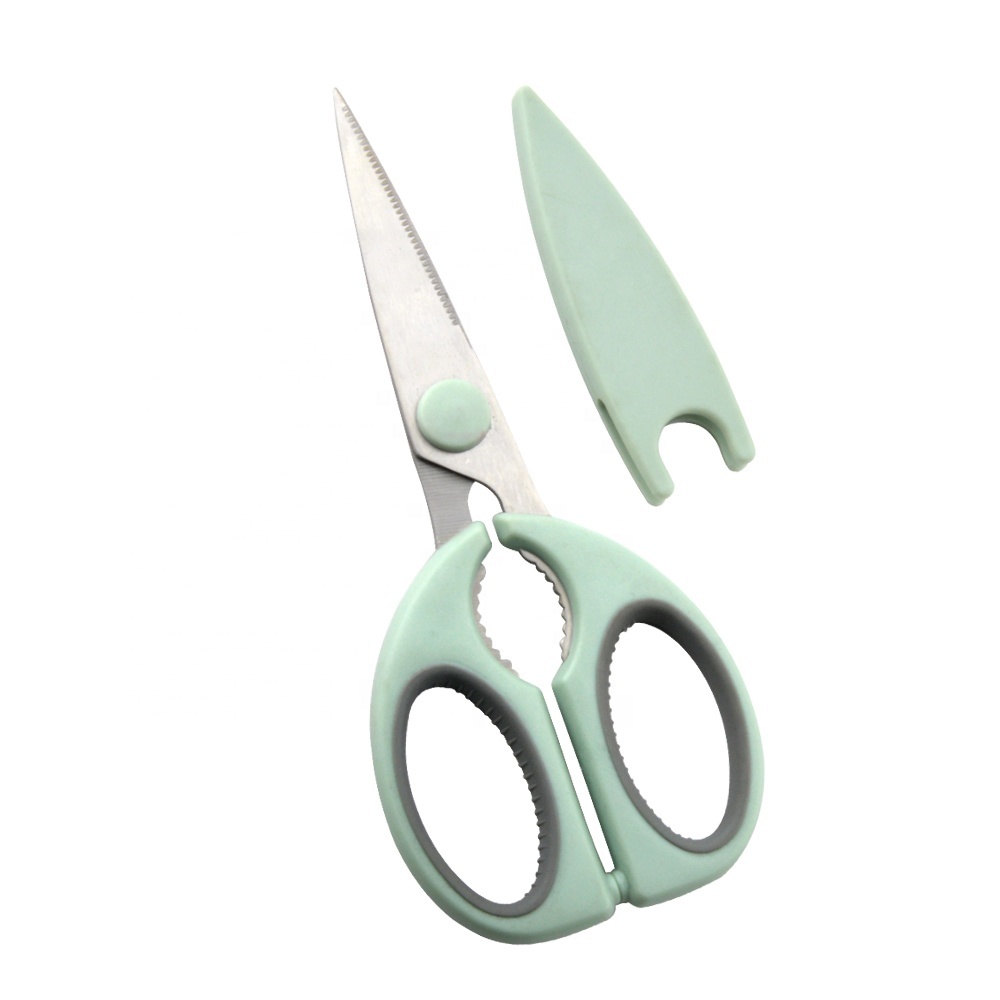
The original product introduction highlights several useful details: the scissors are offered as an OEM product, include stainless steel blades described as rust-resistant, use a micro-serrated edge on one blade, have ergonomic non-slip handles, include an integrated bottle opener, and may be supplied as kitchen scissors with a cover. This article expands those points into a clearer sourcing guide without assuming unconfirmed specifications, certifications, prices, or production capacity.
Key Takeaways
- OEM kitchen scissors should be evaluated for blade performance, handle comfort, safety, packaging, and consistency across bulk orders.
- Confirmed features from the original product description include stainless steel blades, one micro-serrated blade edge, ergonomic non-slip handles, a bottle opener, and a protective cover option.
- Buyers should ask suppliers about material details, customization scope, quality inspection steps, lead time, MOQ, packaging options, and compliance documents for the destination market.
- Samples should be tested on realistic kitchen tasks before confirming a wholesale or private label order.
What OEM Kitchen Scissors Are Used For
Kitchen scissors are valued because they handle tasks that may be awkward with a knife. A pair can cut herbs directly over a bowl, open vacuum food bags, trim small pieces of meat, cut parchment, or break down light kitchen packaging. In foodservice, catering, and home cooking, they can reduce preparation time when the tool is sharp, easy to grip, and simple to clean.
For OEM programs, the same base product may be adapted for different sales channels. A retailer may want a kitchen scissors with cover for safer drawer storage. A promotional distributor may focus on logo printing and gift packaging. A supermarket buyer may need hanging card packaging that clearly explains the functions. An online brand may prioritize product photography, color consistency, and compact shipping dimensions.
Product Features to Review Before Sourcing
The original product description mentions a micro-serrated edge on one blade. This is useful because serrations can help grip slippery items such as herbs, plastic packaging, or poultry skin. Buyers should still confirm how the edge is formed, how sharp it is after production, and whether the supplier can maintain the same cutting feel across batches.
The scissors are also described as having ergonomic non-slip handles. Comfort matters because kitchen scissors are often used with wet hands or during repetitive preparation. When reviewing samples, check whether the handle opening fits different hand sizes, whether the grip surface feels secure, and whether there are sharp plastic edges around the handle molding.
An integrated bottle opener adds convenience, especially for retail packs positioned as multi-function kitchen tools. However, buyers should test whether added functions interfere with cutting comfort or cleaning. A protective cover is another practical feature because it helps protect the blades in storage and reduces the risk of accidental contact in a drawer.
OEM Customization Options to Discuss
OEM sourcing is about matching the product to the buyer’s market. Common customization discussions may include handle color, logo placement, blade marking, retail packaging, instruction cards, barcode labeling, carton marks, and display-ready packing. The original article mentions a mint green finish, but buyers should ask what color options are available and whether custom colors require a minimum quantity or color matching process.
Do not assume all branding methods are suitable for all surfaces. A logo on a handle, blade, cover, or package may require different tooling or printing methods. Ask the supplier for artwork requirements, sample approval steps, and how color differences are controlled between sample and mass production. If the product will be sold under a private label, confirm who is responsible for final label text, warning statements, and market-specific packaging requirements.
Comparison Checklist for B2B Buyers
| Evaluation Area | What to Check | Questions to Ask the Supplier |
|---|---|---|
| Blade construction | Sharpness, alignment, serration quality, corrosion resistance claim | What stainless steel is used, and how is blade quality inspected? |
| Cutting performance | Herbs, food packaging, light poultry trimming, paper or card packaging | Can samples be tested before bulk order approval? |
| Handle comfort | Grip security, hand fit, surface finish, comfort during repeated cuts | Are handle colors and materials customizable? |
| Safety and storage | Cover fit, blade tips, opening and closing feel | Is the cover included by default or optional? |
| OEM packaging | Card, box, label, instructions, barcode, carton marks | What packaging formats can be supplied for retail or wholesale? |
| Commercial terms | MOQ, lead time, payment terms, sample cost, shipping method | What are the current order requirements and production timelines? |
How to Test Samples Before a Wholesale Order
Sample testing should be practical and repeatable. Create a small test plan that reflects how customers will use the scissors. Cut fresh herbs, food bags, thin cardboard packaging, parchment paper, and small pieces of raw poultry if that use is relevant to your market. Check whether the blades meet cleanly from pivot to tip and whether the scissors pull or crush instead of cutting.
- Inspect the first sample visually for blade alignment, handle finish, and cover fit.
- Test cutting on several common kitchen materials, not only paper.
- Wash and dry the scissors according to the supplier’s care guidance, then check for changes in feel or appearance.
- Ask for a pre-production sample with final logo and packaging before mass production.
- Define acceptable inspection criteria in writing before shipment.
If the supplier provides inspection reports or third-party testing documents, review whether they apply to the exact product, material, and destination market. Avoid relying on general statements. For regulated markets, buyers should confirm applicable requirements with their own compliance adviser or importer of record.
Working with a Kitchen Scissors Manufacturer
The original article refers to Yangjiang as a known area for stainless steel fabrication and kitchen scissors manufacturing. When sourcing from any kitchen scissors manufacturer, location alone is not enough. Buyers should evaluate communication speed, sample accuracy, documentation, quality control process, packaging support, and export experience relevant to the destination market.
Important commercial details should be asked directly rather than assumed. These include MOQ, unit price by quantity, sample lead time, mass production lead time, payment terms, available shipping terms, logo setup charges, packaging costs, and whether replacement parts or covers can be ordered separately. If you need exclusivity, custom tooling, or a unique handle color, confirm the terms in writing.
Use and Care Guidance for End Customers
Even a well-made kitchen tool lasts longer when customers understand how to use it. Retail packaging or an instruction insert can explain that kitchen scissors should be cleaned after contact with food, dried before storage, and stored with the cover when provided. Customers should avoid using kitchen scissors on materials outside their intended use, such as hard wire or non-food workshop tasks, unless the supplier specifically confirms that capability.
If the scissors are dishwasher safe, that claim should be confirmed by the supplier before printing it on packaging. If not confirmed, recommend hand washing and thorough drying. Clear care guidance can reduce complaints and help customers understand the difference between kitchen scissors and general-purpose scissors.
Practical FAQ
What makes OEM kitchen scissors different from regular scissors?
OEM kitchen scissors are developed for kitchen tasks and private label supply. They may include features such as stainless steel blades, micro-serrated cutting edges, non-slip handles, a bottle opener, or a protective cover, depending on the confirmed design.
Can the handle color and logo be customized?
Often, OEM programs allow branding or color discussions, but availability depends on the supplier’s process, order quantity, tooling, and printing method. Buyers should request artwork guidelines and a branded sample.
Should buyers choose kitchen scissors with a cover?
A cover is useful for drawer storage, retail presentation, and safer handling. Confirm whether it is included in the standard quotation or offered as an optional accessory.
What should be confirmed before placing a bulk order?
Confirm material details, sample approval, packaging, MOQ, lead time, inspection standards, payment terms, shipping terms, and any compliance documents needed for the target market.
How can importers reduce quality risk?
Use approved samples, written specifications, pre-shipment inspection, clear packaging requirements, and realistic performance tests. Keep all agreed details documented before production starts.
