





Enhance Your Kitchen with Soft Grip Scissors
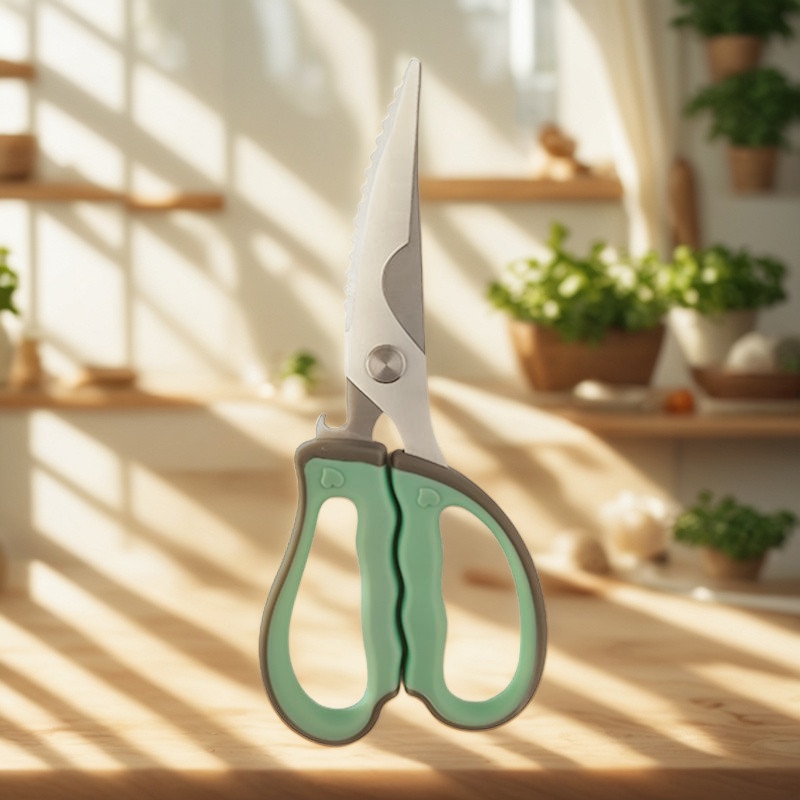
Soft grip kitchen scissors are one of those simple tools that can make food preparation faster, safer, and more controlled. Unlike office scissors or lightweight craft scissors, kitchen shears are designed for ingredients, packaging, and repetitive hand movement. The original product described here features a plush mint-green soft-touch handle, stainless steel blades, a serrated blade edge, and a built-in bottle opener between the handles. Those details matter because they affect comfort, cutting grip, cleaning routines, and how the tool fits into everyday kitchen work.
What Makes Soft Grip Kitchen Scissors Useful?
The main advantage of soft grip kitchen scissors is hand comfort. A soft-touch handle can reduce the hard pressure points that occur when cutting herbs, trimming meat, opening sealed bags, or preparing multiple ingredients at once. This is especially helpful when hands are damp, lightly oily, or moving quickly between tasks. A secure handle does not replace careful knife skills, but it can give the user better control than a slippery, narrow handle.
Kitchen scissors are also useful because they work directly over a bowl, pan, cutting board, or plate. Instead of moving food back and forth between tools, users can cut herbs into a salad, trim poultry portions, snip noodles, or open packaging with one compact tool. For small kitchens, shared workspaces, and busy home cooking, that flexibility is valuable.
Blade Design: Stainless Steel and Serrated Grip
The original article states that these scissors are made with stainless steel blades. Stainless steel is commonly used for kitchen cutting tools because it is suitable for repeated contact with food and moisture when properly cleaned and dried. Buyers should still ask the supplier for the exact material grade, finish, and care recommendations instead of assuming all stainless steel performs the same.
One of the useful details in the source description is the serrated edge on one blade. A serrated edge helps hold slippery ingredients in place while cutting. This can be helpful for poultry skin, herbs, scallions, fish skin, and flexible packaging. The opposite blade completes the cut while the serration reduces sliding. For users, this means less force and better alignment. For wholesale or OEM buyers, it is a feature worth checking in samples because serration depth, spacing, and sharpness can vary between factories.
Common Kitchen Tasks for Multi-Purpose Shears
Soft grip kitchen scissors are not limited to one ingredient type. They are best viewed as a supporting tool that handles quick cuts and repetitive prep tasks. They may not replace a chef’s knife for all chopping, but they can reduce effort for many small jobs.
- Snipping fresh herbs directly into soups, salads, sauces, or garnish bowls.
- Cutting cooked noodles, bacon strips, dried chilies, or scallions into shorter pieces.
- Trimming meat or poultry portions when a knife feels less convenient.
- Opening stubborn food packaging, vacuum packs, or seasoning sachets.
- Butterflying poultry when the blade strength and hinge design are suitable for the task.
- Using the built-in bottle opener for occasional beverage or pantry tasks.
Users should match the task to the tool. If cutting through hard bones, frozen food, or very thick shells, confirm that the scissors are designed for that level of force. Forcing a tool beyond its intended use can damage the edge, loosen the pivot, or create a safety risk.
Feature Checklist for Buyers and Product Teams
For retailers, private-label brands, promotional product teams, or distributors, soft grip kitchen scissors should be evaluated through samples rather than product photos alone. The handle may look comfortable online, but grip feel, hinge smoothness, and blade alignment can only be judged in hand. The table below gives a practical comparison checklist for sourcing discussions.
| Feature to Check | Why It Matters | Question to Ask a Supplier |
|---|---|---|
| Soft-touch handle | Affects comfort, control, and wet-hand grip. | What handle material is used, and is it available in custom colors? |
| Stainless steel blades | Supports food-prep use when cleaned and dried properly. | What stainless steel grade and blade thickness are supplied? |
| Serrated blade edge | Helps grip slippery ingredients during cutting. | Can you provide samples with different serration patterns? |
| Pivot strength | Influences cutting stability and long-term smoothness. | How is pivot durability checked during production? |
| Built-in bottle opener | Adds utility without requiring another separate tool. | Is the opener position tested for comfort and safe handling? |
| Packaging options | Important for retail display, e-commerce, and private label programs. | What packaging formats and labeling options are available? |
Use and Care Tips for Longer Service Life
Kitchen scissors touch raw ingredients, packaging, and prepared food, so cleaning habits matter. After use, wash the blades and handle with warm water and mild detergent. Pay attention to the pivot area, where food particles can collect. Dry the scissors promptly with a clean towel before storing them. This simple habit helps maintain the blade surface and reduces moisture buildup around the hinge.
Do not leave kitchen scissors soaking in the sink for long periods. Avoid tossing them loose into a crowded drawer where the cutting edge can hit other tools. If the scissors have a detachable design, follow the supplier’s instructions for separating and reassembling the blades. If they are not designed to come apart, do not force the pivot open.
- Rinse immediately after cutting sticky, salty, or acidic foods.
- Wash both blade faces and the handle area with mild detergent.
- Dry thoroughly, especially around the pivot.
- Store in a sheath, tool tray, or safe drawer position.
- Check blade sharpness and hinge tightness before heavy use.
Sourcing Guidance for OEM and Wholesale Buyers
The original article mentions OEM scissors factories in China and kitchen scissors manufacturers. For B2B sourcing, the best approach is to turn attractive product claims into verifiable questions. Instead of assuming a factory can meet every market requirement, ask for sample timelines, available materials, quality-control steps, packaging options, and documentation relevant to your target market.
Buyers should avoid focusing only on unit price. A kitchen tool may look simple, but user satisfaction depends on balance, grip comfort, cutting smoothness, edge consistency, and packaging quality. If the product will be sold under a private label, confirm artwork requirements, barcode placement, carton markings, and whether the supplier can support repeat orders with consistent color and finish. If compliance or food-contact documentation is needed, request current documents and confirm their scope with your own compliance advisor.
Key Takeaways
- Soft grip handles can improve comfort and control during repetitive kitchen cutting tasks.
- Stainless steel blades and a serrated edge are useful features, but buyers should verify exact specifications.
- The built-in bottle opener adds practical value without turning the scissors into a bulky gadget.
- Proper washing, drying, and storage help maintain performance and hygiene.
- OEM and wholesale buyers should request samples and ask detailed questions before confirming an order.
FAQ
Are soft grip kitchen scissors better than regular scissors?
For food preparation, yes. Kitchen scissors are designed for ingredients and packaging, while regular scissors are usually not intended for food contact or wet kitchen use. Soft grip handles can also feel more secure during repeated cutting.
Can these scissors cut meat?
The source describes them as capable of handling tougher meat and tasks such as butterflying poultry. Users should still avoid forcing them through bones or frozen foods unless the supplier confirms that use.
Why is one blade serrated?
A serrated blade helps grip slippery foods so they do not slide forward while cutting. This can improve control when cutting meat, herbs, or flexible packaging.
What should a private-label buyer ask before ordering?
Ask about blade material, handle material, available colors, sample approval, packaging options, quality-control checks, lead time, order quantity, and any documentation needed for the intended sales market.
How should soft grip kitchen scissors be cleaned?
Wash them with mild detergent after use, clean around the pivot, dry thoroughly, and store them safely. Do not leave them soaking in water or loose against other sharp tools.
