




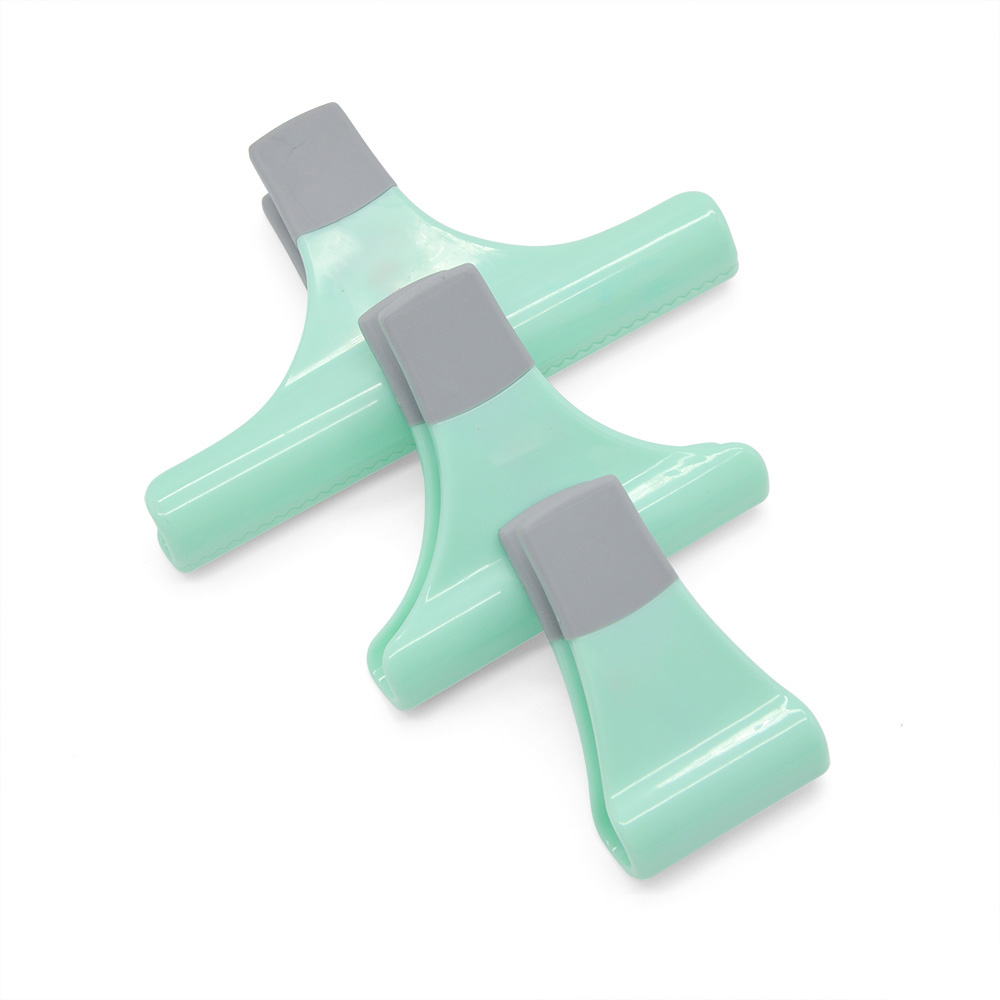
Enhancing Kitchen Organization with a Sealing Clip Factory
Sealing clips are simple products, but they solve a daily problem in homes, offices, food service areas, and retail kitchens: how to close opened bags neatly and reduce exposure to air and moisture. For buyers, importers, distributors, and private-label brands, choosing a sealing clip factory is not only about finding a low unit cost. It is about confirming that the supplier can make clips that close securely, feel practical in the hand, and fit the packaging expectations of your target market.
The original purpose of sealing clips is clear: they help maintain freshness for packaged goods by keeping bags closed after opening. In kitchen organization, they also reduce clutter by making snack bags, coffee bags, herbs, dry food, and other flexible packages easier to store. This guide explains how to evaluate a plastic sealing clips manufacturer with a sourcing mindset, without relying on assumptions about materials, certifications, or production capacity that should always be verified with the supplier.
Key Takeaways
- A sealing clip should be assessed for grip strength, repeat use, ease of opening, and suitability for different bag materials.
- Buyers should ask suppliers to confirm plastic type, production process, packaging options, lead time, MOQ, and quality-control procedures.
- Different clip sizes and designs serve different use cases, from small snack packs to larger dry-food bags.
- Samples and practical bag-closure testing are essential before wholesale or OEM orders.
What a Sealing Clip Factory Typically Produces
A sealing clip factory usually focuses on clips designed to close flexible packaging. These may include simple straight clips, wider clips for larger bags, clips with textured grip areas, or ergonomic shapes intended to be easier to press and release. Some designs may be suitable for household kitchen drawers, while others may be packaged for retail display, promotional use, or wholesale kitchenware assortments.
The core function is the same: the clip should press the bag opening tightly enough to limit unwanted air and moisture from entering. Because sealing clips are used repeatedly, buyers should look closely at durability. A clip that feels acceptable during one use may loosen, crack, or lose grip after repeated opening and closing. For this reason, performance checks should include repeated-use testing, not only a visual inspection.
How Sealing Clips Improve Kitchen Organization
For consumers, sealing clips are valued because they make opened packages easier to manage. Instead of folding bags loosely or transferring every product into a container, users can close the original packaging and place it back in a cabinet, pantry, refrigerator, or drawer. This is especially useful for snacks, coffee beans, tea, herbs, frozen food bags, baking ingredients, and pet food packs.
From a product-selection point of view, buyers should consider how the clip will be used in real kitchens. A small clip may be convenient for thin snack bags, but it may not cover the width of a larger cereal or rice bag. A larger clip may seal more surface area but take up more drawer space. Some users prefer assorted-size sets because they can match the clip to the bag. If your sales channel serves household buyers, mixed sizes may be worth discussing with the manufacturer.
Supplier Evaluation Checklist
Before choosing a plastic sealing clips manufacturer, ask practical questions and request samples. The goal is to reduce uncertainty before placing a larger wholesale, OEM, or private-label order. The following checklist can help buyers compare suppliers consistently.
| Evaluation Area | What to Check | Questions to Ask the Supplier |
|---|---|---|
| Material | Plastic type, flexibility, strength, color consistency | What plastic is used, and can you provide material details for the quoted product? |
| Seal Performance | Grip on thin, thick, glossy, and matte bags | Can samples be tested on common snack, coffee, and dry-food bags? |
| Durability | Repeated opening and closing without cracking or loosening | What internal checks are used for repeated-use performance? |
| Design Options | Sizes, shapes, grip surfaces, colors, assortment sets | Which existing molds or designs are available for selection? |
| Packaging | Bulk packs, retail cards, color boxes, private-label packaging | What packaging formats can be quoted, and what artwork files are required? |
| Commercial Terms | MOQ, lead time, sample policy, payment terms | What are the current MOQ and lead time for this item and packaging type? |
Plastic Sealing Clips: Product Details to Verify
The source article mentions that manufacturers often focus on durable plastics, but buyers should not assume a specific plastic grade or performance level without written confirmation. Ask the supplier to identify the material used for the exact product being quoted. If your target market has food-contact expectations or specific retailer requirements, request documentation and confirm whether it applies to the product, color, and packaging you plan to purchase.
Also review the clip mechanism. Does it close by snap pressure, sliding pressure, or another structure? Is the grip area comfortable for users with smaller hands? Does the surface help prevent slipping when closing a bag? The original article notes that non-slip grip can help with diverse bag materials, but this should be checked on the actual sample because bag thickness and texture vary widely.
OEM, Wholesale, and Packaging Considerations
For wholesale buyers, packaging can be as important as the clip itself. A bulk bag may suit distributors or institutional buyers, while a hanging card or small retail box may work better for supermarkets, home goods stores, or online bundles. Private-label buyers should ask whether the supplier can support logo placement, custom color requests, barcode placement, instructions, and export carton labeling.
When discussing OEM options, avoid vague requests such as “make it premium.” Instead, provide measurable requirements. For example, specify the desired length range, color, quantity per set, target packaging format, and any retailer labeling rules. If the supplier proposes an existing mold, ask for dimensions and photos of production samples. If a new mold is required, clarify tooling cost, ownership terms, development timeline, and approval steps before payment.
Quality Checks Before Placing an Order
Quality control for sealing clips should be practical and usage-based. A clip may look clean and uniform but still fail if it does not hold a bag closed. Before confirming an order, request samples from the same material and design that will be used in production. Test them in the way end users will actually use them.
- Close different bags, including thin snack bags, thicker coffee bags, and dry-food packaging.
- Open and close each sample repeatedly to check whether the hinge or closing pressure changes.
- Store a clipped bag upright and sideways to see whether it slips off.
- Check edges for sharp points, rough molding marks, or uncomfortable pressure areas.
- Review packaging samples to confirm count, label placement, and presentation.
If you are buying for a regulated retail channel, ask what inspection criteria the factory can follow and whether third-party inspection is possible before shipment. Do not rely only on catalog photos; sealing performance depends on the final molded part and production consistency.
Questions to Ask a Sealing Clip Supplier
A reliable sourcing conversation should be specific. Ask for the supplier’s available clip sizes, current color options, sample timing, packaging formats, and whether products can be supplied as assorted sets. If sustainability is part of your buying strategy, ask what waste-reduction practices or material options are available, but avoid assuming eco-friendly performance unless the supplier provides clear supporting information.
Buyers should also confirm export carton details, order change rules, defect handling, and spare sample availability for internal review. These questions help prevent misunderstandings after artwork approval or production start. Good communication at the quotation stage often saves more time than negotiating only on price.
Practical FAQ
What is the main use of a sealing clip?
A sealing clip is used to close opened flexible bags, helping reduce exposure to air and moisture while keeping cabinets, pantries, and kitchen drawers more organized.
Should I choose one size or an assorted-size set?
Assorted sizes are useful for household retail because consumers seal many bag types. A single size may work better for promotional items, food service use, or a specific package format.
How can I judge whether a plastic sealing clip is durable?
Request samples and test repeated opening and closing. Also check whether the clip keeps its grip on different bag materials after multiple uses.
Can a sealing clip factory provide private-label packaging?
Some suppliers may offer private-label or custom packaging, but buyers should ask directly about available formats, artwork requirements, MOQ, sample approval, and lead time.
What information should I confirm before a wholesale order?
Confirm material, dimensions, color, packaging, MOQ, lead time, sample policy, inspection method, carton details, and how the supplier handles defects or order changes.
