




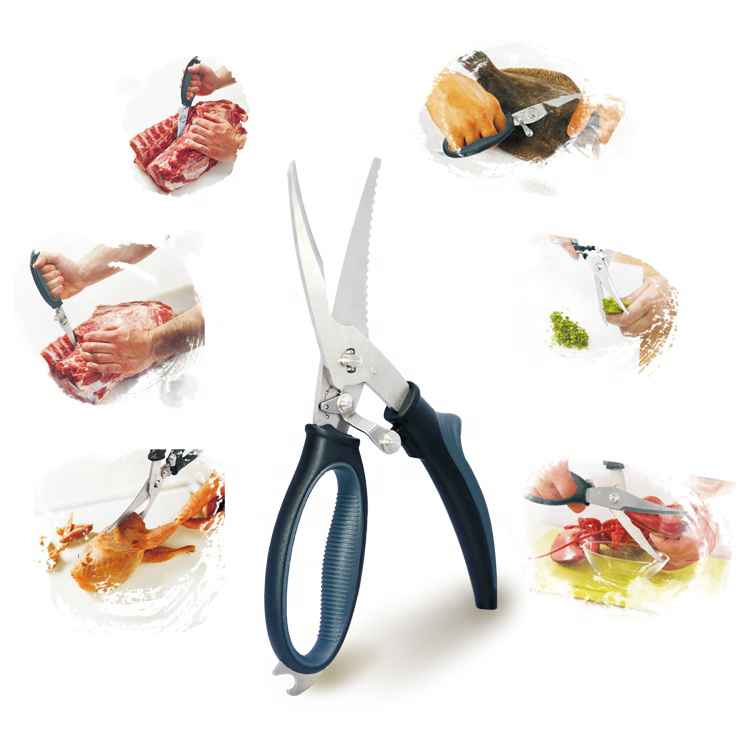
Ergonomic Poultry Shears: Practical Guide for Kitchen Buyers
Ergonomic poultry shears are designed to make poultry preparation more controlled than using a general kitchen knife for every cut. For chefs, caterers, food-prep teams, retailers, and home cooks, the main value is not only sharpness. A good pair of poultry shears should feel stable in the hand, cut through chicken joints and small fish bones with less strain, and clean safely after use.
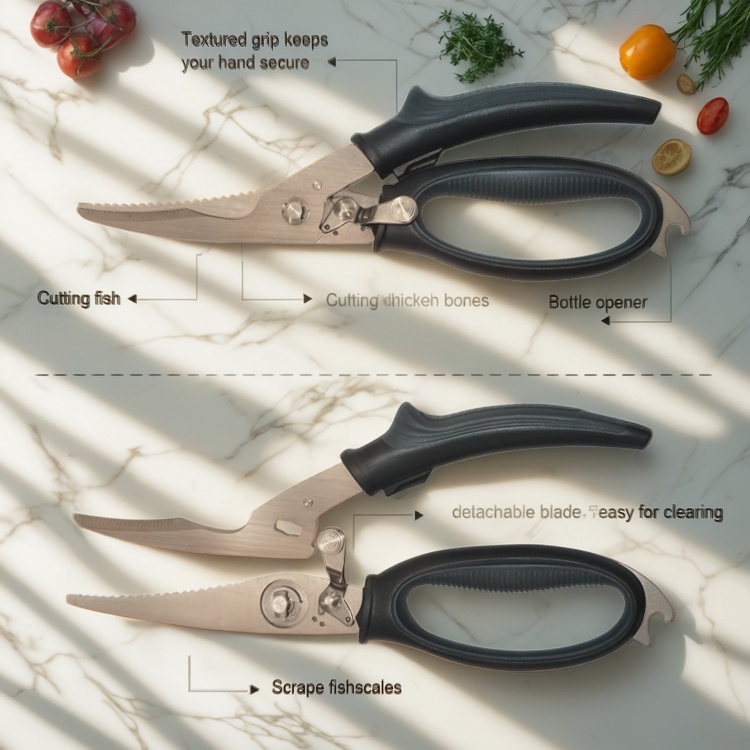
The original product description highlights several useful points: robust stainless steel blades, the ability to cut through chicken and fish bones, textured grips, detachable blades for easier cleaning, scalloped blade edges for scale-scraping, and an additional built-in bottle opener. These are practical features, but buyers should still verify exact materials, dimensions, packaging, and compliance requirements directly with the supplier before placing a wholesale or OEM order.
Key Takeaways
- Choose poultry shears based on cutting control, grip comfort, cleaning access, and hinge stability rather than appearance alone.
- Stainless steel blades are useful for kitchen environments, but buyers should ask the supplier to confirm the exact grade and care instructions.
- Detachable blades can simplify washing, but the locking mechanism should be secure and easy to reassemble.
- For OEM poultry shears, confirm customization options, packaging, labeling, samples, lead time, and inspection standards before production.
- Extra functions such as scale-scraping edges or bottle openers should not compromise cutting safety or grip comfort.
What Makes Poultry Shears Ergonomic?
Ergonomics is about reducing unnecessary effort during repeated use. Poultry prep often involves uneven shapes, slippery surfaces, and hard joints, so the handle shape matters as much as the blade. Textured grips can help users maintain control when hands are damp, while a balanced handle opening reduces pressure on the palm and fingers.
When evaluating ergonomic poultry shears, hold them in a natural cutting position. The hand should not feel stretched, pinched, or forced into an awkward angle. If the shears will be used in a commercial kitchen, test them with multiple users because hand size and cutting habits vary. A design that works for one person may feel tiring to another after repeated prep work.
Blade Design and Cutting Performance
The source article states that the shears use robust stainless steel blades and can cut through chicken and fish bones. That is a useful starting point, but buyers should avoid assuming more than the supplier has confirmed. Ask whether the blades are intended for poultry joints, small bones, fish preparation, or general kitchen trimming. A product designed for light kitchen cutting may not be suitable for heavy butchery tasks.
Scalloped blade edges can add grip on slippery surfaces and may assist with scale-scraping when preparing fish. However, blade geometry should be judged by real use. A clean cut through skin, cartilage, and joints is more valuable than a long list of functions. For professional buyers, sample testing is the safest way to compare shears before ordering in volume.
Cleaning, Detachable Blades, and Food Safety Habits
Poultry tools require careful cleaning because raw meat can leave residue around the hinge and inner blade surfaces. Detachable blades, mentioned in the original article, can make this process easier by opening access to areas that are difficult to rinse. Buyers should check how the blades detach, whether reassembly is intuitive, and whether the mechanism remains tight after repeated use.
For daily care, users should wash shears promptly after cutting raw poultry, dry them thoroughly, and store them in a way that protects the blade edge. If a dishwasher is preferred, confirm with the supplier whether the specific product is dishwasher-safe. Do not assume this from stainless steel alone, as handles, springs, screws, and finishes may have different care requirements.
Comparison Checklist for Selecting Poultry Shears
| Selection point | What to check | Why it matters |
|---|---|---|
| Grip comfort | Handle size, texture, and finger clearance | Reduces fatigue during repeated cutting |
| Blade material | Ask supplier to confirm stainless steel grade | Helps assess durability and care needs |
| Cutting task | Chicken joints, fish bones, trimming, or general use | Prevents mismatch between tool and workload |
| Detachable design | Locking safety and ease of reassembly | Supports cleaning without creating safety issues |
| Extra functions | Scale-scraper, bottle opener, or other features | Useful only if they do not weaken the main cutting role |
| OEM readiness | Logo, packaging, samples, lead time, inspection terms | Clarifies commercial expectations before ordering |
OEM and Wholesale Sourcing Guidance
For retailers, distributors, and kitchenware brands, OEM poultry shears can support private-label programs, gift sets, or category expansion. The original article notes that OEM poultry shears offer customizable solutions, but customization should be discussed in practical terms. Buyers should ask what can be customized: handle color, logo placement, blade marking, packaging, instructions, barcode labels, carton markings, or accessory combinations.
Before confirming an order, request samples and test them under realistic conditions. Cut poultry joints, trim skin, open and close the shears repeatedly, detach and reassemble the blades if applicable, and check whether the grip remains comfortable when wet. Also ask the supplier about production lead time, minimum order quantity, sample fees, packaging options, quality inspection process, and after-sales handling for defects. If your market has specific food-contact, labeling, or import requirements, confirm what documentation the supplier can provide rather than assuming compliance.
How Kitchen Scissors Manufacturers Add Value
Kitchen scissors manufacturers influence more than the visible design. They choose blade thickness, hinge structure, handle molding, finishing, packaging, and inspection methods. For poultry shears, these decisions affect cutting control, cleaning convenience, and product consistency across bulk orders.
When comparing suppliers, look beyond a single product photo. Ask for clear product drawings or specification sheets, available packaging formats, production tolerances if relevant, and the process for approving pre-production samples. A reliable sourcing conversation should make the product easier to understand, not less. If a feature is important to your customers, such as detachable blades or textured grips, make it part of the written specification.
Use and Care Tips for End Users
- Use poultry shears mainly for their intended kitchen tasks, such as cutting poultry joints, trimming skin, or preparing fish as appropriate.
- Keep fingers clear of the blade path and cut on a stable surface when working with slippery ingredients.
- Clean the hinge and inner blade area immediately after raw poultry contact.
- Dry the shears fully before storage to help protect the blade and moving parts.
- Check the locking or detachable mechanism regularly and stop using the shears if it feels loose or unsafe.
Practical FAQ
Are ergonomic poultry shears only for professional chefs?
No. They can be useful for both professional kitchens and home cooking. The main advantage is better control when cutting poultry, fish, and similar ingredients compared with using unsuitable general scissors.
Can these shears cut through bones?
The source article states that the shears can cut through chicken and fish bones. For bulk purchasing, confirm the intended bone size and use limits with the supplier, then test samples before ordering.
Are detachable blades important?
They are helpful for cleaning because food residue can collect around the hinge. However, the detachable mechanism should be secure, easy to operate, and durable after repeated washing.
What should OEM buyers ask before placing an order?
Ask about material details, customization options, sample approval, packaging, MOQ, lead time, inspection criteria, care instructions, and any documentation needed for your target market.
Do extra tools like a bottle opener matter?
They can add convenience, but the main priority should remain safe, comfortable cutting. Extra functions should not make the shears heavier, harder to clean, or less comfortable to grip.
Final Selection Advice
Good ergonomic poultry shears should solve real preparation problems: controlled cutting, reduced hand strain, easier cleaning, and dependable handling. For consumers, that means choosing a tool that feels secure and is simple to maintain. For OEM and wholesale buyers, it means turning each feature into a verified specification before production. By asking precise questions and testing samples carefully, buyers can choose poultry shears that fit actual kitchen needs instead of relying on broad marketing claims.
