




Essential 3-Piece Knife Set for Everyday Kitchen Prep
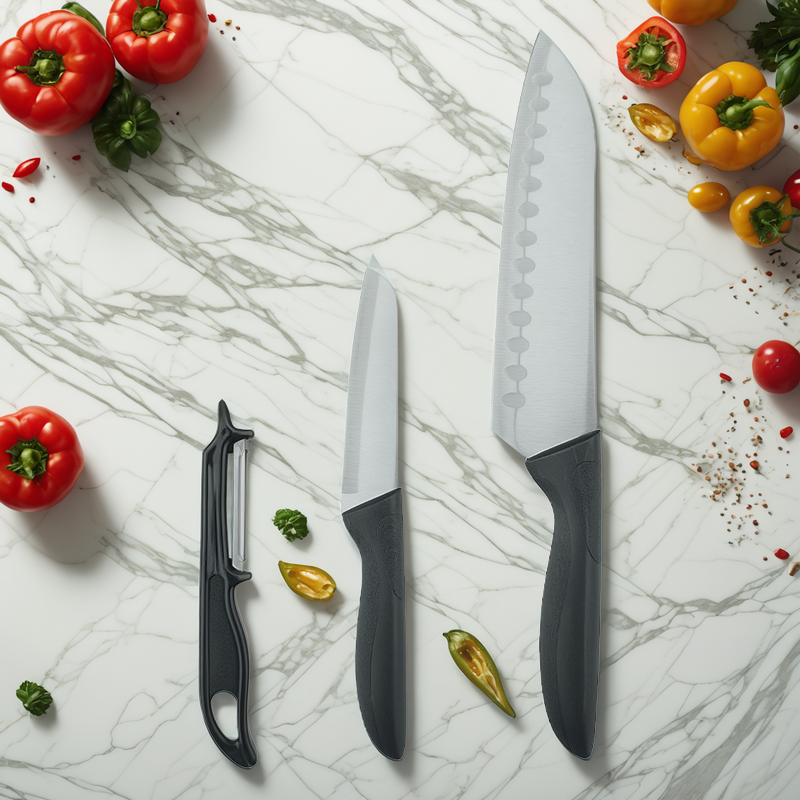
A compact three-piece knife set can cover most daily kitchen preparation without filling a drawer with tools that rarely get used. The original idea is simple: combine a versatile Santoku knife, a precise paring knife, and a practical peeler so cooks can slice, chop, trim, peel, and shape ingredients with better control. For home kitchens, rental properties, starter kitchens, or small food-prep spaces, this trio is often more useful than a large block of specialty knives.
What Is Included in a Three-Piece Kitchen Set?
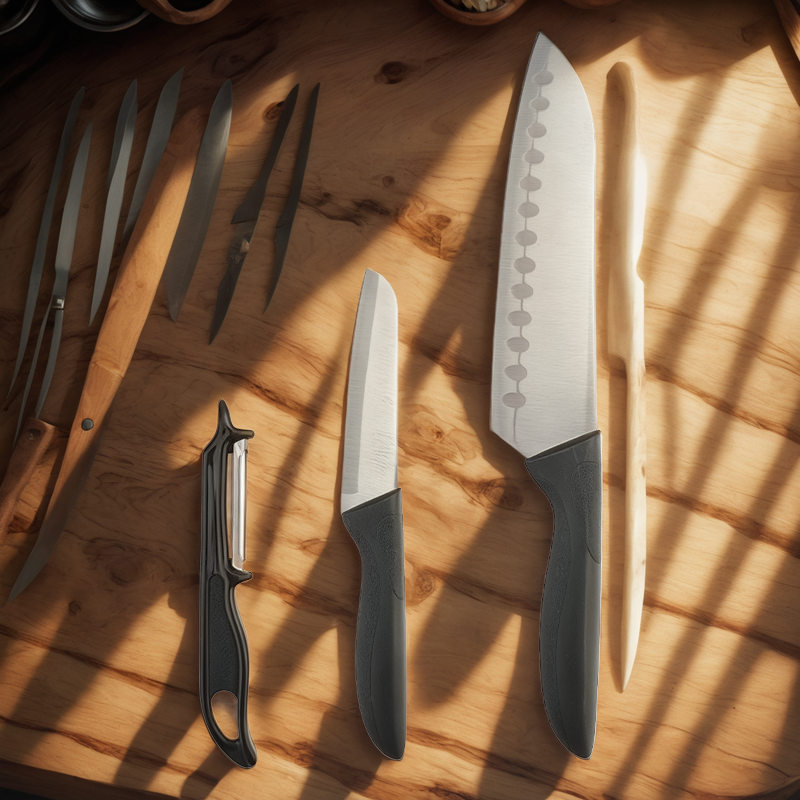
A three-piece set usually focuses on the tools used most often rather than every possible cutting task. In this article, the set includes a Santoku knife, a paring knife, and a peeler. Each item has a different role, which helps prevent one knife from being used for jobs it was not designed to handle.
- Santoku knife: Used for general slicing, dicing, and chopping of vegetables, fruit, cooked meats, and other common ingredients.
- Paring knife: Used for small, controlled tasks such as trimming, seed removal, peeling by hand, and decorative cuts.
- Peeler: Used to remove thin skins from vegetables and fruit quickly while reducing unnecessary waste.
This combination is especially useful for cooks who want a straightforward setup. It does not replace every specialty knife, but it provides a reliable foundation for most everyday meal preparation.
The Santoku Knife: The Everyday Workhorse
The Santoku knife is a Japanese-style all-purpose kitchen knife. Its blade is typically broad, with a relatively straight cutting edge and a sheepsfoot-style tip. This shape supports efficient downward cutting motions and controlled chopping. It is well suited to vegetables, herbs, boneless proteins, and many routine prep jobs.
Some Santoku knives include small dimples or grantons along the blade face. These indentations are designed to create tiny air pockets between the blade and the food. In use, they may help reduce sticking when cutting moist or starchy ingredients such as potatoes, cucumbers, or similar produce. Performance still depends on sharpness, cutting technique, food texture, and blade finish, so buyers should evaluate the actual product rather than relying on the visual feature alone.
When using a Santoku, keep the food stable on a cutting board and avoid twisting the blade through hard items. It is a slicing and chopping tool, not a cleaver or prying tool.
The Paring Knife: Control for Small Details
A paring knife is the small-tool specialist of the set. Where a larger knife can feel awkward, a paring knife gives the user closer control. It is useful for peeling small fruit by hand, trimming blemishes, hulling strawberries, removing seeds, deveining shrimp, scoring dough, and creating simple garnishes.
The advantage of a paring knife is not force; it is accuracy. The shorter blade allows the hand to work near the ingredient, making it easier to guide the cut. For safety, many tasks should still be done on a board rather than in the hand, especially for inexperienced users. If hand-held trimming is necessary, cut away from fingers and use light pressure.
The Peeler: Small Tool, Big Time Saver
A peeler may not be a knife in the traditional sense, but it is an essential preparation tool. It removes the outer layer of carrots, potatoes, apples, cucumbers, and other produce faster than most people can manage with a knife. A good peeler should remove a thin strip rather than gouging away too much edible food.
The original article notes the value of a quality peeler with a sharp blade and ergonomic handle. When comparing options, check whether the peeler feels secure in the hand, whether it works comfortably for left- and right-handed users if needed, and whether the blade can follow curves without skipping. A peeler that feels uncomfortable will often be ignored, even if it looks attractive in a set.
Comparison and Selection Checklist
Use the table below to decide whether a three-piece set suits your kitchen and what to check before buying. This is especially helpful when comparing similar-looking sets online.
| Tool | Best Uses | What to Check | Common Mistake to Avoid |
|---|---|---|---|
| Santoku knife | Chopping, slicing, dicing, general prep | Comfortable grip, balanced feel, clean cutting edge, appropriate size for your board | Using it to cut bones, frozen food, or very hard items |
| Paring knife | Trimming, peeling by hand, seed removal, small detail work | Secure handle, agile blade, easy control near the tip | Applying too much force on small slippery foods |
| Peeler | Peeling fruit and vegetables with minimal waste | Sharpness, comfortable handle, smooth movement over curved surfaces | Keeping a dull peeler that slips and wastes food |
How to Choose the Right 3-Piece Knife Set
Selection should start with how you cook. If you prepare vegetables daily, the Santoku and peeler will get frequent use. If you work with fruit, herbs, or small garnishes, the paring knife becomes more important. Avoid choosing only by appearance; comfort and control matter more during real prep.
- Check the grip: Handles should feel secure when dry and reasonably controlled during normal prep conditions.
- Assess balance: A knife should not feel excessively blade-heavy or handle-heavy for your hand.
- Ask about maintenance: Confirm whether the supplier recommends hand washing, sharpening methods, or specific storage.
- Review product details: If material, hardness, coating, or dishwasher guidance matters to you, ask the seller before purchasing.
- Match the set to your board: A Santoku needs enough board space for safe, comfortable chopping.
For hospitality buyers, retailers, or bulk purchasers, ask suppliers clear questions rather than assuming specifications. Useful questions include: What materials are used for the blade and handle? What packaging options are available? Are samples available for evaluation? What quality checks are performed before shipment? What care instructions are provided for end users?
Use and Care Tips for Longer Service
Knife performance depends heavily on care. Even a well-designed kitchen knife can become unsafe if it is dull, stored loosely, or used on unsuitable surfaces. Use a stable cutting board made for kitchen knives, not glass, stone, or metal surfaces that can damage edges quickly.
- Wash and dry knives promptly after use, especially after cutting acidic or salty foods.
- Store blades in a sheath, drawer insert, magnetic strip, or block to prevent edge damage and accidental cuts.
- Keep knives sharp; dull blades require extra force and are more likely to slip.
- Use the peeler only for produce, not packaging, cans, or other non-food tasks.
- Do not leave knives soaking in a sink where the edge is hidden under water.
Key Takeaways
- A Santoku knife, paring knife, and peeler cover most everyday cutting and peeling tasks.
- The Santoku is best for general prep; the paring knife is best for detail work.
- A comfortable, sharp peeler saves time and reduces food waste.
- Choose based on grip, balance, care needs, and verified product details.
FAQ
Is a three-piece knife set enough for a beginner?
Yes, for many beginners it is a practical starting point. It covers the most common prep tasks without overwhelming the user with too many tools.
Can a Santoku knife replace a chef’s knife?
It can handle many of the same everyday jobs, especially vegetable prep and slicing. However, preference depends on blade shape, cutting style, and the foods you prepare most often.
Should these tools be washed in a dishwasher?
Check the supplier’s care instructions. Hand washing and immediate drying are generally safer for preserving edges, handles, and overall appearance.
How often should the knives be sharpened?
That depends on use, cutting surface, and blade condition. If the knife crushes herbs, slips on tomato skin, or needs extra pressure, it may be time to sharpen it.
What should bulk buyers ask before ordering?
Ask for material details, packaging options, sample availability, care instructions, inspection process, and any documents relevant to your market. Do not assume specifications that are not stated.
