




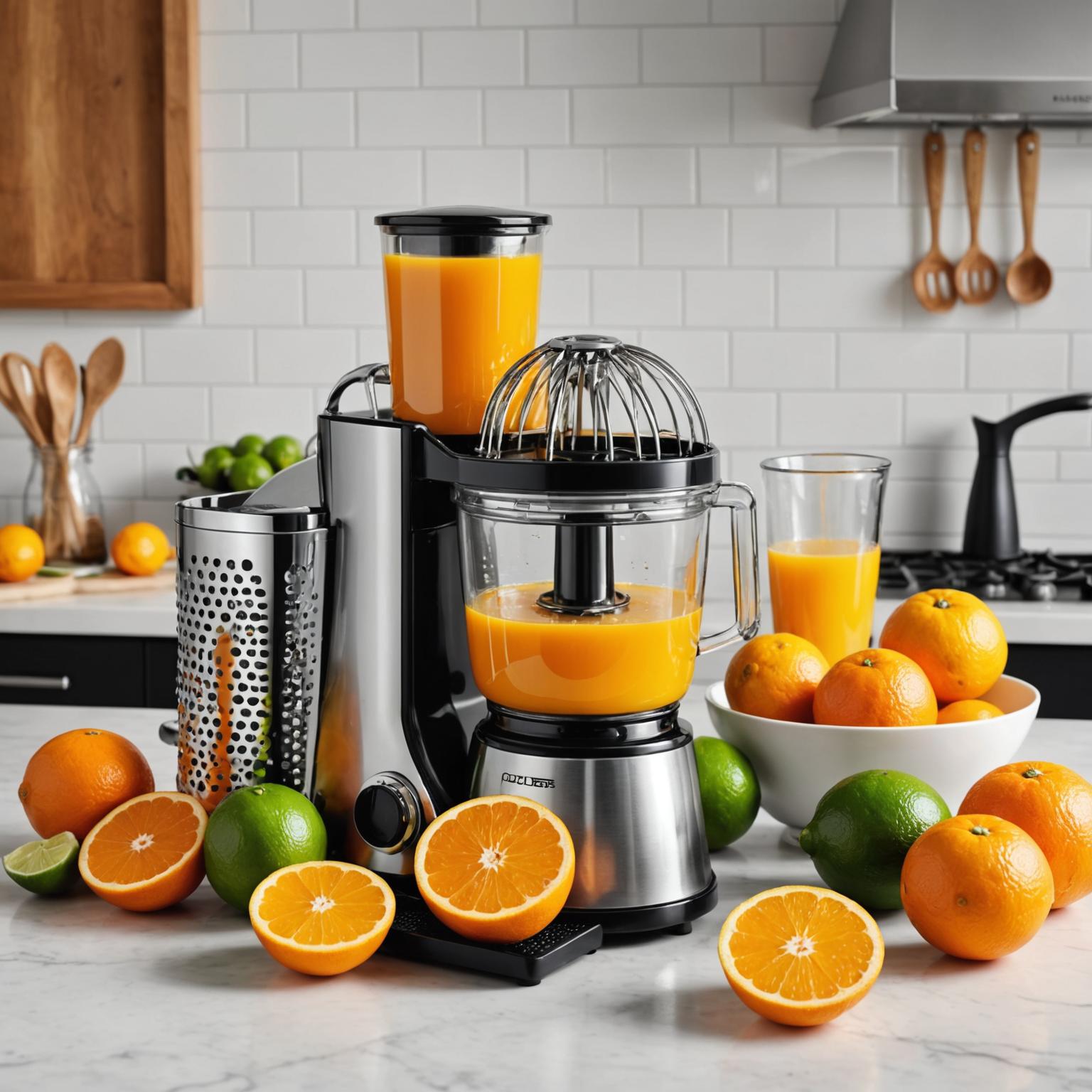
Citrus Juicer and Grater Set: Practical Guidance for Better Prep
A citrus juicer and grater set is a small kitchen tool combination with a clear purpose: extract juice efficiently, grate ingredients neatly, and reduce the number of separate tools needed for everyday cooking. The original product description highlights a vibrant yellow design, a citrus juicer, a grater, a measuring container, a non-slip base, a comfortable grip handle and a compact form. Those are useful features, but the real value depends on how the set performs during routine tasks such as juicing lemons, preparing orange juice, zesting citrus peel, grating cheese or shredding small vegetables.
This guide explains what to look for, how to use the set well, how to clean it safely and what questions buyers should ask before purchasing for home use, retail shelves or wholesale sourcing.
Key Takeaways
- A manual citrus juicer is best for small to medium quantities of lemon, lime or orange juice.
- A grater adds flexibility for zest, cheese, ginger, garlic and some vegetables, depending on blade design.
- A measuring container helps when recipes require accurate juice volume.
- Non-slip support and a comfortable handle can make repeated use safer and easier.
- For B2B sourcing, ask the supplier to confirm materials, packaging, care instructions and quality-control procedures rather than assuming specifications.
What This Set Is Designed to Do
The set combines two common preparation tasks: citrus juicing and grating. A citrus reamer presses into the cut side of fruit and helps release juice from the pulp. A grater provides a textured surface for creating fine or coarse shreds, depending on the design. The measuring container is especially practical because juice can be collected and checked without transferring it to another cup.
For home cooks, the main benefit is convenience. Lemon juice for salad dressing, orange juice for marinades, zest for baking and grated cheese for a quick meal can all be prepared with one compact set. For small cafes, cooking studios, gift sets or houseware retailers, the appeal is a familiar tool category that customers understand quickly.
Feature Checklist Before You Buy
Not every citrus juicer and grater set is the same. When comparing options, pay attention to practical details rather than appearance alone.
| Feature | Why It Matters | Question to Ask |
|---|---|---|
| Citrus reamer | Helps separate juice from pulp with less effort | Is it sized for lemons, limes, oranges or multiple fruit sizes? |
| Grater surface | Determines whether it works for zest, cheese or vegetables | What ingredients is the grater intended to handle? |
| Measuring container | Supports recipe accuracy and reduces extra dishes | Are the measurement marks easy to read and durable? |
| Non-slip base | Improves stability during pressing and grating | How does the base perform on wet countertops? |
| Handle design | Affects comfort during repeated use | Is the grip suitable for left- and right-handed users? |
| Compact storage | Matters in small kitchens and retail packaging | Do the components nest or stack neatly? |
How to Use the Citrus Juicer Effectively
Good juicing technique can improve yield without forcing the tool. Start with fresh fruit at room temperature when possible. Roll the fruit gently on the counter before cutting it in half; this helps loosen the internal segments. Place the cut side on the reamer and rotate with steady pressure. Avoid pressing so hard that the rind tears apart, because bitter oils from the peel can enter the juice.
- Wash the fruit before cutting, especially if you may also use the zest.
- Cut the citrus crosswise through the middle.
- Press and rotate the fruit over the reamer.
- Check the measuring container for the volume needed in your recipe.
- Remove seeds or excess pulp if your recipe requires a smoother liquid.
For lemons and limes, this method is useful for dressings, sauces, tea, cocktails and marinades. For oranges, it works best when only a small amount of juice is needed, rather than large-batch juicing.
How to Use the Grater Without Waste
The grater can be used for citrus zest, cheese or vegetables, depending on the sharpness and pattern of the grating surface. When zesting citrus, use light pressure and remove only the colored outer layer. The white pith underneath can taste bitter. Rotate the fruit as you work so you do not over-grate one spot.
For cheese, colder firm cheese usually grates more cleanly than soft cheese. For ginger or garlic, short strokes may provide better control. If the grater clogs, pause and tap it gently or rinse it before continuing. Do not use excessive force, because that can increase slipping and reduce control.
Cleaning, Drying and Storage
Cleaning should happen soon after use, especially when citrus juice or cheese is involved. Acidic juice can dry into sticky residue, while cheese can harden between grater teeth. Rinse the juicer and grater under warm water, then use a soft brush or sponge to clear pulp and small particles. If the supplier states that the set is dishwasher safe, follow the recommended rack placement and temperature guidance. If no dishwasher guidance is provided, hand washing is the safer default.
After washing, dry the pieces fully before storage. This helps prevent odors and keeps the grater surface ready for the next use. Store the set where the grater surface is not rubbing against hands or other utensils. If it nests inside the measuring container, make sure all parts are dry first.
When This Tool Is the Right Choice
A citrus juicer and grater set is most useful for cooks who often prepare fresh ingredients in small quantities. It suits apartment kitchens, family kitchens, baking prep, salad stations and simple beverage preparation. It is less suitable for commercial kitchens that need to juice large volumes every day; those settings may need a larger manual press or electric juicer.
The compact design mentioned in the original article is important because many buyers do not want another bulky appliance. A small manual set can be easier to store, faster to clean and more accessible for quick tasks.
Notes for Retailers and Wholesale Buyers
For B2B purchasing, avoid relying only on product photos or broad descriptions. Request a sample and verify how the set feels in actual use. Because material grade, packaging specifications, testing and compliance details are not provided in the original source, buyers should ask the supplier directly before placing orders.
- What materials are used for the juicer, grater, base and measuring container?
- Are care instructions included on the product, insert or packaging?
- Can the supplier provide packaging dimensions and carton information?
- What quality checks are performed for grater sharpness, handle fit and base stability?
- Are color options, branding options or retail packaging options available?
- What is the confirmed lead time, order quantity and after-sales process?
These questions help reduce misunderstandings and make the product easier to present accurately to end customers.
FAQ
Can one set handle both lemons and oranges?
Many manual citrus reamers can handle both, but performance depends on the reamer size and fruit size. Ask the supplier which fruit sizes the design is intended for.
Is the grater mainly for citrus zest?
It can be used for zest if the grating surface is suitable. It may also work for cheese or vegetables, but buyers should confirm intended uses and test a sample.
How do I avoid bitter citrus flavor?
When zesting, remove only the colored peel and avoid the white pith. When juicing, use steady pressure rather than crushing the rind aggressively.
Is a manual juicer better than an electric juicer?
For small quantities, a manual juicer is often faster to set up and easier to clean. For large quantities, an electric or lever press may be more efficient.
What should I check first when sourcing this product in bulk?
Start with materials, sample performance, packaging, care instructions and quality-control details. Do not assume specifications that the supplier has not confirmed in writing.
