




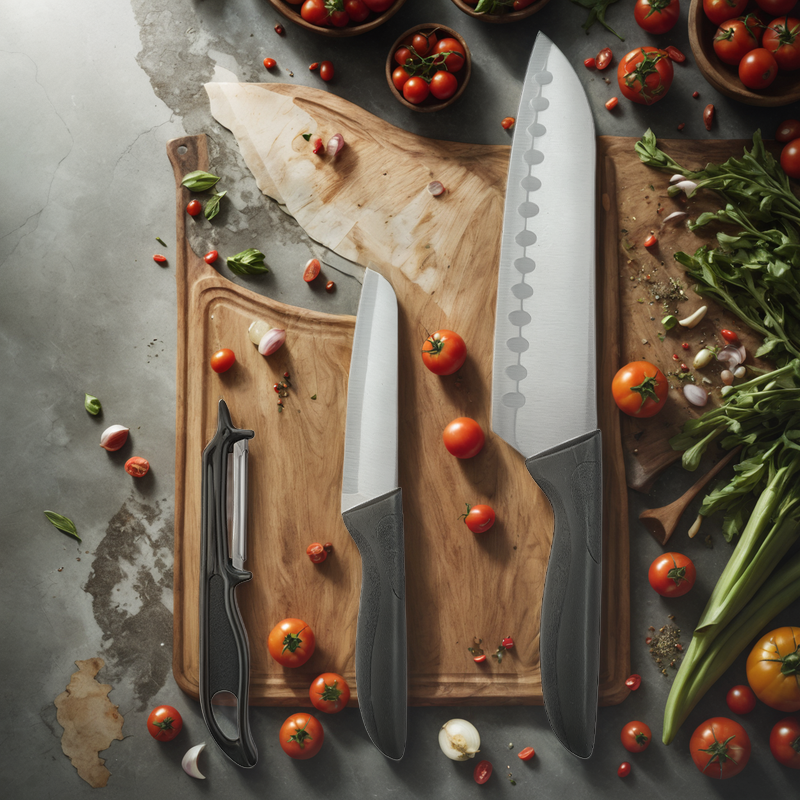
Essential Guide to Choosing a 3-Piece Knife Set
A well-chosen 3-piece knife set can cover most everyday food preparation without overcrowding a kitchen drawer. Instead of buying many specialized blades, many cooks start with a versatile medium knife, a smaller detail knife, and a reliable peeler. This combination is practical for vegetables, fruit, fish, herbs, and basic meal prep.
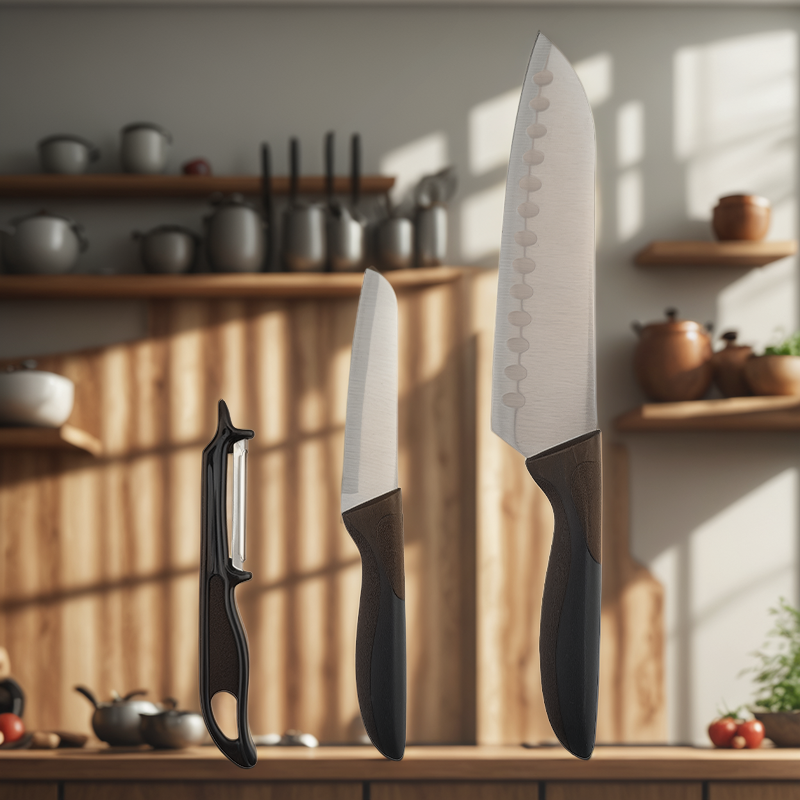
The original article highlights three core tools: a Santoku-style knife, a paring knife, and a peeler. This guide explains what each tool is best for, how to compare options, and how to care for the set so it remains safer and more useful over time.
Key Takeaways
- A 3-piece knife set is best when each tool has a clear purpose: general cutting, detail work, and peeling.
- A Santoku knife is useful for slicing, dicing, and chopping many everyday ingredients.
- A paring knife provides control for smaller tasks such as trimming, coring, and decorative cuts.
- A sharp peeler can save time on potatoes, carrots, apples, and similar produce.
- Handle comfort, blade sharpness, easy cleaning, and safe storage are more important than buying the largest set.
What Is Usually Included in a 3-Piece Knife Set?
A compact kitchen knife set often includes one main prep knife, one small precision knife, and one peeling tool. In the source article, the main knife is described as a Santoku knife, often around 7 inches. The smaller knife is described as a paring knife, often around 4 inches. The third piece is a peeler for removing skins from produce.
This selection makes sense for home kitchens, small apartments, dorm cooking, and secondary prep stations because it avoids duplication. A large knife block may look complete, but many pieces can go unused. A focused set is easier to clean, store, and learn to use properly.
The Santoku Knife: The Everyday Workhorse
The Santoku knife is a Japanese-style multipurpose kitchen knife commonly used for slicing, dicing, and chopping. In a 3-piece set, it usually serves as the main blade for daily prep. It is especially useful for vegetables, boneless proteins, herbs, and fruit that require controlled, repeatable cuts.
The original article notes that many Santoku blades have scalloped indentations along the blade. These indentations are intended to reduce friction and help limit food sticking during cutting. This can be helpful when slicing moist ingredients such as cucumbers, potatoes, or fish. However, performance still depends on sharpness, technique, and the condition of the cutting board.
When evaluating a Santoku knife, hold it if possible. The handle should feel stable, not slippery, and comfortable for both pinch grip and standard grip. A blade that feels balanced is easier to guide and less tiring during longer prep sessions.
The Paring Knife: Control for Small Tasks
A paring knife is the detail tool in the set. The source article describes a compact knife, often around 4 inches, used for peeling fruit and vegetables, trimming, and decorative work. It is not designed to replace the main knife; it is designed for jobs where a shorter blade gives better control.
Common uses include hulling strawberries, removing blemishes from produce, segmenting citrus, deveining shrimp, and making small garnish cuts. For safety, use the paring knife slowly and keep fingers away from the cutting path. If a task requires force, it may be better suited to the Santoku knife on a stable cutting board.
The Peeler: A Simple Tool That Affects Workflow
A peeler may seem less important than a knife, but it can make a visible difference in prep speed and consistency. A sharp peeler removes skins from potatoes, carrots, apples, cucumbers, and similar produce with less waste and less effort. A dull peeler can slip, dig too deeply, or require repeated passes.
Look for a peeler that feels secure in the hand and moves smoothly across curved surfaces. If multiple people use the kitchen, choose a handle shape that works for different hand sizes. After use, rinse food residue from the blade area promptly, because starch and fruit sugars can dry in small gaps.
Comparison Checklist for Selecting a Set
Before choosing a 3-piece knife set, compare practical details rather than judging by appearance alone. The following checklist can help home cooks and small food-service buyers ask better product questions.
| Feature to Check | Why It Matters | Questions to Ask |
|---|---|---|
| Main knife size and shape | Determines whether the set can handle daily chopping and slicing. | Is the Santoku comfortable for your cutting style and board size? |
| Paring knife control | Affects precision when trimming, peeling, or coring. | Does the handle allow safe control during small cuts? |
| Peeler sharpness | Influences speed, waste, and ease of use. | Does it glide smoothly over firm and curved produce? |
| Handle comfort | Reduces fatigue and improves stability. | Is the handle secure when hands are slightly wet? |
| Cleaning and storage | Helps maintain hygiene and edge condition. | Can the pieces be cleaned easily and stored safely? |
How to Use the Set Safely and Efficiently
Sharp knives are generally safer than dull knives because they require less force, but only when used with attention. Place a damp towel under the cutting board if the board slides. Keep the blade tip and edge pointed away from your body. Use a claw grip with the guiding hand so fingertips are tucked back.
- Use the Santoku knife on a cutting board for larger ingredients and repeated cuts.
- Use the paring knife for hand-held detail work only when the ingredient is small and stable.
- Use the peeler for thin, controlled skin removal instead of forcing a knife to do the same job.
- Wipe blades between ingredients to reduce slipping and flavor transfer.
- Store knives where the edge cannot hit other utensils or hands.
Care Tips to Keep the Set Useful
Knife care does not need to be complicated. Wash the blade and handle soon after use, especially after cutting acidic foods such as citrus or tomatoes. Dry each tool before storage. Avoid leaving knives loose in a sink, where they can be damaged or cause injury.
Use cutting boards made for kitchen knives rather than glass, stone, or ceramic surfaces, which can dull edges quickly. If the knives begin to drag or crush ingredients instead of cutting cleanly, they may need honing or sharpening. Follow the supplier’s care guidance for the specific product, especially if there are instructions about dishwashing, sharpening angle, or storage.
Who Benefits Most from a 3-Piece Knife Set?
This type of set is well suited to people who want a small, functional collection rather than a large knife block. It works for beginners learning basic knife skills, home cooks with limited storage, and households that prepare fresh produce regularly. It can also be useful as a compact gift when the recipient needs practical tools rather than many specialized items.
For commercial or wholesale sourcing, buyers should not assume details that are not provided. Ask suppliers about blade material, handle material, packaging, care instructions, edge retention expectations, sample availability, customization options, and any testing or compliance documentation relevant to the target market. Clear questions reduce misunderstandings and help compare offers fairly.
Practical FAQ
Is a 3-piece knife set enough for daily cooking?
For many everyday meals, yes. A Santoku knife, paring knife, and peeler can handle most chopping, slicing, trimming, and peeling tasks. Cooks who regularly prepare bread, large roasts, or filleting tasks may eventually add specialized knives.
What is the Santoku knife best used for?
It is best for general preparation such as slicing vegetables, chopping herbs, dicing fruit, and cutting boneless proteins. Its broad blade also helps transfer chopped ingredients from the board to a pan or bowl.
Should knives be washed in a dishwasher?
Check the supplier’s care instructions. Hand washing and drying are often the safest habits for preserving edges, handles, and appearance, especially when product-specific dishwasher guidance is not available.
How often should the knives be sharpened?
That depends on use, cutting surface, and steel quality. If a knife slips on tomato skin, crushes herbs, or requires extra pressure, it is time to hone or sharpen it according to the manufacturer’s recommendations.
What should wholesale buyers confirm before ordering?
Buyers should ask about materials, dimensions, packaging, branding options, sample policy, lead time, quality checks, care instructions, and market-specific documentation. Do not rely on assumptions when comparing suppliers.
