




Vegetable Slicer and Grater Set: Practical Prep Guide
A handheld vegetable slicer and grater set is a simple way to make everyday food preparation more consistent. Instead of pulling out a large appliance for a cucumber salad, carrot garnish, grated ginger marinade or citrus zest, a compact manual tool can often do the job with less setup and less cleanup. The original product description highlights a handheld vegetable slicer with a pastel green body, stainless steel blade and ergonomic handle, plus a grater trio designed for different textures. This guide explains how to choose the right tool for each task, how to use it safely and what to check before buying.
Key Takeaways
- Use the slicer for even pieces of cucumbers, carrots, zucchini, potatoes and similar vegetables.
- Choose the grating surface based on texture: coarse for shredding, fine for ginger or zest, and slicing slots for thin cuts.
- Stainless steel blades and teeth should be cleaned promptly and dried well to maintain performance.
- Comfort, grip, storage space and cleaning access matter as much as sharpness.
What This Type of Kitchen Tool Is Best For
A vegetable slicer is most useful when you want similar thickness from piece to piece. Uniform slices cook more evenly and look better in salads, bowls and garnishes. The source product mentions common ingredients such as cucumber, carrot and zucchini, all of which are good matches for a handheld slicer because they are firm enough to guide across a blade without collapsing.
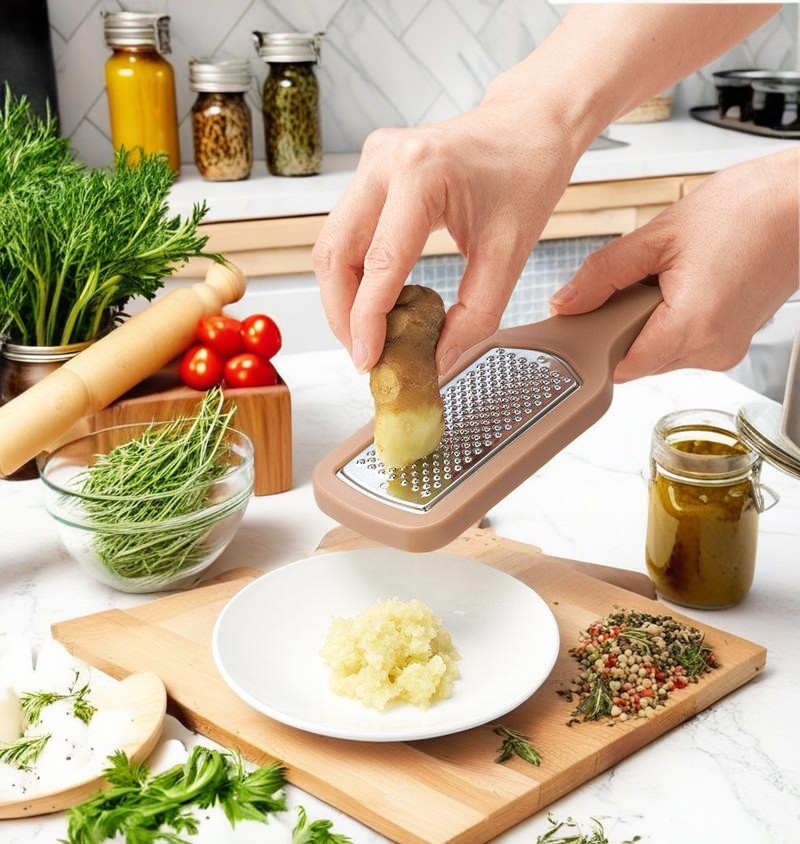
A grater performs a different job. It breaks ingredients into shreds, flakes or fine particles. A ginger grater, for example, helps release aroma and juice from fibrous roots. Larger grating holes are more suitable for cheese or carrots, while ultra-fine perforations are useful for citrus peel, nutmeg or other strong ingredients where a little goes a long way.
Understanding the Slicer and Grater Options
The original article describes a trio of handheld tools: a green slicer with a double-slot stainless steel blade, a lime-colored grater with larger texture holes, and a yellow grater with ultra-fine perforations. That combination covers many everyday preparation needs without requiring a bulky countertop unit. For a home cook, the benefit is not only speed; it is also control. You can prepare a small amount directly over a cutting board, bowl or plate.
| Tool or Surface | Best Uses | What to Check Before Use |
|---|---|---|
| Handheld vegetable slicer | Thin slices of cucumber, carrot, zucchini or potato | Blade sharpness, stable grip and a clear cutting path |
| Coarse grater | Shredded carrot, cheese and similar ingredients | Hole size, food release and ease of cleaning between holes |
| Fine ginger grater | Ginger, garlic, citrus zest or small amounts of spice | Fine teeth, comfortable pressure angle and safe hand position |
| Ultra-fine grater | Citrus peel, nutmeg and delicate finishing ingredients | Whether it removes only the surface layer without excess pith |
How to Choose a Vegetable Slicer Set
When comparing vegetable slicer sets, do not look only at color or the number of pieces included. The best choice depends on the foods you prepare most often. If you frequently make salads, pickled vegetables or quick stir-fry ingredients, slicing performance should be the priority. If you cook with ginger, cheese, citrus or spices, the grating surfaces deserve equal attention.
- Blade and tooth material: The source describes stainless steel blades and teeth. Ask the seller how the metal should be cleaned and whether it is intended for dishwasher use if that matters to you.
- Handle comfort: An ergonomic handle can reduce hand fatigue, especially when grating fibrous ingredients such as ginger.
- Tool size: Compact and lightweight tools are easier to store, but they should still provide enough surface area for the ingredient.
- Cleaning access: Very fine holes can trap food. Choose a design that can be rinsed or brushed without complicated disassembly.
- Storage safety: Sharp edges should not be left loose in a drawer where they can cut hands or damage other utensils.
Safe Use Tips for Everyday Prep
Manual slicers and graters are simple tools, but sharp edges require attention. Always place the tool on a stable surface or hold it at a controlled angle over a bowl. Keep fingertips away from the blade path and slow down as the ingredient becomes shorter. If a food holder or guard is supplied, use it according to the supplier instructions. If no guard is included, leave a small end piece rather than trying to slice every last bit.
For long vegetables such as cucumbers and zucchini, use smooth, steady strokes. For hard roots such as carrots, avoid twisting or forcing the ingredient sideways, because that can produce uneven cuts or cause slipping. For ginger, peel only the amount you need and grate with light pressure; pressing too hard may clog the teeth and make cleaning harder.
Use-and-Care Checklist
- Rinse the tool soon after use, before vegetable fibers, cheese or starch dries onto the surface.
- Use a soft brush to clean grater holes and fine perforations from the back side when possible.
- Dry the stainless steel blade or teeth thoroughly before storage.
- Store the slicer and graters where the cutting surfaces are protected from accidental contact.
- Inspect the blade and handle regularly. Stop using the tool if the handle is loose, cracked or difficult to control.
Care instructions can vary by supplier, especially regarding dishwasher suitability. If the product listing or packaging does not clearly state dishwasher guidance, hand washing is the safer default for maintaining sharp edges and handle finish.
Common Kitchen Uses
A vegetable slicer set earns its place when it is used for small, frequent tasks. Thin cucumber slices work well for salads, sandwiches and cold side dishes. Carrot ribbons or shreds can be added to slaws, noodle bowls and stir-fries. Zucchini slices can be used for quick sautés or layered vegetable dishes. Potatoes can be sliced for small batches, although very hard or large potatoes may require extra care and a stable grip.
The grater trio adds more range. Coarser holes can prepare cheese toppings or shredded vegetables. Fine teeth are useful for ginger in sauces, marinades and soups, where you want flavor without large chunks. Ultra-fine perforations can remove citrus zest for baking, dressings or finishing dishes. In each case, the goal is to match the cutting surface to the texture you want, not to use one tool for every job.
Questions to Ask Before Buying
Because product listings do not always include every detail, ask practical questions before purchasing, especially if you are buying for a shared kitchen, cooking class or hospitality setting. What parts are stainless steel? Is the handle material heat-resistant or dishwasher-safe? Are blade covers or storage cases included? What cleaning method does the supplier recommend? Are replacement parts available if a guard or cover is lost? Clear answers help you select a tool that fits your real kitchen routine.
FAQ
Can a handheld vegetable slicer replace a knife?
It can replace a knife for some repetitive slicing tasks, but not all cutting. You will still need a knife for trimming ends, cutting large vegetables into manageable pieces and tasks that require custom shapes.
What foods should I avoid using with a small slicer?
Avoid foods that are too soft, slippery, frozen or too large to control safely. Very hard ingredients may require extra pressure, which increases the risk of slipping.
How do I grate ginger without clogging the tool?
Use fresh ginger, grate with moderate pressure and rinse the grater soon after use. If fibers collect on the teeth, brush gently from the back side.
Is stainless steel always dishwasher-safe?
Not necessarily. Stainless steel parts may tolerate water well, but handles, finishes and sharp edges can be affected by dishwasher heat or detergent. Follow the supplier care instructions.
Which grater surface is best for citrus zest?
An ultra-fine surface is usually best because it removes a thin layer of peel. Avoid grating deeply into the white pith, which can taste bitter.
Final Thoughts
A vegetable slicer and grater set is most valuable when it solves everyday prep problems: consistent slices, fast shredding, fine ginger and clean citrus zest. Look for a comfortable grip, appropriate stainless steel cutting surfaces, easy cleaning and safe storage. With careful use and routine maintenance, these compact tools can help make regular cooking more organized and predictable without taking up much kitchen space.
