




Best Silicone Spoon for Modern Cooking: Practical Selection Guide
A good silicone spoon is one of the most frequently used tools in a modern kitchen. It can stir soup, fold batter, serve vegetables, toss salad, and scrape the sides of a pan without the sharp edge of metal utensils. The original Bonet Houseware article introduced the Happy Chef Spoon, the Happy Spoon, and an ergonomic silicone ladle as cheerful, practical choices for daily cooking. This rewritten guide focuses on how to choose, use, and care for this type of utensil so buyers can make a more informed decision.
Key Takeaways
- Silicone spoons are valued for flexibility, light weight, easy cleaning, and gentle contact with delicate cookware surfaces.
- For coated cookware, a silicone spoon is often preferable to metal because it is less likely to scratch during normal stirring and serving.
- Handle comfort, bowl shape, storage hole, and intended use matter as much as color or decorative design.
- Product details such as exact heat rating, dishwasher suitability, and material documentation should be confirmed with the seller before bulk or repeat purchasing.
Why Silicone Spoons Fit Modern Cooking
Modern home cooking often involves a mix of cookware: nonstick pans, ceramic-coated pots, stainless steel saucepans, glass bowls, and serving dishes. A silicone spoon can move between these tasks without feeling too specialized. It is useful for stirring thick stews, mixing sauces, serving rice, and folding soft ingredients that can break apart under a rigid metal spoon.
The original article described silicone utensils as functional, durable, stylish, lightweight, and easy to clean. Those qualities explain why they have become common in household kitchens. A silicone spoon is not only about cooking performance; it is also about reducing friction in daily routines. If a utensil is comfortable to hold, easy to rinse, and simple to store, it is more likely to be used every day.
What to Look For in the Best Silicone Spoon
When comparing silicone spoons, start with the task you perform most often. A deep spoon is better for serving soups and sauces, while a flatter spoon works well for stirring and scraping. A ladle shape is useful for broths, stews, and portioning liquid dishes. The ergonomic silicone ladle mentioned in the original article is a good example of how shape affects use: a comfortable grip and controlled handling can make serving heavier soups easier.
- Head shape: Choose a broad spoon for mixing and a deeper bowl for serving liquids.
- Handle design: Look for a grip that feels secure when wet or when stirring thicker food.
- Edge flexibility: A slightly flexible edge helps scrape bowls and pan corners.
- Storage: A hanging hole, noted in the original article, is useful for small kitchens and utensil rails.
- Cleaning: Smooth surfaces are easier to wash because fewer food particles remain in seams or decorative details.
Silicone Spoon, Ladle, or Traditional Utensil?
Not every kitchen task requires the same utensil. The table below compares common options so home cooks can choose based on use rather than appearance alone.
| Utensil Type | Best For | What to Check |
|---|---|---|
| Silicone spoon | Stirring sauces, serving vegetables, mixing soft foods, scraping bowls | Flexibility, handle comfort, bowl size, ease of cleaning |
| Silicone ladle | Soups, stews, broths, chili, and liquid portions | Depth, balance when full, pouring control, grip shape |
| Wooden spoon | General stirring and traditional cooking tasks | Drying care, odor absorption, cracking over time |
| Metal spoon | Serving from stainless steel or durable cookware | Potential scratching on coated surfaces and heat transfer to handle |
Using Silicone with Coated and Ceramic Cookware
The original article notes that silicone utensils are safe for delicate surfaces such as ceramic-coated cookware. In practical terms, silicone is commonly chosen because it is softer than metal and can reduce the risk of visible scratches during stirring. However, careful use still matters. Avoid forcing the spoon against rough pan edges, cutting food with the spoon, or using it as a lever to lift heavy stuck-on food.
If cookware protection is your main concern, choose a spoon with smooth edges and no sharp molding marks. Before first use, inspect the utensil head and handle. If you feel rough seams, ask the supplier or seller whether that is normal for the item. A quality kitchen tool should feel comfortable and controlled in the hand.
Design Details: Happy Chef Spoon and Happy Spoon
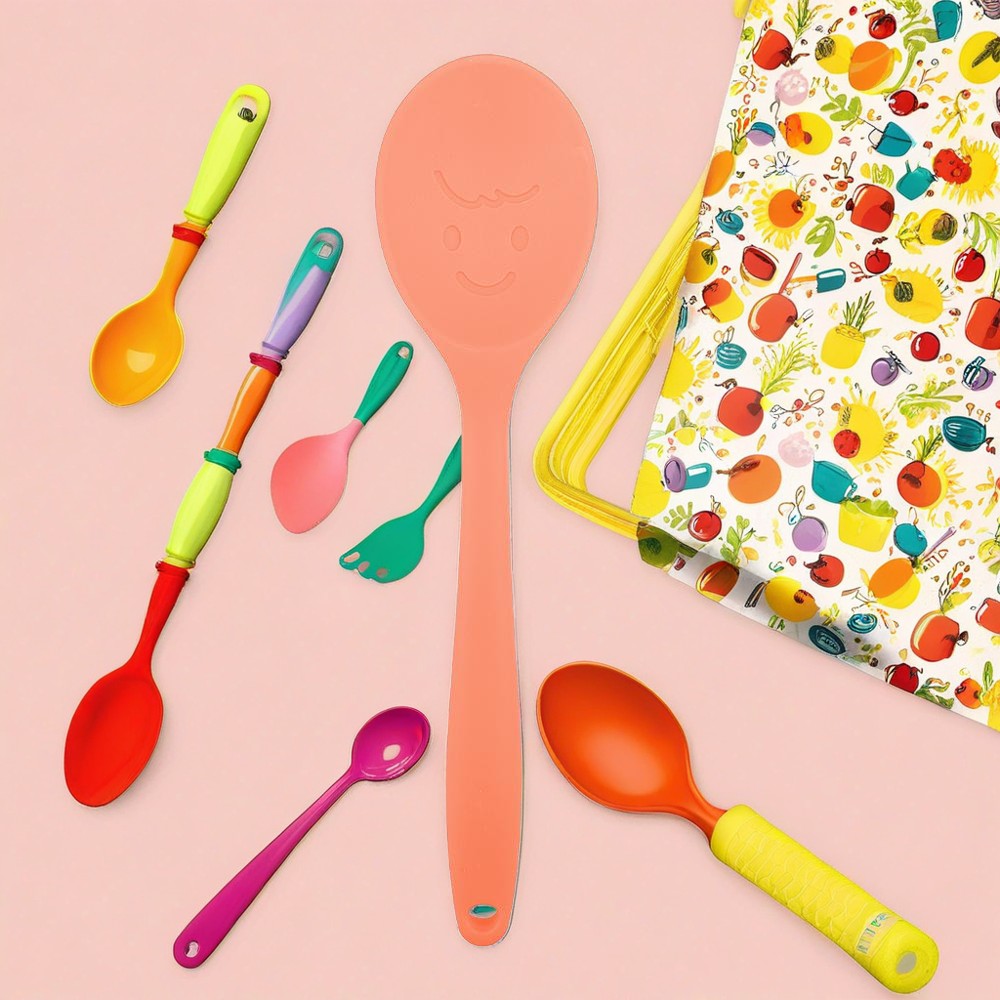
The original Bonet Houseware article highlights the Happy Chef Spoon and Happy Spoon as colorful silicone utensils with cheerful face details. It also mentions a coral-colored Happy Spoon with an embossed happy face. These design elements can make the tool easy to identify in a drawer or utensil holder, and they may appeal to households that prefer kitchen accessories with a playful look.
Still, design should not replace function. A decorative spoon should also be practical: the bowl should be shaped for real food preparation, the handle should be comfortable, and the hanging hole should be placed where it does not weaken the grip. If you are buying for family use, consider whether all cooks in the household can hold the utensil comfortably.
Care and Cleaning Tips
Silicone spoons are generally easy to clean, and the original article mentions resistance to staining and easy cleaning. To keep any silicone utensil in better condition, clean it soon after cooking, especially after sauces with strong color or aroma. Use warm water, mild dish soap, and a soft sponge. Avoid abrasive pads that may roughen the surface.
- Wash before first use to remove dust from storage or shipping.
- Rinse promptly after tomato sauce, curry, or heavily seasoned dishes.
- Dry fully before storing in a drawer or utensil crock.
- Keep away from open flame and direct contact with heating elements.
- Ask the seller whether the item is dishwasher suitable if that matters to your routine.
Questions to Ask Before Buying
For individual household purchases, feel and shape may be enough to guide a choice. For retailers, hospitality buyers, or anyone sourcing silicone utensils in larger quantities, ask more specific questions before placing an order. Do not assume details that are not stated in the product listing.
- What is the exact material description, and is supporting documentation available?
- What is the stated heat-resistance range?
- Is the utensil one-piece or assembled from multiple parts?
- Is it suitable for dishwashers, and under what conditions?
- Are color options, packaging options, and replacement availability consistent over time?
Practical FAQ
Is a silicone spoon better than a wooden spoon?
It depends on the task. Silicone is easier to rinse, flexible for scraping, and gentle on coated cookware. Wood feels traditional and sturdy but needs more drying care and can absorb odors.
Can I use a silicone spoon in hot soup?
Silicone spoons are commonly used for soups and stews, but the exact heat limit should be confirmed from the product information or supplier. Avoid resting any utensil directly on a burner or open flame.
Will a silicone spoon stain?
The original article describes silicone as resistant to staining, but strong pigments can affect some utensils over time. Rinse promptly after cooking with tomato, turmeric, chili oil, or similar ingredients.
What shape should I choose for everyday cooking?
For general use, choose a medium-depth spoon with a comfortable handle and a slightly flexible edge. If you often serve soup, add a silicone ladle as a separate tool.
Are decorative silicone spoons practical?
They can be, as long as the design does not interfere with grip, cleaning, or food handling. Check the bowl shape, handle balance, and storage hole before choosing based on appearance.
