




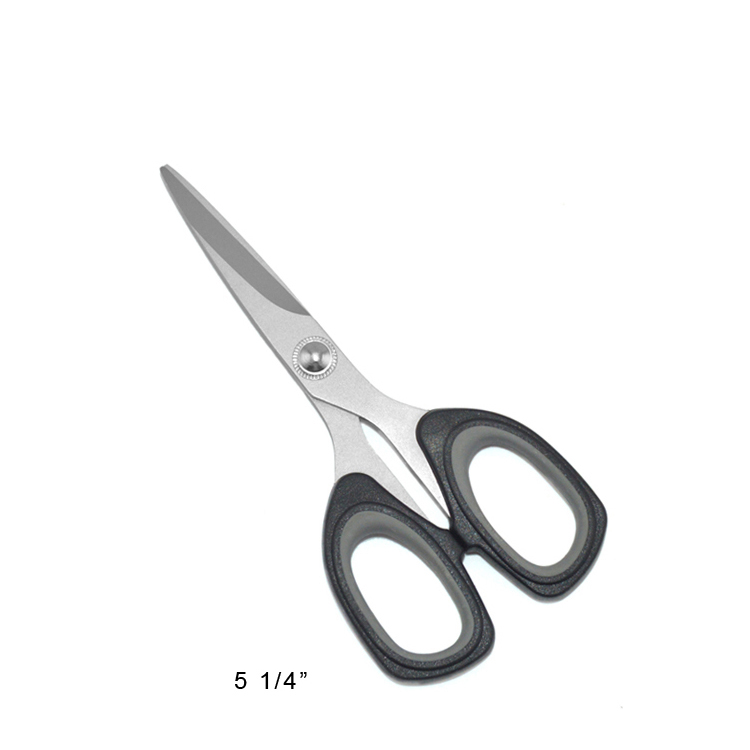
Experience Precision with OEM Scissors with Soft Handle
Scissors with a soft handle are designed for buyers who need more than a basic cutting tool. For household ranges, stationery assortments, craft kits, sewing accessories, and promotional product lines, the handle feel can strongly influence repeat use and customer satisfaction. The original XeroCut Elite description highlights a soft thermoplastic elastomer handle, a non-slip grip, stainless steel blades, and smooth cutting for fabric, paper, and thin plastic. Those features make this type of product relevant for distributors, retailers, and OEM buyers comparing everyday scissors for private label or wholesale programs.
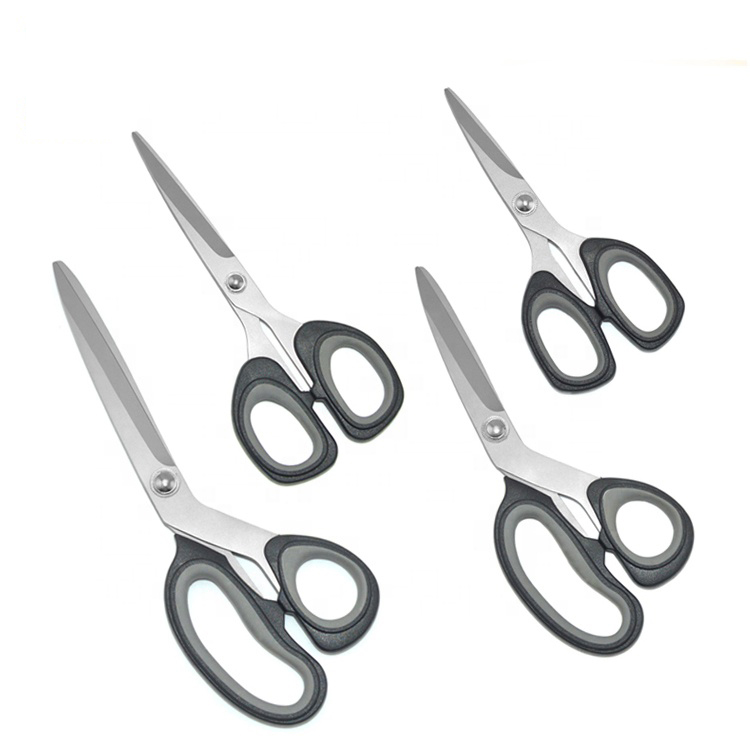
Key Takeaways
- Soft-handle scissors are best evaluated by grip comfort, blade alignment, cutting feel, and consistency across samples.
- For OEM sourcing, buyers should confirm materials, available customization, packaging options, inspection standards, lead time, and MOQ directly with the supplier.
- A good household scissors range should match real use cases such as paper, fabric, crafts, kitchen packaging, and thin plastic.
- Do not judge scissors by appearance alone; test repeated cutting, pivot smoothness, and handle comfort before placing a bulk order.
Why Soft Handles Matter for Household Scissors
A soft handle is not only a comfort detail. It affects control, cutting stability, and the user’s willingness to keep using the same pair of scissors during repeated tasks. The original product description notes a handle made from thermoplastic elastomer, a material commonly used when a softer touch and better grip are required. For household buyers, this can be useful when scissors are used by different family members for packaging, paper, labels, fabric projects, or school tasks.
For B2B buyers, soft handles also help create a clearer product tier. A standard hard-handle scissors may suit entry-level assortments, while a soft-grip version can be positioned for comfort-oriented household, office, craft, or sewing categories. The decision should be based on target retail price, expected usage, packaging format, and the level of differentiation needed in the product line.
Blade Performance: What Buyers Should Check
The source article describes industrial-grade stainless steel blades designed to cut fabric, paper, and thin plastic with minimal effort. When sourcing, treat those applications as testing scenarios. Ask for samples and cut the same materials repeatedly, not just once. A blade can feel sharp during the first cut but lose smoothness if the edge finish, alignment, or pivot tension is inconsistent.
Useful test materials include copy paper, kraft paper, light cardboard, cotton fabric, ribbon, plastic packaging film, and thin blister packaging. Check whether the blades push material away, snag fabric threads, or leave ragged paper edges. For household scissors, a clean and predictable cut matters more than aggressive sharpness alone.
OEM Sourcing Checklist for Soft-Handle Scissors
OEM scissors sourcing should be handled with a structured checklist. Before requesting a quotation, prepare your target market, application, expected packaging, branding needs, and order forecast. This helps the supplier recommend a suitable product instead of quoting only the lowest-cost option.
| Checkpoint | What to Review | Questions to Ask the Supplier |
|---|---|---|
| Handle material | Soft touch, grip security, odor, color consistency | What handle material is used, and can color be customized? |
| Blade material | Cutting feel, corrosion resistance expectations, edge finish | What blade material options are available for this model? |
| Pivot system | Smooth opening and closing, blade alignment | How is pivot tension controlled during production? |
| Cutting tests | Paper, fabric, thin plastic, packaging materials | Can samples be tested against the buyer’s target materials? |
| Branding | Logo placement, handle color, packaging artwork | Which OEM branding methods are available? |
| Quality control | Appearance, sharpness, alignment, safety of tips and edges | What inspection steps are used before shipment? |
| Commercial terms | MOQ, lead time, packing quantity, carton details | What are the current MOQ, delivery time, and packing options? |
Evaluating Comfort, Grip, and Hand Strain
The original article mentions that the soft handle provides a non-slip grip and helps reduce hand strain during extended use. To validate this for your own product program, ask several people to test the sample. A purchasing manager, a craft user, a warehouse worker, and a home user may all notice different issues. Some users prefer a thicker grip, while others want a lighter tool that opens easily.
During testing, pay attention to pressure points around the thumb and fingers. The handle should not feel sharp at the inner edges, and the grip should remain stable when hands are dry. If the scissors will be marketed for school, craft, or sewing use, also consider left-hand comfort, handle opening size, and whether the tool feels balanced during detailed cutting.
Common Applications for OEM Household Scissors
Soft-handle scissors can fit several product categories, but the best version depends on the intended user. A household product line may prioritize general-purpose cutting, while a craft assortment may need better control for curves and small shapes. Office buyers may focus on paper and packaging, while sewing accessory buyers will care more about clean fabric performance.
- Home use: Opening packages, cutting labels, trimming paper, and light daily tasks.
- Craft use: Cutting card, ribbon, felt, fabric scraps, and decorative materials.
- Office use: Paper, envelopes, tape, mailers, and thin plastic sleeves.
- Retail multipacks: Mixed household scissors sets where comfort grip helps differentiate the range.
- Private label programs: Branded scissors with custom packaging for supermarkets, hardware stores, and home goods channels.
How to Compare Samples Before Bulk Ordering
Sample comparison should be documented rather than based on a quick impression. Create a simple scoring sheet for sharpness, smoothness, grip comfort, appearance, packaging, and consistency. If you receive multiple samples, label them and test each one on the same materials in the same order.
Open and close each pair at least 30 to 50 times to check for stiffness, looseness, or rough pivot movement. Inspect the blade tips and the area where the blades meet. If the source product uses an innovative pivot system, as described in the original article, ask the supplier to explain how that system improves alignment and whether it is standard for bulk production. This keeps the discussion practical and avoids relying only on marketing language.
Packaging and Branding Questions for OEM Buyers
Packaging can change how scissors are perceived at retail. A blister card may show the handle design clearly, while a paper card or box may support a more sustainable presentation if available from the supplier. Buyers should ask what standard packaging is offered and whether custom artwork, barcode placement, warning text, and multilingual labels can be supported.
For branding, confirm whether the logo can be applied to the blade, handle, packaging, or a combination of these. Also ask for artwork requirements, color matching process, sample approval steps, and whether packaging dimensions affect shipping cost. These details should be confirmed in writing before a purchase order is issued.
Use and Care Guidance for End Customers
Even well-made household scissors last longer when used correctly. If you are building a private-label product page or retail package, include simple care instructions. Recommend wiping blades clean after cutting adhesive materials, keeping scissors dry after use, and storing them away from children. Users should avoid cutting wire, thick hard plastic, or materials beyond the intended household scope unless the supplier confirms suitability.
For fabric and craft users, it is helpful to dedicate one pair to fabric and another to paper or packaging. Paper can dull cutting edges over time, which may reduce fabric-cutting performance. Clear use guidance can reduce complaints and help customers select the right tool for the task.
FAQ
What makes soft-handle scissors different from regular scissors?
Soft-handle scissors use a more comfortable grip surface that can improve control during repeated cutting. The source product description identifies thermoplastic elastomer as the handle material and notes a non-slip grip.
Can OEM scissors be customized for private label?
Often, OEM programs may include options such as color, logo, and packaging, but buyers should confirm available customization methods, MOQ, lead time, and artwork requirements with the supplier.
What materials should household scissors be tested on?
For this type of scissors, useful tests include paper, fabric, ribbon, light cardboard, plastic film, and thin plastic packaging. Use the materials most relevant to your target customers.
How can buyers judge blade quality before ordering?
Request samples, perform repeated cutting tests, inspect blade alignment, check pivot smoothness, and compare consistency across multiple pieces. Ask the supplier how quality is inspected before shipment.
Are stainless steel blades always the best choice?
The original product description states stainless steel blades. Buyers should still ask which stainless steel option is used, what finish is available, and whether the blade performance matches the intended application.
