




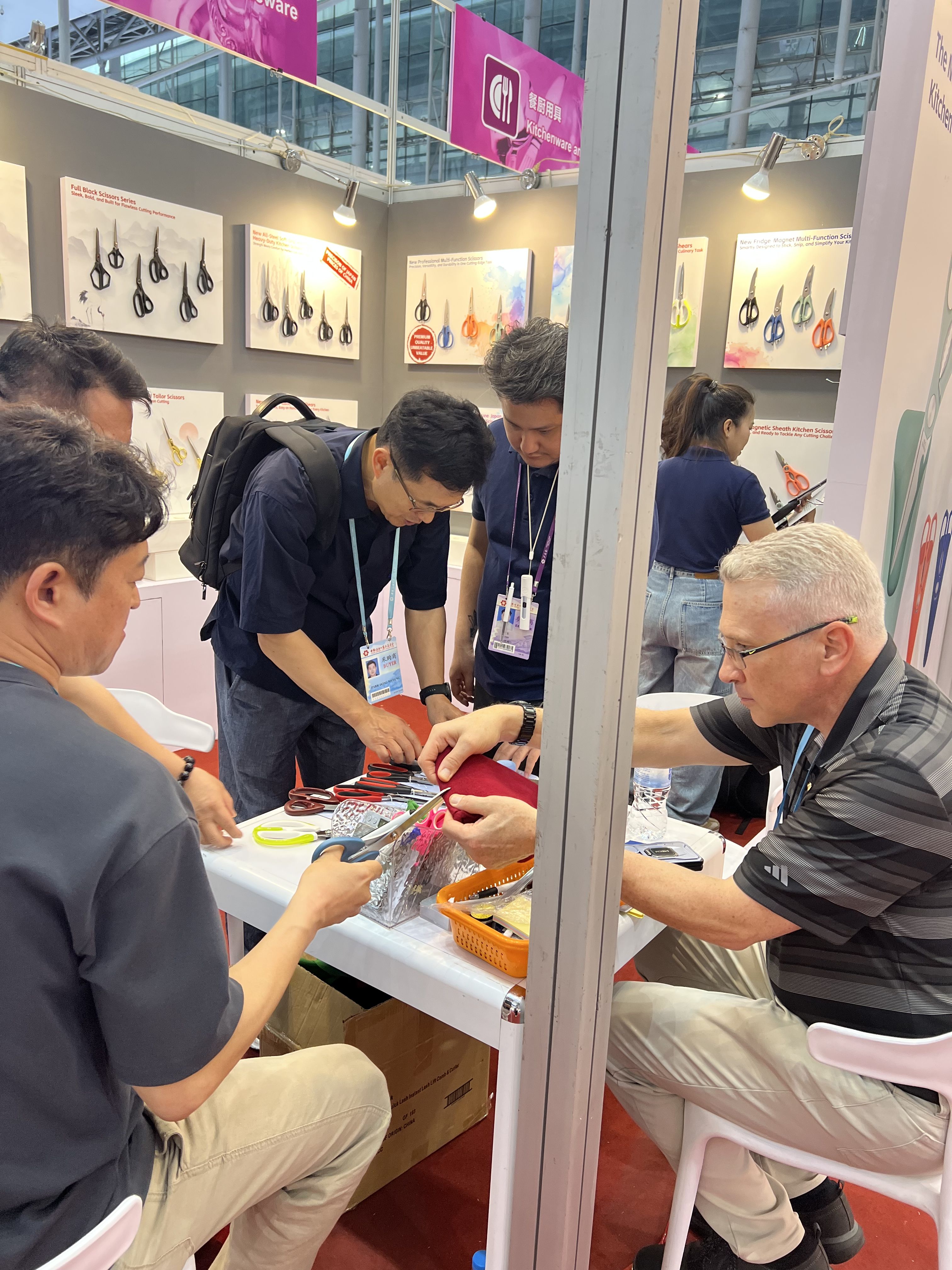
Canton Fair Kitchenware and Scissors: Practical Sourcing Guide
The Canton Fair is widely used by international buyers to compare household products, kitchen tools and potential suppliers in one place. For kitchenware buyers, scissors and kitchen shears are a useful category to examine because they reveal a great deal about a supplier's approach to materials, ergonomics, finishing, packaging and quality control. A pair of scissors may look simple, but small differences in blade alignment, handle comfort and hinge stability can affect daily performance.
The original article highlighted a collection of kitchenware and scissors shown in a Canton Fair context, including durable blades, ergonomic handles, models for kitchen and everyday use, colorful transparent handle accents, compact magnetic multifunction scissors, and options intended for both left-handed and right-handed users. This rewritten guide keeps those useful points while focusing on how buyers can assess such products for retail, wholesale, OEM or promotional sourcing.
Why Scissors Matter in Kitchenware Sourcing
Kitchen scissors sit at the intersection of utility, safety and repeat use. Consumers may use them for opening packaging, trimming herbs, cutting poultry, preparing craft materials or handling general household tasks. For B2B buyers, this makes the category attractive but also demanding. A product that feels sharp during a short booth demonstration may not perform well after repeated use unless the blade geometry, pivot, handle design and finishing are consistent.
At a trade fair, the goal is not only to find an appealing design. Buyers should determine whether a supplier can deliver consistent quality, clear communication, appropriate packaging and reliable production documentation. If OEM customization is required, buyers should also confirm which design elements can be changed and which ones are fixed by existing tooling.
Core Product Features to Evaluate
The original description mentioned high-quality blades and ergonomic design. Those are important starting points, but they should be tested rather than accepted as general claims. Ask to handle several samples from the same model. Open and close each pair slowly. The motion should feel smooth, with no grinding, looseness or sudden stiffness. The blade tips should meet cleanly, and the cutting edge should not show visible burrs or rough finishing.
- Blade performance: Test cutting on paper, thin packaging and, where appropriate, food-safe demonstration material.
- Handle comfort: Check grip shape, finger clearance and pressure points during repeated opening and closing.
- Pivot stability: Look for wobble, uneven tension or screws that loosen too easily.
- Finish quality: Inspect edges, handle molding lines, color consistency and surface scratches.
- Storage design: For magnetic multifunction scissors, ask how the magnetic feature is intended to be used and packaged safely.
Matching Models to Use Cases
A useful kitchenware scissors range should not treat every user need as identical. The source article referred to stainless kitchen shears for poultry or herbs, all-purpose scissors for daily tasks, and compact magnetic multifunction scissors for storage convenience. These categories can serve different market channels.
For grocery, homeware or online retail, a general-purpose kitchen scissor may be the easiest product to explain. For professional or enthusiast cooking channels, heavier kitchen shears may need stronger cutting performance and easier cleaning. For small-space households, compact storage or magnetic placement can be a selling point if the safety instructions are clear. For craft or general household buyers, comfort and smooth cutting may matter more than kitchen-specific claims.
| Buyer Check | What to Look For | Questions to Ask the Supplier |
|---|---|---|
| Blade and cutting feel | Clean cut, aligned tips, stable pivot | What blade material is used, and can it be documented? |
| Handle design | Comfort for repeated use, no sharp molding edges | Are left-handed and right-handed versions available or is the design ambidextrous? |
| Product range | Kitchen shears, everyday scissors, compact or magnetic options | Which models are existing designs and which can be customized? |
| Packaging | Retail-ready protection, safe blade coverage, clear instructions | Can packaging artwork, language and barcode requirements be supported? |
| Quality control | Consistent samples across the same model | What inspections are performed before shipment, and what records are provided? |
OEM and Wholesale Sourcing Considerations
When the target is OEM, private label or wholesale distribution, buyers should avoid making decisions based only on booth samples. Trade fair samples often represent the supplier's best presentation. Before placing an order, request pre-production samples, written specifications and confirmation of approved packaging. If the supplier claims customization is available, clarify whether customization includes color, handle shape, blade marking, packaging, product set composition or only logo placement.
Commercial details should be confirmed directly with the supplier rather than assumed. Ask about minimum order quantity, lead time, tooling charges, sample fees, payment terms and replacement policy. If certifications, testing reports or compliance documents are required for your market, request current copies and verify that they apply to the specific product model you intend to buy. Do not rely on general statements such as 'export quality' without documentation.
Quality Control Before Placing an Order
A structured inspection plan can prevent many problems. For scissors and kitchen shears, practical checks include blade sharpness, handle strength, screw security, opening and closing cycles, packaging protection and carton drop resistance where relevant. If the product will be sold as kitchenware, review labeling, safety warnings and cleaning instructions for the destination market.
- Approve a sealed reference sample before mass production.
- Record key specifications such as dimensions, color, packaging and model name.
- Define acceptable and unacceptable defects in writing.
- Arrange pre-shipment inspection if the order size or risk level justifies it.
- Keep communication records for any agreed customization or packaging change.
Design, Color and User Experience
The original article noted transparent handles with colorful accents. Visual appeal can help a product stand out on a retail shelf, but design should not interfere with comfort or safety. Transparent or colored handles should be checked for molding consistency, scratches, cracking risk and grip feel. Bright colors can help separate kitchen, craft and household models in a product line, but buyers should make sure the color choices match their channel and brand positioning.
Ergonomic claims should also be practical. A handle that feels comfortable for a small number of cuts may create pressure after longer use. If the product is promoted for both left-handed and right-handed users, test the grip orientation, blade visibility and cutting control with both hands. If separate left-hand and right-hand versions exist, confirm labeling and carton separation to avoid fulfillment errors.
Key Takeaways
- The Canton Fair is useful for comparing kitchenware and scissors, but samples should be verified with structured testing.
- Blade alignment, pivot stability and handle comfort are more important than appearance alone.
- Different models should be matched to clear use cases, such as poultry, herbs, daily tasks or compact storage.
- For OEM or wholesale orders, confirm MOQ, lead time, documentation, packaging and inspection standards directly with the supplier.
- A written specification and approved reference sample reduce misunderstandings before mass production.
Practical FAQ
What should buyers test first when evaluating kitchen scissors?
Start with cutting feel, blade alignment and handle comfort. Use several samples from the same model to see whether quality is consistent rather than judging only one display item.
Are magnetic multifunction scissors suitable for every retail channel?
Not always. They may suit compact kitchens or convenience-focused sets, but buyers should review storage safety, packaging protection and user instructions before selecting them.
Can a supplier customize scissors for private label orders?
Possibly, but the scope varies. Ask whether customization covers logo, color, handle design, packaging, product sets or tooling changes, and request written confirmation.
What information should be confirmed before placing a wholesale order?
Confirm product specifications, MOQ, lead time, sample approval process, packaging requirements, inspection standards, payment terms and any required compliance documents for your market.
How can buyers avoid overclaiming product features?
Only use claims that are supported by supplier documentation and product testing. If a material grade, certification or performance result is not documented, treat it as a question to verify rather than a marketing statement.
