




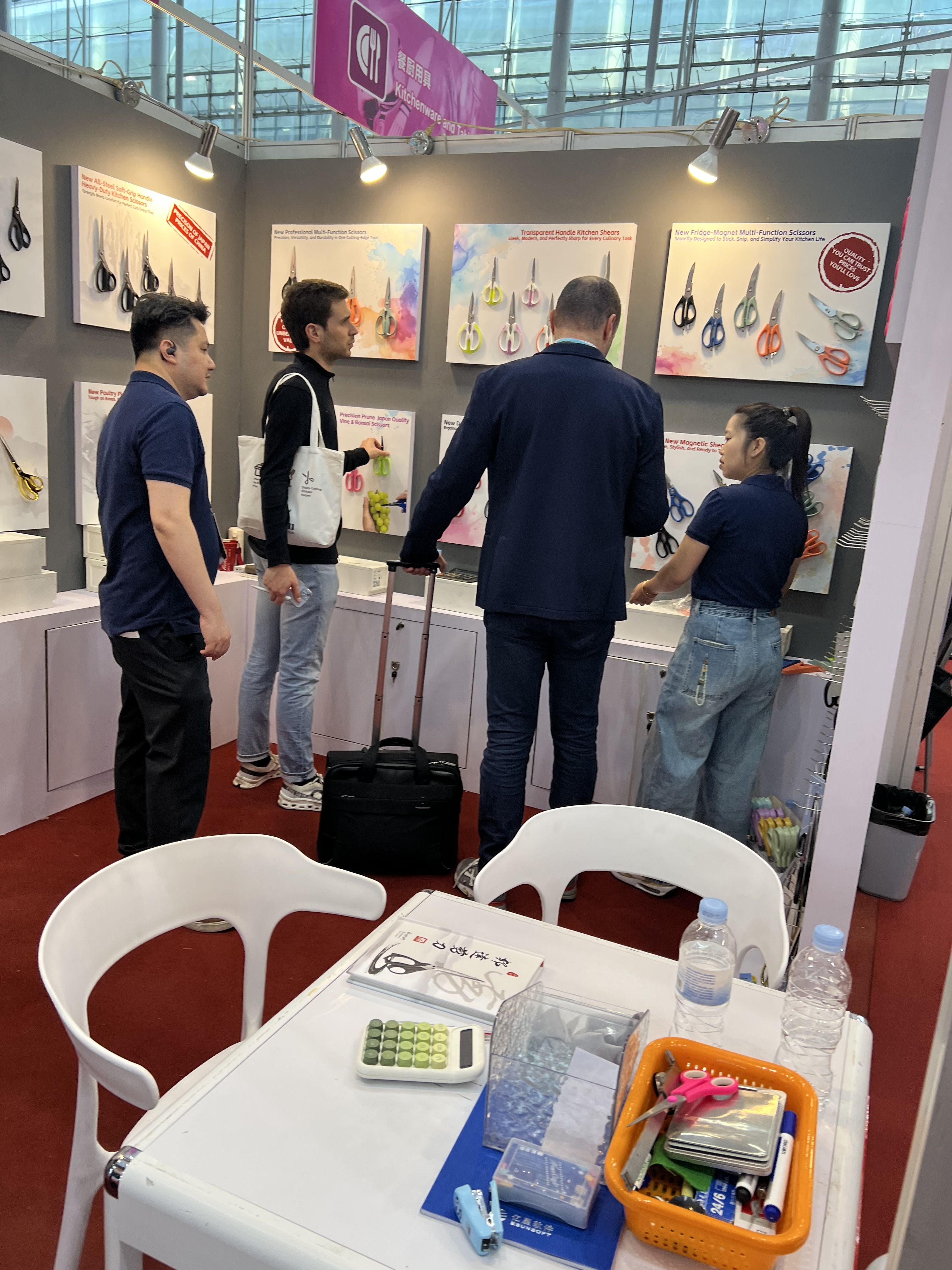
Canton Fair Kitchenware: How to Source Kitchen Scissors and Practical Tools
The Canton Fair is widely known as a major place to discover kitchenware, cookware accessories, and everyday food-preparation tools. For buyers, it can be especially useful for comparing kitchen scissors, multi-function shears, and compact cutting tools side by side. The original article highlighted transparent-handle kitchen scissors, magnetic multi-function scissors, colorful soft-grip scissors, and lightweight designs. This rewritten guide turns those product ideas into practical sourcing advice for importers, wholesalers, brand owners, and retail buyers.
Kitchen scissors may look simple, but small design choices affect usability, packaging, after-sales issues, and customer satisfaction. A buyer should not judge only by appearance at a trade show booth. Instead, compare handle comfort, blade alignment, opening force, storage method, packaging options, and supplier communication before requesting samples or discussing OEM production.
Why Kitchen Scissors Attract Attention at the Canton Fair
Kitchen scissors are common household tools, but they serve many different buyers. A supermarket chain may need an affordable blister-packed item. A cookware brand may want a coordinated color range. An online seller may focus on distinctive features such as transparent handles or magnetic storage. A hospitality distributor may prioritize durability and repeat purchasing.
The Canton Fair environment allows buyers to evaluate these differences quickly. You can hold the tool, test the grip, compare several handle shapes, and ask whether the same design can be supplied in different colors or packaging formats. This is more efficient than reviewing catalog images alone.
Product Types Mentioned in the Original Article
The source article described several types of kitchen cutting tools without providing detailed technical specifications. Those product categories are useful starting points for a sourcing checklist.
- Transparent-handle kitchen scissors: selected mainly for visual appeal and a modern look.
- Magnetic multi-function scissors: designed to make storage more convenient through magnetic integration.
- Soft-grip scissors: intended to improve comfort during repeated cutting tasks.
- Colorful scissors and shears: useful for retailers building a coordinated kitchen accessories range.
- Lightweight kitchen tools: suitable when the target user values easy handling and everyday convenience.
Because the original article does not state blade material, exact dimensions, dishwasher suitability, certifications, or test results, buyers should treat these as questions to confirm rather than assumed product facts.
Comparison Checklist for Buyers
Use the table below when comparing kitchen scissors and related tools at a fair, showroom, or supplier meeting. It keeps the discussion focused on verifiable details.
| Evaluation Point | Why It Matters | Questions to Ask the Supplier |
|---|---|---|
| Handle design | Affects comfort, grip security, and user preference. | Is the handle available in transparent, soft-grip, or color options? |
| Blade performance | Determines cutting feel and customer satisfaction. | What material is used, and what cutting tests can be shared? |
| Magnetic storage | Can improve convenience but needs safe, stable attachment. | Where is the magnet located, and how should users store it safely? |
| Packaging | Impacts retail display, shipping protection, and branding. | Can the product be supplied in blister card, box, or buyer-designed packaging? |
| OEM options | Important for private label and product-line consistency. | What logo, color, packaging, and carton customization options are available? |
| Quality control | Reduces defects and inconsistent batches. | What inspection steps are performed before shipment? |
How to Evaluate a Supplier, Not Just a Sample
A good sample is important, but supplier reliability matters more for repeat orders. When meeting kitchenware suppliers at the Canton Fair, ask for clear answers and documentation instead of general claims. Buyers should request product photos, packaging drawings, carton information, sample lead times, and production lead time estimates. If the supplier offers OEM or wholesale service, ask which parts of the product can be customized and which parts are fixed.
For commercial details that are not provided publicly, avoid assumptions. Ask about minimum order quantity, payment terms, production schedule, inspection process, and export documentation. If your market requires specific compliance or labeling, ask whether the supplier has experience with that market and whether supporting documents can be reviewed before an order is placed.
Design Features That Need Practical Testing
Trade show products often look attractive under booth lighting, but kitchen scissors need practical testing. Transparent handles may create a clean visual effect, but buyers should test how they feel in wet or oily hands. Soft grips may feel comfortable, but the material should be checked for secure bonding and easy cleaning. Magnetic scissors may be convenient, but the magnet should not create unsafe storage habits or packaging complications.
Ask for samples and test them with common household tasks such as opening food packaging, cutting herbs, trimming thin plastic, and cutting paperboard. For professional or heavier-use channels, build a more demanding test plan. Record opening and closing smoothness, blade alignment, screw tightness, handle comfort, and any looseness after repeated use.
OEM and Wholesale Questions to Prepare Before the Fair
Buyers get better results when they arrive with a clear brief. A supplier cannot quote accurately if the buyer only asks for the cheapest scissors. Prepare your target channel, expected retail positioning, packaging preference, estimated order volume, and any legal requirements for your market.
- Define whether the product is for retail, promotional use, online sales, hospitality supply, or a private-label range.
- Decide whether the main selling point is price, color, ergonomic comfort, magnetic storage, or coordinated kitchen design.
- Ask whether existing molds are available or whether a new design requires development.
- Confirm what product claims can be supported with documents or testing.
- Request a written quotation that separates product cost, packaging, tooling if any, and sample charges.
This approach keeps sourcing discussions professional and reduces misunderstanding after the fair ends.
Key Takeaways
Canton Fair kitchenware can be a useful category for buyers seeking practical tools with visible design differences. Kitchen scissors, transparent handles, magnetic storage, and colorful soft-grip options all have potential, but each should be evaluated through samples, documentation, and supplier communication.
- Do not rely only on booth appearance; test the tool in realistic use.
- Ask suppliers to confirm materials, packaging, customization, and quality-control steps.
- Treat MOQ, pricing, certifications, and compliance as questions until verified.
- Compare several suppliers using the same checklist to avoid emotional buying decisions.
- Keep product claims conservative unless the supplier provides supporting evidence.
FAQ
What should buyers check first when sourcing kitchen scissors?
Start with handle comfort, blade alignment, cutting performance, packaging suitability, and supplier responsiveness. These points quickly show whether a product is ready for your sales channel.
Are magnetic kitchen scissors suitable for wholesale programs?
They can be, if the storage feature is stable, clearly explained, and appropriate for the target user. Buyers should test the magnetic function and ask how it affects packaging and safety instructions.
Can kitchen scissors be customized for private label?
Many kitchenware suppliers may offer customization, but the available options vary. Ask about logo placement, handle color, packaging design, carton marks, and whether any tooling is required.
Should buyers request certifications before ordering?
Yes, if your market, retailer, or product category requires them. Do not assume compliance from a catalog. Ask the supplier what documents are available and whether they match your destination market.
How can buyers reduce risk after meeting a supplier at the Canton Fair?
Request samples, confirm specifications in writing, review packaging details, agree on inspection criteria, and keep all commercial terms documented before placing a purchase order.
