




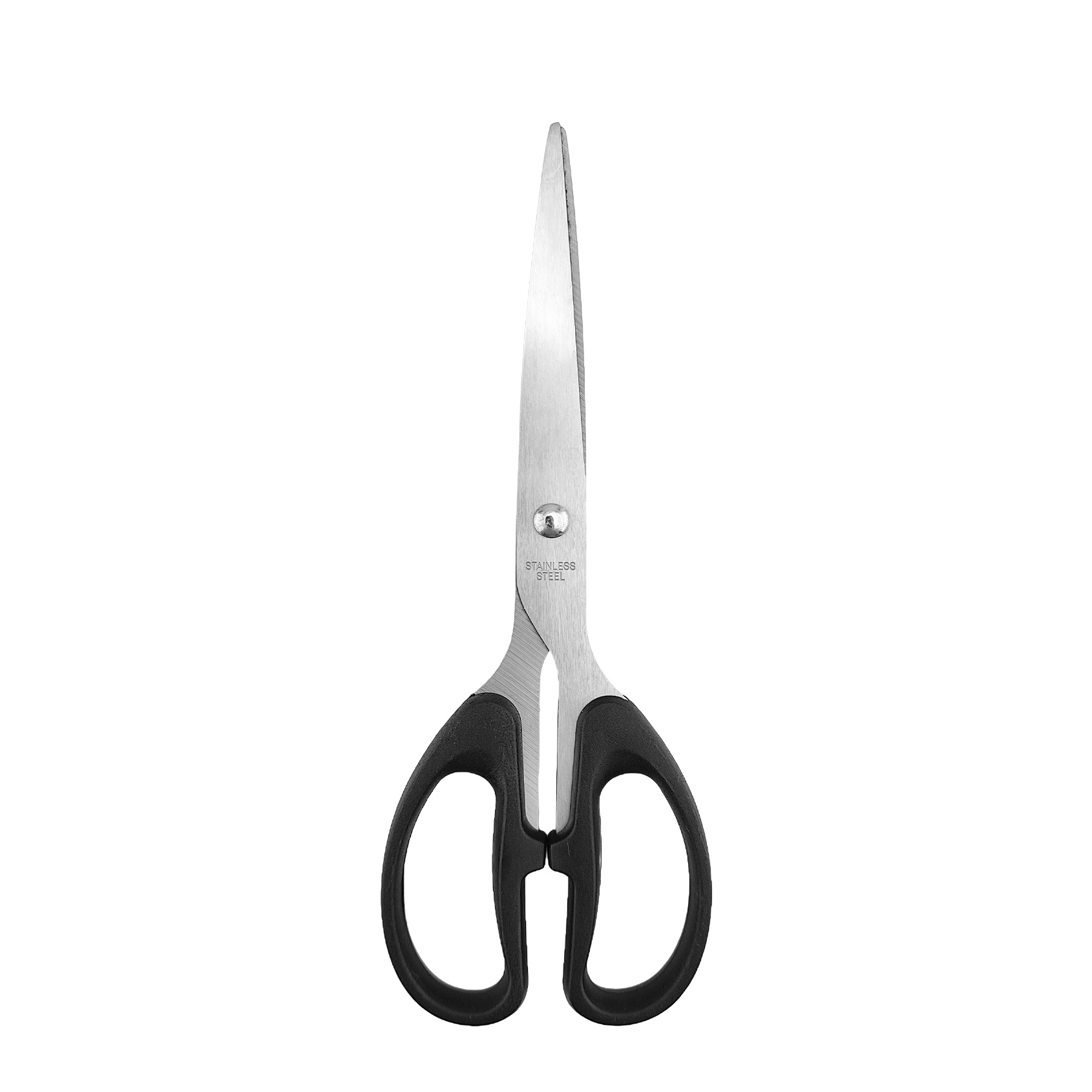
Explore Classic Household Scissors: Quality & Durability
Classic household scissors are simple tools, but buying them well requires more than choosing a familiar shape. For homes, retailers, promotional programs, and private-label product lines, the right pair should cut cleanly, feel comfortable in the hand, and hold up to repeated everyday use. The original article highlights the lasting appeal of household scissors, the importance of Yangjiang scissors expertise, and the role of OEM scissors. This rewrite expands those ideas into a practical sourcing guide for buyers comparing suppliers and product options.

Key Takeaways
- Classic household scissors remain useful because they serve many routine cutting tasks without complex parts or special maintenance.
- Buyers should verify blade material, edge consistency, handle comfort, packaging, inspection process, and private-label options before ordering.
- Yangjiang is widely associated with knife and scissors production, but each supplier still needs individual evaluation.
- For OEM scissors, ask specific questions about samples, tolerances, branding methods, carton packing, and quality checks rather than assuming details.
Why Classic Household Scissors Still Matter
Household scissors are used for paper, packaging, labels, light craft materials, thread, and general home tasks. Their value comes from dependable cutting, easy storage, and a design that most users understand immediately. Unlike specialty cutters, classic scissors do not need batteries, replacement blades, or complicated instructions.
For B2B buyers, this broad use case is important. A general-purpose scissors product may be sold through supermarkets, homeware stores, stationery channels, gift programs, online marketplaces, or private-label household ranges. Because the product is familiar, small differences in cutting feel, handle finish, and durability can strongly influence customer satisfaction.
What To Check In Blade Quality
The original article refers to stainless steel blades and smooth cutting through materials such as fabric and paper. When sourcing, buyers should not rely on a generic stainless steel claim alone. Ask the supplier what steel is used, how the blades are hardened, how the cutting edge is finished, and what inspections are performed before packing.
A good sample review should include repeated cutting tests on paper, thin card, thread, and common packaging materials. The blades should meet evenly without catching, bending away from each other, or leaving uncut sections near the tip. Also check the pivot area. A loose pivot can make scissors feel weak, while an overly tight pivot can cause hand fatigue.
Handle Comfort And Everyday Usability
Classic household scissors often look straightforward, but handle design still matters. The original content mentions black ergonomic handles and a fatigue-free grip. For sourcing decisions, evaluate the handle opening size, finger pressure points, edge smoothness, and whether the scissors remain comfortable after repeated cuts.
If the target market includes general household users, avoid designs that only feel comfortable for one hand size. If the product is intended for office, craft, school, or utility use, request samples from the exact mold or production version that will be supplied. Color, surface texture, and logo placement should not interfere with grip.
Comparison Checklist For Buyers
| Evaluation Point | What To Look For | Questions To Ask The Supplier |
|---|---|---|
| Blade performance | Clean cutting from base to tip on typical household materials | What blade material and edge process are used? |
| Pivot stability | Smooth opening and closing without wobble | How is pivot tightness checked during production? |
| Handle comfort | Rounded edges, balanced grip, no sharp plastic seams | Can handle color, material, or logo placement be customized? |
| Rust resistance | Appropriate finish and care instructions for normal indoor use | What corrosion or surface checks are available? |
| Packaging | Retail-ready card, blister, sleeve, or bulk packing as required | Can packaging artwork, barcode, and carton marks be supplied to buyer requirements? |
| Quality control | Consistent samples and clear inspection criteria | What pre-shipment inspection steps are documented? |
OEM Scissors: How To Source With Fewer Surprises
OEM scissors can be a good fit for retailers and distributors that need private-label presentation or a defined product specification. However, OEM does not automatically mean better quality or lower risk. It means the buyer and supplier must agree clearly on what is being made, how it is branded, how it is packed, and how it will be inspected.
Before confirming an OEM order, request pre-production samples and compare them with any earlier showroom or catalog samples. Confirm whether the same blade finish, handle color, screw or rivet style, and packaging structure will be used in mass production. If the project requires a specific label, warning text, barcode, or language, provide final artwork early and request a packaging proof.
- Define the target use: home, office, craft, school, promotional, or retail multipack.
- Confirm the exact sample that represents the approved production standard.
- Ask how cutting performance, appearance, and packing quantity are checked.
- Clarify lead time, order quantity, payment terms, and after-sales handling directly with the supplier.
- Keep a sealed reference sample for comparison during inspection.
Understanding Yangjiang Scissors Suppliers
The original article connects these products with Yangjiang scissors and a regional metalworking background. Yangjiang is known as a production base for knives, scissors, and related metal household tools. That background can be useful when searching for experienced suppliers, but buyers should still evaluate each factory on its own evidence.
Ask whether the supplier manufactures in-house or coordinates production through partner workshops. Request information about available product ranges, sample process, quality control workflow, and export packing experience. Avoid assuming capacity, certifications, or testing results unless the supplier provides current documents that match your product and order.
Use And Care Guidance For End Customers
Clear use and care information can reduce complaints and returns. Household scissors should be used within their intended range. Cutting wire, thick plastic, frozen food, or hard industrial materials can damage the edge or pivot unless the product is designed for those tasks.
- Wipe blades dry after contact with moisture.
- Store scissors closed and away from young children.
- Use separate scissors for food, craft, and general utility tasks when hygiene matters.
- Avoid twisting the blades while cutting thick packaging.
- Check the pivot if cutting begins to feel uneven or rough.
FAQ
Are classic household scissors suitable for fabric?
They may cut light fabric, but buyers should test samples on the intended material. If the product is marketed for sewing or tailoring, more specific performance requirements may be needed.
What should I ask before ordering OEM scissors?
Ask about blade material, handle customization, logo method, packaging options, sample approval, inspection criteria, lead time, and how defects are handled.
Does sourcing from Yangjiang guarantee quality?
No. Yangjiang has a strong scissors and metalware manufacturing background, but quality depends on the individual supplier, production process, and inspection standards.
Can I claim rust resistance in retail copy?
Only make claims supported by supplier documentation or testing relevant to the exact product. Otherwise, use practical care guidance and avoid unsupported performance promises.
How can a buyer compare two similar scissors samples?
Test cutting consistency, pivot smoothness, handle comfort, blade alignment, packaging quality, and appearance after repeated use. Keep notes so decisions are based on evidence, not only price.
Final Sourcing Advice
Classic household scissors remain a dependable product category because they solve everyday cutting needs with a familiar design. For organic search visitors and procurement teams, the main question is not whether scissors are useful, but how to select a reliable version and a supplier that can repeat the approved quality. Focus on samples, clear specifications, practical testing, and direct supplier questions. That approach is more valuable than broad claims and helps buyers build a product line that customers can trust for daily use.
