




Explore Flour Sifter Factory: Enhance Baking With Quality
For bakeries, retailers, distributors, and kitchenware importers, choosing the right flour sifter factory is not only about finding a low unit price. A flour sifter affects how flour is aerated, how dry ingredients are combined, and how consistently bakers can prepare doughs, cakes, pastries, and batters. The right sourcing decision can support stable product quality, fewer returns, and clearer communication across the supply chain.
The original topic highlights three useful ideas: understanding flour sifter factories, considering China flour sifter manufacturers, and working with reliable flour sifting machine suppliers. This expanded guide turns those ideas into a practical sourcing checklist for B2B buyers who need to compare products, request samples, and ask informed supplier questions before placing an order.
Key Takeaways
- A flour sifter factory should be evaluated on product consistency, material transparency, packaging options, and communication, not only price.
- China flour sifter manufacturers may offer a wide range of manual sifters, sets, and related baking tools, but buyers should verify details by sample and documentation.
- For bakery operations, a flour sifting machine supplier should be assessed for capacity fit, cleanability, parts support, and operating requirements.
- Do not assume material grade, certifications, or production capacity unless the supplier can confirm them in writing.
What a Flour Sifter Factory Actually Provides
A flour sifter factory typically produces tools designed to distribute and aerate flour before mixing or baking. Sifting helps break up clumps and can improve the uniformity of dry ingredients. For consumer kitchenware lines, this often means manual hand sifters, flour sifter sets, or compact baking accessories. For commercial bakery buyers, the category may also include flour sifting machines used to improve workflow and consistency.
Factory-direct sourcing can give buyers more control over design, packaging, labeling, and inspection requirements. However, those advantages depend on how clearly the buyer defines the product. Before contacting suppliers, prepare a specification sheet covering intended market, product type, dimensions, handle or crank preference, packaging needs, carton strength, labeling requirements, and any requested test or compliance documents.
China Flour Sifter Manufacturers: What to Look For
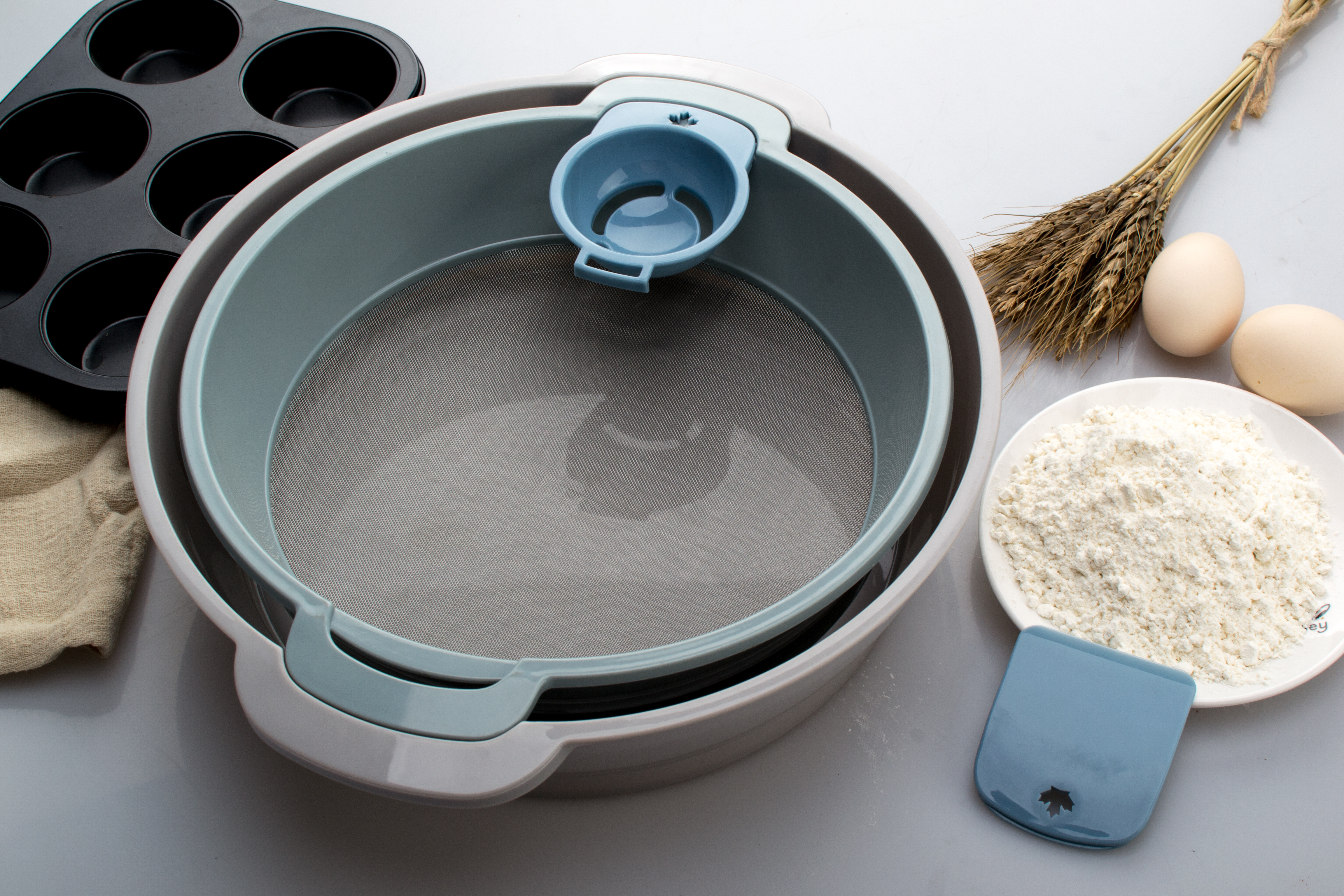
China flour sifter manufacturers are commonly considered by importers and wholesalers because they often serve broad kitchenware and baking tool categories. Some may offer versatile sifter sets for home bakers, while others focus on tools for foodservice or bakery supply channels. The original article mentions that a flour sifter set may include accessories such as a spatula and a built-in measuring cup. If those features matter for your assortment, confirm the exact set contents, materials, and packaging layout before sampling.
When reviewing manufacturers, separate marketing statements from verifiable details. Ask whether the supplier is the actual factory or a trading company, what production steps are handled in-house, and which components are outsourced. Request product photos from current production, not only catalog renders. If you need OEM or private label service, ask what branding methods are available and whether they affect lead time, cost, or minimum order requirements.
Manual Flour Sifters vs. Flour Sifting Machines
The best product choice depends on the buyer’s customer base. Retailers and online sellers usually focus on manual sifters that are easy to package, store, and explain to end users. Bakeries, food processors, and large kitchens may need a flour sifting machine supplier that can help match equipment to operating volume and workflow.
| Buying Factor | Manual Flour Sifter | Flour Sifting Machine | Questions to Ask |
|---|---|---|---|
| Typical user | Home bakers, small shops, retail customers | Bakeries, production kitchens, food operations | Who will use it daily, and how often? |
| Selection focus | Comfort, size, mesh style, packaging, accessories | Throughput, cleaning, safety features, power needs | What specification is confirmed in writing? |
| Sampling | Check feel, finish, function, and carton protection | Request demonstration, manual, and maintenance details | Can the supplier provide a sample or video test? |
| After-sales needs | Replacement policy and defect handling | Spare parts, troubleshooting, technical support | How are quality issues handled after delivery? |
Quality Checks Before Placing a Wholesale Order
Whether you source a basic sifter or a more complex sifting machine, sample review is essential. A low-cost sample can still reveal important issues: sharp edges, weak joints, inconsistent operation, poor carton fit, unclear instructions, or packaging that is not suitable for export handling. Do not rely only on catalog photos.
- Inspect the finish: Check edges, seams, moving parts, and surface consistency.
- Test actual use: Run flour through the sifter several times and check for clogging, jamming, or uneven operation.
- Review packaging: Confirm inner protection, retail presentation, barcode placement, and carton markings.
- Ask for material confirmation: Request written confirmation of materials used, rather than assuming a grade or composition.
- Define defect standards: Agree on what counts as a critical, major, or minor defect before production.
- Plan inspection: Consider pre-shipment inspection, especially for new suppliers or customized orders.
Questions to Ask a Flour Sifting Machine Supplier
For commercial buyers, a flour sifting machine is a workflow investment. The supplier should help you understand whether the machine matches your flour type, batch size, cleaning routine, space limitations, and staff training level. Avoid general claims such as “high efficiency” unless the supplier can explain how performance is measured and under what conditions.
Useful questions include: What power supply is required? What is the recommended operating environment? Which parts require routine cleaning or replacement? Are user manuals available in English? Can spare parts be purchased separately? What packaging is used for export shipment? What support is available if the machine arrives damaged or does not operate correctly?
If your market requires specific food-contact, electrical, or safety compliance, ask the supplier what documents they can provide and whether those documents apply to the exact model you plan to buy. Compliance requirements vary by destination market, so buyers should confirm obligations with their own import, legal, or testing advisors.
OEM, Private Label, and Packaging Considerations
Many B2B buyers are not simply buying a generic flour sifter; they are building a product line. OEM and private label projects can include custom logo placement, retail boxes, instruction sheets, bundled accessories, or product sets. The original article mentions accessories such as a spatula and a built-in measuring cup, which can make a set more convenient for certain retail channels. However, every added component creates another specification to confirm.
Before approving packaging, check whether the box communicates the product clearly and accurately. Avoid unsupported claims on packaging. If the product is sold online, ensure the supplier can maintain consistent appearance between samples and mass production. Ask if packaging artwork files, dielines, color references, and label requirements are reviewed before production begins.
How to Compare Supplier Quotations Fairly
Price comparisons are only meaningful when quotations are based on the same product and service scope. One supplier may quote a basic sifter without accessories, while another includes a set, retail packaging, or different carton protection. Shipping terms, inspection costs, customization charges, and payment terms can also change the real landed cost.
Create a comparison sheet that includes product dimensions, material description, set contents, packaging type, estimated carton quantity, lead time, payment terms, available documentation, sample cost, and whether the quote includes branding. If a supplier cannot answer basic questions clearly, treat that as a sourcing risk even when the quoted price looks attractive.
Practical FAQ
What is the main purpose of a flour sifter?
A flour sifter helps aerate flour and break up clumps. It can also help combine dry ingredients more evenly before mixing, which is useful for many baking applications.
Should I buy from a factory or a trading company?
Both can work. A factory may offer more direct production control, while a trading company may provide broader sourcing options. Ask who produces the goods, who handles quality control, and who is responsible if there is a problem.
What should I check in a flour sifter sample?
Check the finish, edges, moving mechanism, mesh or sifting area, comfort in hand, packaging, and actual performance with flour. Compare the sample against your written requirements.
Can I request OEM packaging for wholesale flour sifters?
Many suppliers may offer custom packaging or private label options, but you should confirm artwork requirements, costs, lead times, minimum quantities, and approval steps before ordering.
How do I choose a flour sifting machine supplier?
Focus on operating requirements, cleanability, spare parts, documentation, packaging for shipment, and after-sales support. Ask the supplier to explain the machine’s suitability for your expected use rather than relying on broad performance claims.
Conclusion
A reliable flour sifter factory or flour sifting machine supplier can help buyers serve home baking, retail, foodservice, or bakery production markets more effectively. The best results come from clear specifications, careful sample testing, and direct questions about materials, packaging, quality control, and support. By treating flour sifters as a sourcing project rather than a simple catalog purchase, buyers can reduce risk and build a more dependable product offering.
