




Multi-Functional Kitchen Shears: Practical OEM Sourcing Guide
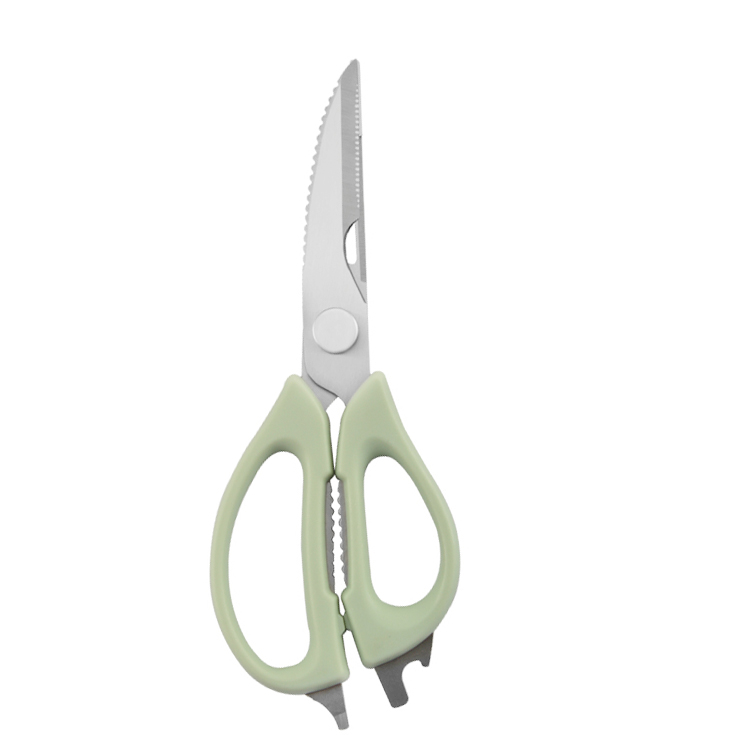
Multi-functional kitchen shears are a compact tool category with broad appeal for household kitchens, food-prep counters, promotional assortments, and retail houseware lines. The original product shown here presents a common and useful format: kitchen scissors with stainless steel blades, ergonomic sage green handles, a serrated edge, a built-in bottle opener, and a nutcracker function. For buyers, the value is not only in the number of functions, but in whether each function is safe, comfortable, durable, and suitable for the intended market.

This guide is written for sourcing teams, importers, brand owners, and wholesale buyers comparing OEM kitchen scissors from a kitchen scissors manufacturer or a scissors factory in Yangjiang. It focuses on practical selection criteria and the questions that should be asked before placing an order.
Key Takeaways
- Multi-functional kitchen shears should be evaluated function by function, not only by appearance.
- Explicit features in this product include stainless steel blades, ergonomic sage green handles, a serrated edge, bottle opener, and nutcracker function.
- OEM buyers should confirm material details, safety requirements, packaging, labeling, inspection standards, and lead times directly with the supplier.
- Comfort, blade alignment, edge consistency, and cleaning access can strongly affect user satisfaction.
- Commercial details such as MOQ, pricing, certifications, and test reports should be requested rather than assumed.
What Makes Kitchen Shears Multi-Functional?
A standard pair of kitchen scissors is used mainly for cutting food packaging, herbs, vegetables, or prepared ingredients. Multi-functional kitchen shears add secondary functions that can reduce the number of small tools stored in a drawer. In the source product, those functions include a serrated edge for better grip during cutting, a bottle opener, and a nutcracker function.
For retail buyers, this type of item can be attractive because shoppers understand the purpose quickly. For OEM buyers, however, the challenge is making sure the added features do not weaken the core cutting performance. A bottle opener that is awkward to use, or a nutcracker area that affects handle comfort, may create complaints even if the product looks versatile on a display card.
Feature Checklist for Product Selection
Before comparing quotations, buyers should create a clear feature checklist. This helps separate meaningful product value from generic descriptions. Use the table below as a starting point when reviewing samples from an OEM scissors supplier.
| Area to Review | What to Check | Questions to Ask the Supplier |
|---|---|---|
| Blade material | The source states stainless steel blades | What stainless steel grade is used, and can it be documented? |
| Cutting edge | Sharpness, alignment, and serrated edge performance | What inspection standard is used for cutting performance? |
| Handle design | Ergonomic sage green handles and grip comfort | Can handle color, finish, or logo placement be customized? |
| Bottle opener | Ease of use and safe positioning | Has the opener design been tested for repeated use? |
| Nutcracker function | Grip, leverage, and user comfort | What size range or usage guidance is recommended? |
| Packaging | Retail display, instruction space, and warning labels | What packaging formats are available for OEM orders? |
How to Evaluate Samples Before an OEM Order
Sample review should be practical and repeatable. Do not rely only on photos or a brief hand feel. A sourcing team should inspect several pieces from the same sample batch and record results. The purpose is not to create a laboratory report, but to identify obvious risks before artwork, packaging, and purchase orders move forward.
- Check whether both blades meet evenly from tip to pivot and cut smoothly along the full length.
- Test common kitchen tasks such as cutting herbs, thin packaging, and food-prep materials suitable for the tool.
- Review the serrated section to see whether it grips material without tearing unnecessarily.
- Hold the shears with dry and slightly damp hands to assess handle comfort and control.
- Use the bottle opener and nutcracker functions carefully to confirm that the added functions feel stable.
- Inspect edges, rivets, joints, and handle surfaces for burrs, gaps, or rough finishing.
If the shears are intended for a specific market, ask the supplier what compliance documentation, labeling guidance, and testing options are available. Do not assume certifications or test results exist; request current documents that match the exact product, material, and destination market.
OEM and Wholesale Questions Buyers Should Ask
When contacting a scissors factory in Yangjiang or another kitchen scissors manufacturer, the best inquiries are specific. A short message asking only for the lowest price usually produces an incomplete quote. Instead, share the target market, expected packaging style, estimated order quantity, branding needs, and any required documentation.
Useful questions include: What material grade is used for the blades? Is the handle color customizable? Can the factory provide logo application options? What are the available packaging types? What is the sample process? What is the standard production lead time after artwork approval? What inspection criteria are used before shipment? Are there additional costs for custom packaging, barcode labels, or instruction inserts?
Buyers should also ask whether the supplier has experience with the intended sales channel, such as supermarket retail, online marketplace, distributor wholesale, or promotional programs. This does not replace due diligence, but it helps clarify whether the supplier understands packaging durability, carton markings, and documentation expectations.
Balancing Function, Cost, and User Experience
More functions can make kitchen shears easier to market, but every feature adds design and quality considerations. A strong product concept should still feel comfortable as scissors first. The blade should open and close cleanly, the handle should not pinch, and the added bottle opener or nutcracker areas should not interfere with normal cutting.
For a houseware brand, the final specification should reflect the target customer. A budget retail line may prioritize simple packaging and consistent cutting quality. A branded kitchen collection may place more attention on handle color, finishing, and shelf presentation. A wholesale buyer may care most about repeatable quality, safe packing, and clear carton identification. In all cases, the sourcing decision should be based on verified samples and written specifications.
Care and Use Guidance to Include With the Product
Even B2B buyers should think about end-user instructions. Clear care guidance can reduce misuse and complaints. Because these shears include multiple functions, packaging or an insert should explain intended use in plain language. Users should keep the blades away from children, wash and dry the shears after contact with food, and avoid using them on materials that exceed the tool's intended kitchen purpose.
If dishwasher suitability is important for your market, ask the supplier directly before making that claim. The same applies to food-contact declarations, corrosion resistance claims, or any statement about blade grade. Claims should be supported by supplier documentation and, where necessary, third-party testing for the destination market.
FAQ
Are multi-functional kitchen shears suitable for OEM branding?
Yes, they can be suitable for OEM programs, but branding options depend on the supplier's tooling, handle material, packaging capability, and logo process. Buyers should request artwork templates and pre-production samples before confirming bulk production.
What features are explicit in this product?
The source describes stainless steel blades, ergonomic sage green handles, a serrated edge, a built-in bottle opener, and a nutcracker function. Other specifications should be confirmed with the supplier before use in marketing materials.
What should importers verify before ordering?
Importers should verify material details, labeling requirements, packaging strength, inspection standards, compliance documents, sample approval steps, lead time, payment terms, and after-sales handling procedures.
How can buyers compare different kitchen scissors manufacturers?
Compare samples under the same test conditions, review documentation, ask detailed technical questions, evaluate communication quality, and confirm whether the quotation matches the same specification and packaging requirements.
Should commercial details be assumed from a product page?
No. MOQ, prices, certifications, testing results, delivery dates, and customization limits should be requested directly from the supplier and confirmed in writing before an order is placed.
