




EcoGrip Precision Scissors Review for OEM and Wholesale Buyers
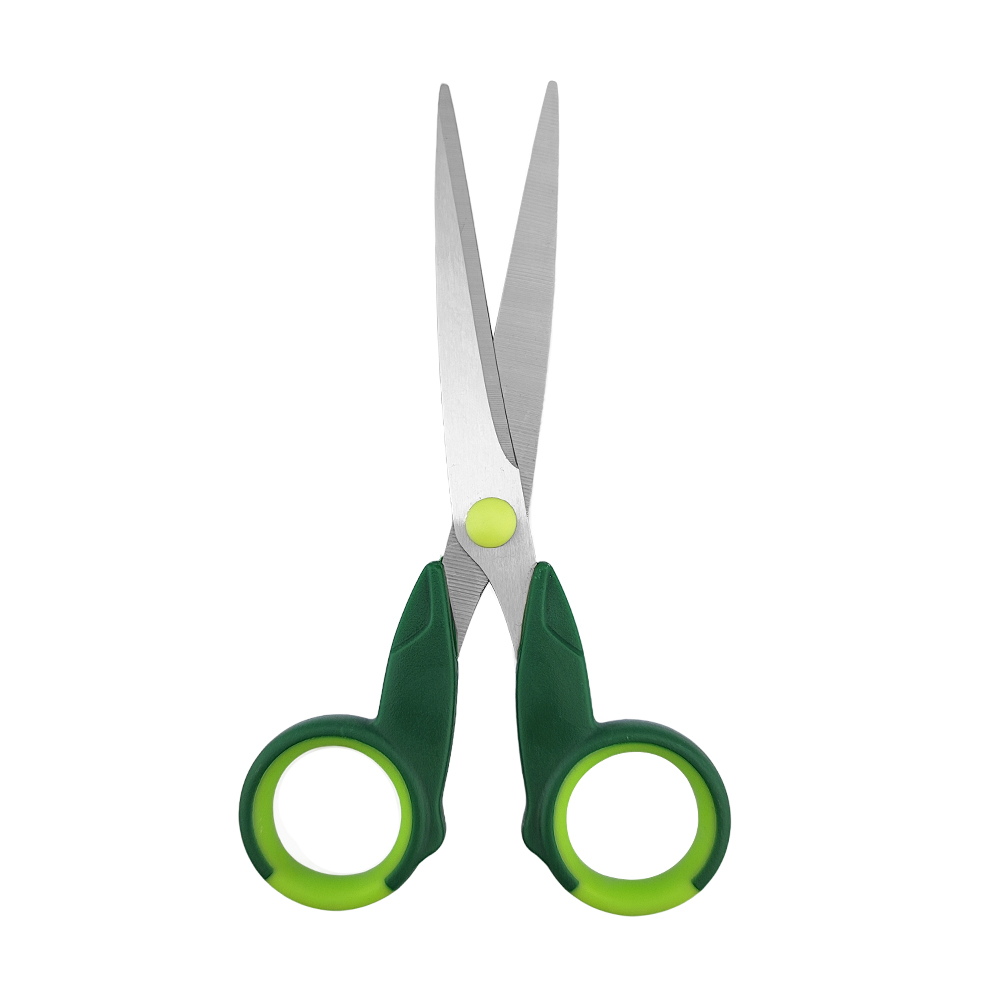
OEM scissors are not just simple cutting tools in a catalog. For importers, wholesalers, private-label brands, and houseware retailers, they are products that must feel right in the hand, cut consistently, and meet the expectations of different users. The EcoGrip Precision Scissors, described in the original product article as having deep forest and lime green handles, stainless steel blades, and an ergonomic soft-grip design, offer a useful case study for evaluating a household scissors program.
This review looks beyond appearance and focuses on sourcing quality: what to check, what to ask a supplier, and how to decide whether a scissors design is suitable for home, craft, or professional-style use. It does not assume unverified specifications, pricing, certifications, or production capacity. Instead, it gives buyers a practical framework for comparing samples and discussing OEM options.
Key Takeaways
- EcoGrip Precision Scissors are positioned as household and craft scissors with ergonomic soft-grip handles and stainless steel blades.
- For OEM sourcing, buyers should confirm blade material details, handle composition, packaging, labeling, sample performance, and quality inspection methods.
- Comfort, pivot smoothness, blade alignment, and repeatable cutting are as important as visual design.
- Any environmental or material claim should be supported by supplier documentation before it is used in sales or packaging copy.
What the EcoGrip Design Suggests
The original article highlights a two-tone handle in deep forest and lime green, which gives the scissors a recognizable retail look. Color can be useful for shelf differentiation, but B2B buyers should treat it as one part of the product brief rather than the main decision factor. The more important questions are whether the grip shape suits the target user, whether the handle remains comfortable during repeated cutting, and whether the color can be matched consistently across batches.
The article also describes soft-grip ergonomic handles. For household scissors, this matters because users may cut paper, packaging, craft materials, gift wrap, fabric, or thin cardboard in one session. A handle that looks appealing but causes pressure points can lead to returns or poor reviews. When reviewing samples, test them with several hand sizes and with both short snips and longer continuous cuts.
Cutting Performance: What to Test Before Ordering
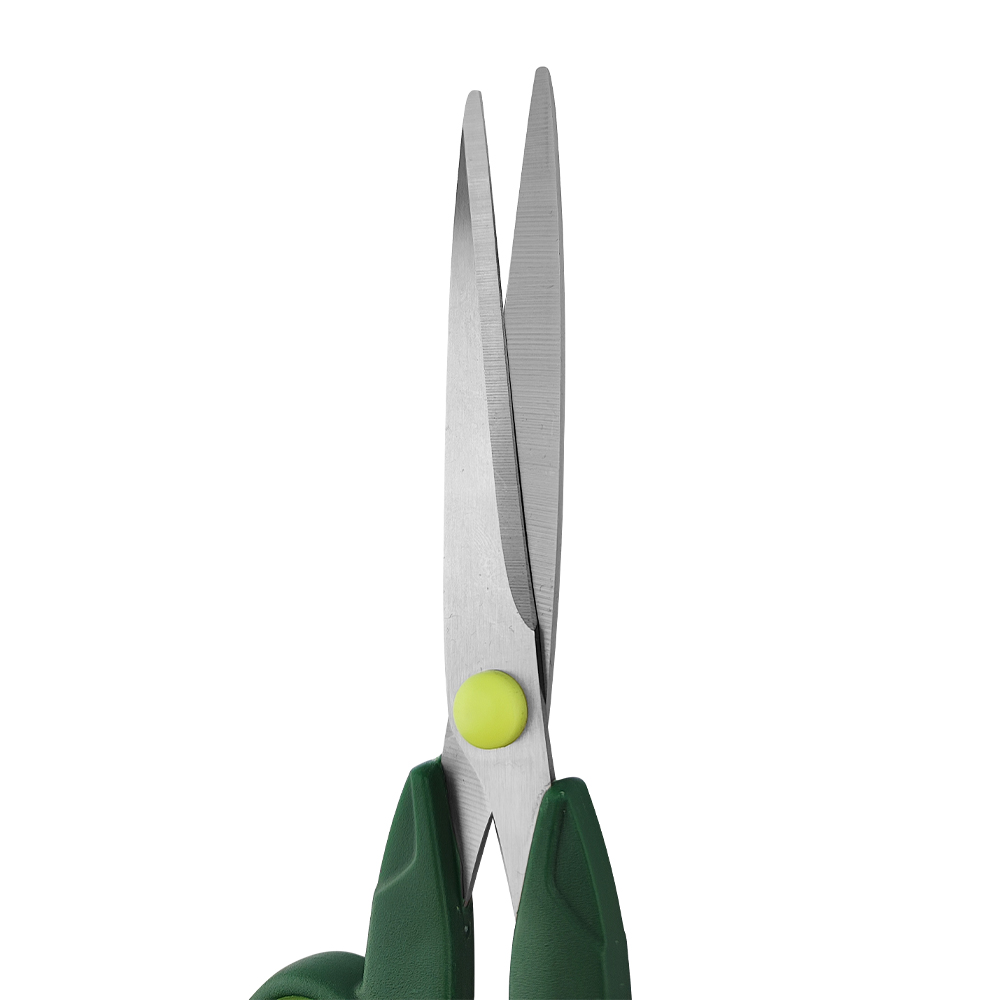
The source article states that the scissors use stainless steel blades and can cut paper, fabric, and thin cardboard. Those are useful application claims to verify during sample testing. Stainless steel is a broad category, so buyers should ask the supplier what steel type is used, what hardness target is typical, and how blade sharpness is checked. Do not put a specific grade on packaging unless the supplier provides reliable documentation.
A simple cutting test should include copy paper, wrapping paper, cotton fabric offcuts, packaging film, and thin cardboard. The scissors should start cuts cleanly, continue without snagging, and close without a rough scraping feeling. Also check the tips, because many lower-quality scissors cut acceptably near the pivot but struggle at the final centimeter of the blade.
Comparison Checklist for OEM Scissors Samples
| Evaluation Area | What to Check | Questions to Ask the Supplier |
|---|---|---|
| Blade performance | Clean cutting on paper, fabric, and thin cardboard | What blade material is used, and how is sharpness inspected? |
| Pivot action | Smooth opening and closing without wobble | Is pivot tension adjustable or fixed during assembly? |
| Handle comfort | Grip pressure, finger space, and comfort during repeated use | What handle materials are used, and can colors be customized? |
| Batch consistency | Same cutting feel across multiple samples | How are incoming materials and finished goods checked? |
| Retail readiness | Packaging fit, barcode area, warnings, and label space | What packaging formats and private-label options are available? |
| Claims support | Any eco, durability, or corrosion-resistance wording | What documents or test reports can support these claims? |
Home, Craft, and Professional-Style Use Cases
For home users, a good pair of scissors needs to be easy to find, comfortable to use, and versatile enough for daily tasks. The EcoGrip concept fits this role because it is described as a household scissors design with a soft-grip handle and clean cutting ability. Buyers serving supermarkets, homeware stores, or online marketplaces may position this type of product as a general utility scissors for kitchen drawers, office corners, craft boxes, and wrapping stations.
For craft users, control is critical. The scissors should follow curves, trim edges neatly, and avoid chewing delicate materials. If your customers include hobbyists, teachers, or small craft businesses, ask for samples and test repeated cutting over time rather than relying on a single demonstration cut.
The original article also references artisans, tailors, and specialists. For professional users, expectations are usually higher. If the product is intended for serious fabric work or shop use, confirm whether the blade length, edge geometry, and handle dimensions are appropriate. It may be better to separate household scissors from dedicated tailoring scissors if performance requirements differ.
OEM Customization Points to Discuss
Custom scissors manufacturing can involve more than placing a logo on the handle. Buyers should prepare a specification sheet before approaching a supplier. This reduces misunderstandings and helps both sides compare the same product standard.
- Define the target market: household, school, craft, office, or professional-style use.
- Confirm blade length, overall length, handle shape, and right-hand or ambidextrous expectations.
- Ask which handle colors are available and whether custom color matching is possible.
- Request packaging options such as blister card, paper card, sleeve, or bulk packing.
- Clarify logo placement, artwork format, barcode needs, and warning label requirements.
- Ask how pre-shipment inspection is handled and what defects are considered unacceptable.
Use and Care Guidance for End Customers
Even well-made household scissors perform better when used correctly. Retailers and brands can reduce complaints by including simple care instructions on packaging or product pages. Recommend using the scissors only on suitable materials and avoiding wire, hard plastic, or other items that can damage the edge unless the product is specifically designed for them.
Users should keep the blades dry after cleaning and store the scissors closed. If adhesive residue builds up from tape or labels, wipe it away carefully with an appropriate cleaner and dry the blades afterward. Avoid dropping scissors, as impact can affect tip alignment or pivot feel.
FAQ
Are EcoGrip Precision Scissors suitable for OEM programs?
They can be considered for OEM evaluation because the design is presented as a household scissors product with ergonomic handling and stainless steel blades. Buyers should still confirm customization options, packaging, quality control, and commercial terms directly with the supplier.
Can I claim the scissors are eco-friendly?
Only use environmental claims if the supplier provides documentation that supports the exact wording. The product name and original article suggest an eco-conscious direction, but marketing claims should be verified before packaging or advertising is approved.
What should I test in a sample order?
Test cutting performance, pivot smoothness, handle comfort, blade alignment, surface finish, packaging durability, and consistency across several pieces. Try the materials your customers are most likely to cut.
What information should a supplier provide before bulk ordering?
Ask for product dimensions, material details, packaging specifications, logo options, quality inspection criteria, lead time, order requirements, and any available documents related to claims you plan to make.
Final Sourcing Advice
The EcoGrip Precision Scissors are best reviewed as a practical OEM scissors concept: visually distinct, ergonomically focused, and intended for everyday cutting tasks. For buyers, the opportunity is not only in the product appearance but in building a clear specification and verifying performance before placing a larger order. A strong scissors program depends on repeatable cutting quality, honest claims, suitable packaging, and supplier communication that answers detailed questions without guesswork.
