




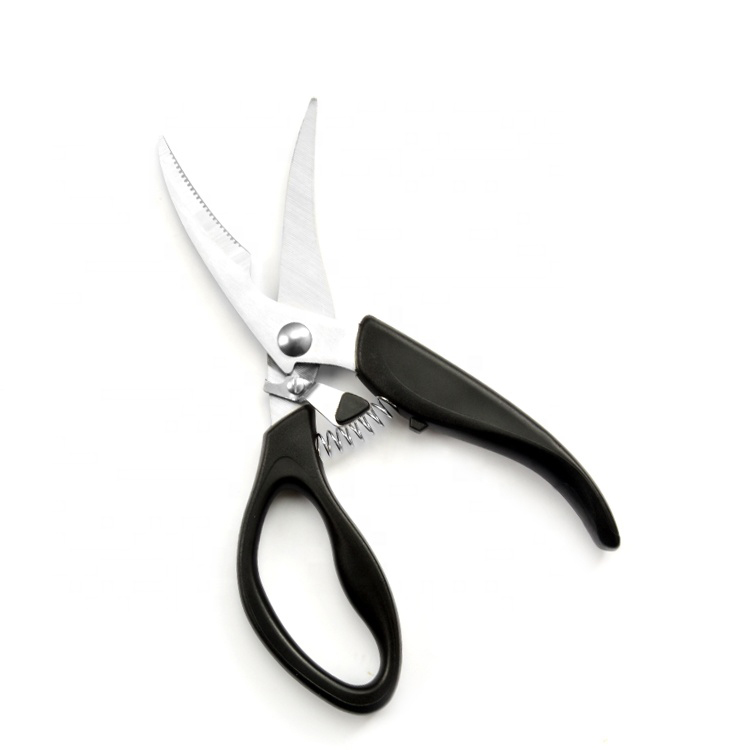
Explore OEM Scissors Manufacturer for Kitchen Mastery
Kitchen scissors are small tools, but for retailers, distributors, private-label brands, and promotional buyers, they require careful sourcing. A buyer is not only choosing a cutting tool; they are selecting a product that must feel comfortable in the hand, cut reliably, clean easily, and match the expectations of the target market. When working with an OEM scissors manufacturer, the best results usually come from clear product requirements, realistic quality checks, and detailed communication before production begins.
Why Kitchen Scissors Matter in a Product Line
Kitchen scissors are used for routine food preparation and household tasks: snipping herbs, cutting packaging, trimming vegetables, opening food bags, and handling poultry or fish preparation when the design is suitable. Because they are frequently used, customers quickly notice whether the blades feel sharp, the handle is comfortable, or the hinge becomes loose over time.
For B2B buyers, this makes kitchen scissors a useful but specification-sensitive category. A low-cost item can still generate returns if it rusts, pinches the hand, or fails to cut cleanly. A premium item can also disappoint if the added features are poorly explained or difficult to clean. The sourcing goal is not simply to add more functions; it is to define the right functions for the intended user and sales channel.
Core Features to Define Before OEM Sourcing
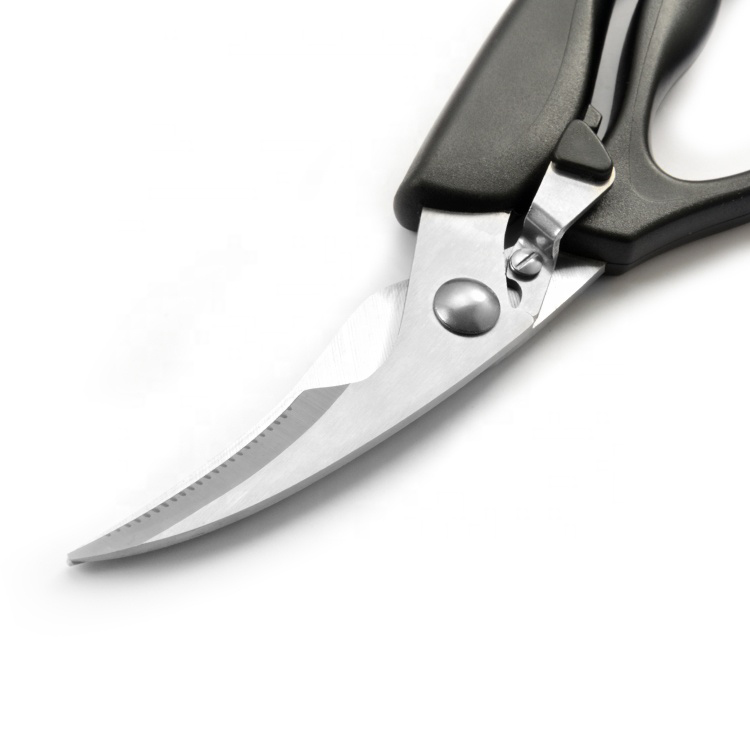
The original product description highlights several common kitchen-shear features: stainless steel blades, possible micro-serrations, a spring mechanism for easier cutting, a built-in bottle opener, soft non-slip handles, and dishwasher-safe maintenance on some models. These are useful starting points, but buyers should confirm each detail with the supplier instead of assuming it applies to every model.
- Blade material: Ask what stainless steel is used, how it is finished, and how rust resistance is checked.
- Blade edge: Confirm whether the blades are plain, serrated, or micro-serrated, and request cutting samples for the foods or packaging your customers commonly handle.
- Handle design: Check grip comfort, hand size suitability, and whether the handle surface remains secure when wet.
- Spring mechanism: If included, test whether it reduces hand fatigue without making the tool hard to control.
- Added functions: Bottle openers, nut-cracking areas, fish-scaling edges, or take-apart designs should be evaluated for safety, cleaning, and real customer value.
Kitchen Scissors vs. Poultry Shears: What to Specify
Many buyers use the terms kitchen scissors and poultry shears interchangeably, but they may serve different needs. General kitchen scissors focus on everyday cutting and convenience. Poultry shears typically need more leverage, stronger blade geometry, and a handle that supports tougher cuts. If your category page or packaging says poultry shears, the product should be tested on demanding tasks rather than judged only by appearance.
| Selection Point | General Kitchen Scissors | Poultry Shears | Buyer Check |
|---|---|---|---|
| Main use | Herbs, bags, vegetables, light prep | Chicken, bones, thicker food items | Define real use cases before sampling |
| Blade requirement | Clean cutting and easy control | Stronger cutting power and grip | Request cutting tests and sample feedback |
| Handle priority | Comfort for frequent household use | Stability under pressure | Test with wet and dry hands |
| Extra features | Opener or multipurpose notches may help | Spring mechanism may reduce fatigue | Confirm usefulness, safety, and cleaning ease |
| Packaging message | Versatile kitchen tool | Heavy-duty food preparation tool | Avoid claims not supported by testing |
How to Evaluate an OEM Scissors Manufacturer
A capable OEM supplier should help translate product goals into specifications, samples, packaging, and production controls. However, buyers should avoid relying on broad claims such as “high quality” or “professional grade” without evidence. Instead, build a checklist for supplier discussions.
- Ask which existing kitchen scissors models can be customized and which require new tooling.
- Request details on blade material, handle material, surface finish, and available color options.
- Confirm whether logos can be applied by printing, engraving, labeling, or packaging design.
- Ask for sample lead time, production lead time, minimum order quantity, and how changes affect cost.
- Discuss inspection standards, acceptable defect limits, packaging drop concerns, and spare sample retention.
- Clarify whether the supplier can provide documentation needed for your target market, without assuming certifications are already available.
Quality Checks Buyers Should Not Skip
Kitchen scissors are mechanical products, so a visual check is not enough. The blades should align properly, open and close smoothly, and cut consistently along the working edge. Handles should not have sharp plastic edges, visible gaps, or uncomfortable pressure points. If the product includes a spring, it should return smoothly and stay controlled during use.
For stainless steel blades, ask how the supplier checks corrosion resistance and whether dishwasher use is recommended for the specific model. If a listing or package will say dishwasher safe, confirm that the supplier supports that claim for the exact product and finish. For micro-serrated blades, check whether they grip slippery surfaces without tearing food excessively. For built-in bottle openers or other functions, test them as real functions rather than decorative features.
Packaging, Branding, and Retail Readiness
OEM sourcing often includes branding beyond the product itself. A private-label buyer may need a logo on the handle, a hang card, blister packaging, color box, barcode label, instruction insert, or warning statement. These details affect both cost and customer satisfaction. Packaging should protect the blade tips, prevent accidental opening during shipping, and explain safe use clearly.
Search-driven retail content should also match the product accurately. If the scissors are best for herbs, packaging, and light prep, do not market them as heavy-duty poultry shears. If the shears are designed for tougher kitchen work, explain how customers should clean and store them after contact with raw food. Accurate positioning reduces complaints and helps buyers build trust across repeat orders.
Key Takeaways
- Start OEM sourcing with clear use cases: general kitchen prep, poultry tasks, or multipurpose household cutting.
- Confirm every feature, including stainless steel blades, micro-serrations, spring action, bottle opener, non-slip handles, and dishwasher-safe claims.
- Use samples to test cutting performance, comfort, hinge movement, cleaning, and packaging protection.
- Ask suppliers direct questions about customization, lead time, MOQ, inspection process, and documentation for your market.
- Keep marketing claims aligned with tested performance to reduce returns and protect brand reputation.
Practical FAQ for OEM Kitchen Scissors Buyers
What should I ask an OEM scissors manufacturer first?
Start with the intended use, available models, customization options, sample process, MOQ, production lead time, and what quality checks are performed before shipment.
Are micro-serrated blades always better?
Not always. Micro-serrations can help grip slippery foods, but the right choice depends on the cutting task, sharpening expectations, and customer preference. Test samples before deciding.
Can kitchen scissors be sold as poultry shears?
Only if the design and testing support that use. Poultry preparation can require more cutting power and stability than general kitchen tasks, so buyers should verify performance before making that claim.
Should I choose dishwasher-safe kitchen scissors?
Dishwasher-safe positioning can be attractive, but it must be confirmed for the exact product. Ask the supplier whether dishwasher cleaning is recommended and how it affects blade finish, handle material, and hinge life.
How can I reduce quality risks before bulk production?
Approve pre-production samples, define inspection criteria, test real cutting tasks, check packaging durability, and keep written records of agreed materials, colors, logos, and claims.
