





Explore OEM Soft Grip Scissors: Comfort and Precision
OEM soft grip scissors are a familiar product in household, office, school, and craft assortments because they combine a simple cutting function with a handle design intended to feel more comfortable during repeated use. For importers, wholesalers, private-label brands, and retailers, the sourcing question is not only whether the scissors look attractive, but whether the product is consistent, practical, and suitable for the intended sales channel.
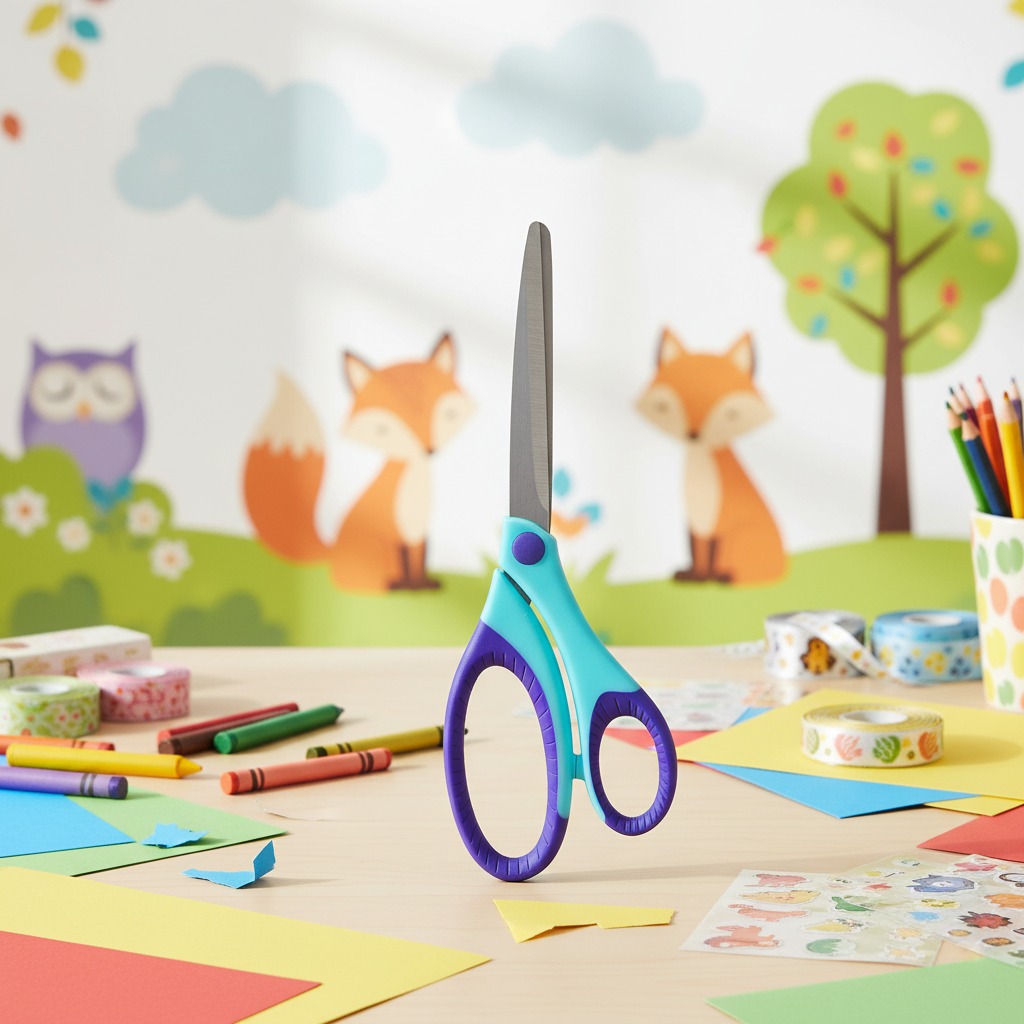
The original product presentation highlights several explicit features: soft-grip handles, stainless steel blades, a turquoise and purple color scheme, and everyday cutting use for paper, fabric, and similar household tasks. Those are useful starting points, but professional buyers should go further. Before placing an OEM order, confirm blade material details, handle construction, packaging, labeling, inspection standards, and the supplier's ability to support your market requirements.
Key Takeaways
- OEM soft grip scissors are best evaluated by comfort, cutting consistency, handle security, and packaging suitability.
- The known product details include soft-grip handles, stainless steel blades, and a turquoise and purple appearance.
- Buyers should ask suppliers to confirm material grade, dimensions, testing methods, MOQ, lead time, and customization options.
- These scissors are positioned for everyday home, office, school, and craft tasks rather than heavy industrial cutting.
- Sampling and pre-shipment inspection are important because small differences in blade alignment can affect user experience.
What Makes Soft Grip Scissors Useful for Everyday Cutting?
Soft grip scissors are designed to reduce the hard pressure that users may feel from rigid handles. This matters for households, classrooms, offices, and craft areas where scissors may be used repeatedly for wrapping paper, labels, packaging, light fabric, or general cutting tasks. A softer contact surface can make the tool easier to hold and may help users maintain better control during longer sessions.
The turquoise and purple color scheme also has practical value. Bright colors can make scissors easier to identify in a drawer, stationery area, or shared workspace. For retail buyers, color can influence shelf visibility; for private-label buyers, it may also support a coordinated product range. However, color should never be the only selection criterion. The handle fit, blade movement, screw or pivot stability, and edge finish are more important to long-term customer satisfaction.
How to Evaluate Blade and Cutting Performance
The source article states that the scissors use stainless steel blades and are intended to deliver clean cuts through paper, fabric, and more. For sourcing, that statement should be translated into specific sample checks. Buyers can request sample sets and test them on the materials most relevant to their target customers, such as copy paper, cardboard packaging, gift wrap, thread, ribbon, or light fabric.
Look for smooth opening and closing, consistent blade contact from pivot to tip, and a clean cut without tearing. The tips should meet accurately, and the blades should not wobble during use. If the product is intended for children, schools, kitchens, or craft retail, ask the supplier which design versions are available and what safety, labeling, or market requirements may apply. Do not assume one scissor design is suitable for every channel.
OEM Sourcing Checklist for Buyers
OEM purchasing involves more than choosing a sample that looks good. A supplier may be able to adjust color, packaging, branding, or assortment configuration, but buyers should confirm what is actually available before building a sales plan. Use the checklist below when comparing household scissors suppliers.
| Evaluation Area | What to Check | Questions to Ask the Supplier |
|---|---|---|
| Blade | Sharpness, alignment, smooth cutting, stainless steel claim | What blade material grade is used, and how is sharpness checked? |
| Handle | Soft grip feel, comfort, slippage, color consistency | Can the handle color or grip design be customized for OEM orders? |
| Construction | Pivot stability, opening force, tip alignment | What inspection points are used before shipment? |
| Packaging | Retail card, bulk pack, barcode, warning text | Which packaging formats are available, and what files are needed for artwork? |
| Commercial Terms | MOQ, lead time, sample process, payment terms | What are the current MOQ, sample cost, production lead time, and carton details? |
Matching the Scissors to the Right Sales Channel
For household scissors, the end user may be a parent opening packaging, a student working on a project, an office worker trimming documents, or a crafter cutting light materials. These users value reliable cutting, a comfortable grip, and easy storage. Retailers may focus on appearance and price point, while distributors often prioritize carton efficiency, reorder stability, and low complaint rates.
If the product is intended for supermarkets or discount stores, packaging durability and shelf presentation are important. If it is intended for stationery or craft channels, buyers may need clearer product descriptions and color options. For online sales, product images, dimensions, and use limitations should be stated accurately to reduce returns. Avoid overstating the scissors as industrial-grade unless the supplier provides evidence and the design is made for that purpose.
Quality Control Points Before Confirming an OEM Order
A pre-production sample should represent the final approved product, including handle color, blade finish, logo placement if applicable, packaging, and labeling. Buyers should keep an approved sample for comparison during production and inspection. Even for a common product like scissors, variations in pivot tightness, blade edge, or handle molding can affect perceived quality.
- Check several samples, not only one display piece.
- Test cutting performance on the actual materials your customers are likely to cut.
- Confirm whether the soft grip surface is securely bonded or molded as part of the handle.
- Review packaging artwork carefully, including warnings, barcode, country-of-origin marking, and language requirements.
- Ask how defective units are handled and what acceptance quality level, if any, will be used for inspection.
Buyers should also ask whether the supplier can provide product photos, packing details, and any documentation needed for the destination market. If compliance testing is required, clarify who arranges it, which standard applies, and whether testing is performed on the exact production version.
Use and Care Guidance for End Customers
Clear consumer guidance can reduce complaints and extend product life. These OEM soft grip scissors are positioned for general home, office, classroom, and craft use. They should be kept dry after cleaning, stored safely, and used only on appropriate materials. Cutting wire, thick plastic, metal sheet, or other hard materials may damage ordinary household scissors unless the supplier has specifically designed and verified them for those tasks.
Retail packaging or product descriptions should explain the main use cases in plain language. For example, buyers can describe them as suitable for paper, wrapping materials, office tasks, and light craft use if those claims match sample testing. If fabric cutting is mentioned, clarify whether the target is light fabric and craft use rather than professional tailoring.
Practical FAQ
Are OEM soft grip scissors suitable for private-label programs?
They can be, provided the supplier confirms available customization options such as color, logo method, packaging format, MOQ, and lead time. Buyers should approve samples before mass production.
What product details should be confirmed before ordering?
Confirm blade material grade, full size, handle material, color tolerance, packaging type, carton packing, inspection process, and any market-specific labeling requirements.
Can these scissors be marketed for both home and office use?
Yes, if sample testing supports those uses. The source information describes them as useful for everyday tasks such as paper and fabric cutting, but buyers should avoid claims beyond verified performance.
How can buyers compare different household scissors manufacturers?
Compare sample consistency, cutting results, communication speed, packaging support, defect handling, and willingness to answer technical and commercial questions clearly.
Should buyers request testing documents?
If the destination market, retailer, or product category requires testing, ask the supplier what documentation is available and whether additional third-party testing is needed for the final OEM version.
Final Sourcing Advice
OEM soft grip scissors can be a practical addition to a household or stationery product line when buyers treat them as a functional tool rather than only a colorful accessory. The best sourcing approach is to combine hands-on sample testing with clear supplier questions. Confirm what is known, verify what is claimed, and document the final approved version before production. That process helps protect comfort, cutting performance, packaging accuracy, and customer satisfaction across repeat orders.
