





Explore Premium OEM Kitchen Scissors: Your Ultimate Kitchen Partner
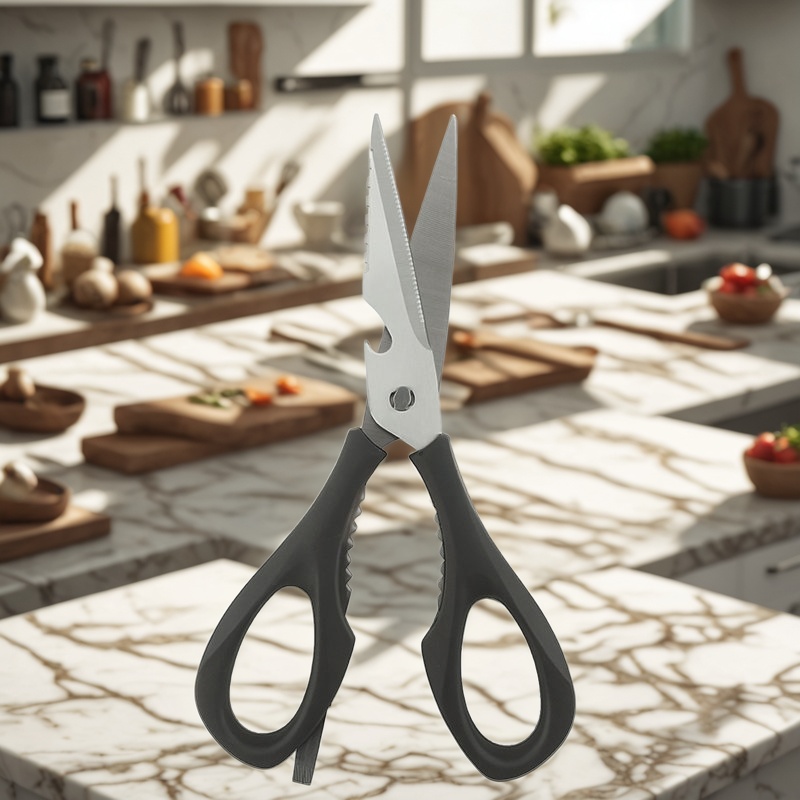
OEM kitchen scissors are a practical category for retailers, importers, promotional buyers, and kitchenware brands that want a useful everyday tool with room for customization. Unlike a single-purpose utensil, kitchen scissors can support many routine food-preparation tasks, from trimming herbs to cutting poultry, depending on blade design and construction. The original product description highlights stainless steel blades, ergonomic handles, and built-in functions such as a bottle opener and nutcracker. Those are useful selling points, but B2B buyers should still verify the exact material, structure, performance, packaging, and compliance requirements before confirming an order.
Key Takeaways
- OEM kitchen scissors should be evaluated by cutting performance, handle comfort, safety, cleaning convenience, and packaging suitability.
- Do not rely only on product photos; request samples and confirm blade material, finishing, assembly, and functional details in writing.
- Built-in features such as a bottle opener or nutcracker can add retail appeal, but they should be tested for usability and durability.
- For wholesale or private-label projects, ask suppliers about logo methods, packaging options, inspection standards, lead time, and order requirements.
What OEM Kitchen Scissors Need to Do Well
Kitchen scissors are expected to be simple, safe, and reliable. A buyer may be sourcing for supermarket shelves, online marketplaces, homeware chains, cooking kits, or branded kitchen collections. In each case, the end user will judge the item quickly: does it cut cleanly, feel comfortable, wash easily, and remain safe to store?
The original article describes the product as multi-functional and suitable for both professional chefs and home cooks. That broad positioning can work, but sourcing teams should define the target user more precisely. A home-use model may prioritize comfort, attractive packaging, and easy cleaning. A food-service-oriented model may need stronger construction, more repeat-use durability, and clearer care instructions. A promotional version may focus on perceived value, branding area, and cost control.
Features to Review Before Sourcing
Several features can make OEM kitchen scissors more attractive, but every feature should be checked against actual use. Stainless steel blades are mentioned in the source, yet buyers should still ask the supplier to state the specific steel type, hardness range if available, surface finish, and corrosion-resistance expectations. If the scissors are promoted for poultry, herbs, packaging, or general kitchen use, request sample testing for each intended task.
Handle design also deserves attention. Ergonomic handles can reduce hand fatigue, but comfort depends on shape, opening width, edge smoothness, grip texture, and whether the scissors suit both left- and right-hand use. Built-in functions such as a bottle opener and nutcracker may reduce the number of tools needed in a kitchen, but they should not weaken the main cutting function or create hard-to-clean areas.
Comparison Checklist for OEM Buyers
| Buying Point | What to Check | Questions to Ask the Supplier |
|---|---|---|
| Blade construction | Sharpness, thickness, alignment, edge finish, stainless steel details | What blade material is used, and can it be confirmed on the quotation or specification sheet? |
| Handle comfort | Grip size, surface texture, hand clearance, balance | Can samples be tested by users with different hand sizes before mass production? |
| Multi-function parts | Bottle opener, nutcracker, or other added functions | Are these features included in the standard model, and how are they tested? |
| Cleaning and care | Food-contact areas, crevices, removable structure if applicable | What cleaning instructions should be printed on the packaging or insert? |
| OEM packaging | Retail box, card, label, barcode, instruction sheet | What packaging formats are available, and what files are needed for custom artwork? |
| Quality control | Visual defects, function checks, carton strength, random inspection | What inspection standard is used before shipment, and can third-party inspection be arranged? |
Working with a Kitchen Scissors Manufacturer
A kitchen scissors manufacturer should be able to support more than basic production. For OEM projects, buyers usually need a clear product specification, sample confirmation, packaging development, production timeline, and shipment documentation. The supplier should explain which parts are customizable and which are fixed. Common customization points may include handle color, logo placement, packaging artwork, instruction content, and carton labeling, but availability varies by model and factory process.
Before moving to bulk order, ask for a pre-production sample that reflects the final approved materials, color, logo, and packaging. If any detail changes after sample approval, update the specification sheet. This helps prevent disputes caused by vague terms such as premium, durable, or high quality. Those phrases may be useful in marketing copy, but purchasing documents should use measurable descriptions wherever possible.
How to Evaluate a Kitchen Shears Supplier
A kitchen shears supplier can be a factory, trading company, or sourcing partner. Each option can work if communication is transparent. The key is to understand who controls production, who handles quality issues, and who is responsible if delivery requirements are not met. Ask whether the supplier can provide product photos, videos, samples, packaging templates, and written specifications before payment decisions are made.
Buyers should also clarify commercial details without assuming them. Minimum order quantity, lead time, sample fees, tooling costs, logo charges, payment terms, and freight options should be confirmed directly with the supplier. If compliance or market-entry documents are needed for a destination country, ask what documents are available and whether additional testing is required. Do not treat a general product description as proof of compliance.
Product Selection Tips for Wholesale Programs
- Define the sales channel first: retail shelf, e-commerce, hospitality supply, gift program, or private-label kitchenware range.
- Choose the functional level: basic cutting scissors, multi-functional kitchen shears, or a heavier-duty version for tougher tasks.
- Request samples from more than one supplier and test them on realistic kitchen materials.
- Check packaging strength, hanging options, barcode space, warning text, and care instructions.
- Confirm inspection criteria before production, including blade alignment, handle finish, cutting test, and quantity per carton.
For online sales, photography and product copy should match the actual sample. Avoid claiming dishwasher safety, specific steel grades, antimicrobial properties, or professional certification unless the supplier provides evidence and those claims are appropriate for the market. For offline retail, packaging needs to explain the main functions quickly and safely, especially if sharp blades are visible or accessible.
Care, Safety, and User Guidance
Even strong kitchen scissors perform better when users understand proper care. General guidance may include washing after contact with food, drying before storage, keeping the blades away from children, and avoiding use on materials outside the intended scope. If the scissors include a nutcracker or bottle opener, the instruction insert should show safe use so customers do not apply force in the wrong direction.
For B2B buyers, care instructions are not just an afterthought. They reduce customer confusion, support better reviews, and help align expectations. Ask the supplier whether they provide standard instruction wording, or prepare your own based on the final product specification and local labeling needs.
Practical FAQ
What should I ask before ordering OEM kitchen scissors?
Ask for the blade material, handle material, product dimensions, weight, available colors, logo options, packaging choices, sample timing, production lead time, MOQ, inspection method, and shipment terms.
Are multi-functional kitchen scissors better than basic scissors?
They can be better for retail value if the added functions are practical and durable. However, the main cutting performance should remain the priority.
Can I use my own brand packaging?
Many OEM suppliers can discuss custom packaging, but buyers should confirm artwork requirements, printing costs, order quantities, and approval samples before production.
How do I check quality before shipment?
Use an agreed inspection checklist that covers appearance, blade alignment, cutting performance, handle finish, packaging accuracy, carton labeling, and quantity. Third-party inspection may be useful for larger orders.
What claims should I avoid in product listings?
Avoid unsupported claims about steel grade, dishwasher safety, food-contact compliance, certifications, or performance testing unless the supplier provides suitable documentation and the claim is valid for your market.
Final Sourcing Advice
OEM kitchen scissors can be a strong addition to a kitchenware program when buyers treat the product as both a tool and a sourcing project. Focus on verified specifications, real sample testing, clear packaging requirements, and practical supplier communication. A reliable kitchen scissors manufacturer or kitchen shears supplier should help you answer detailed questions before production begins, not after goods are already in transit.
