








Professional Kitchen Scissors: Practical Selection and Use Guide
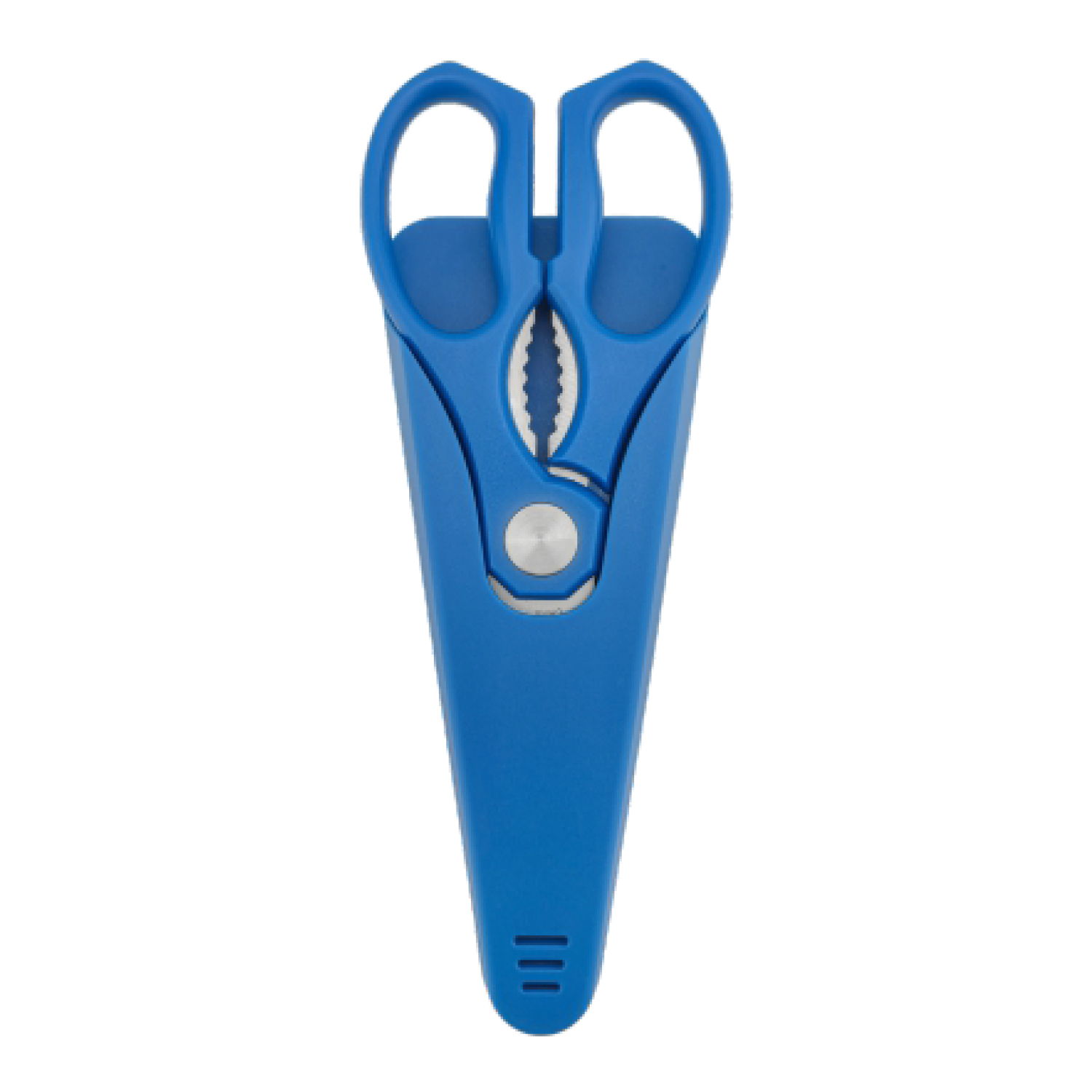
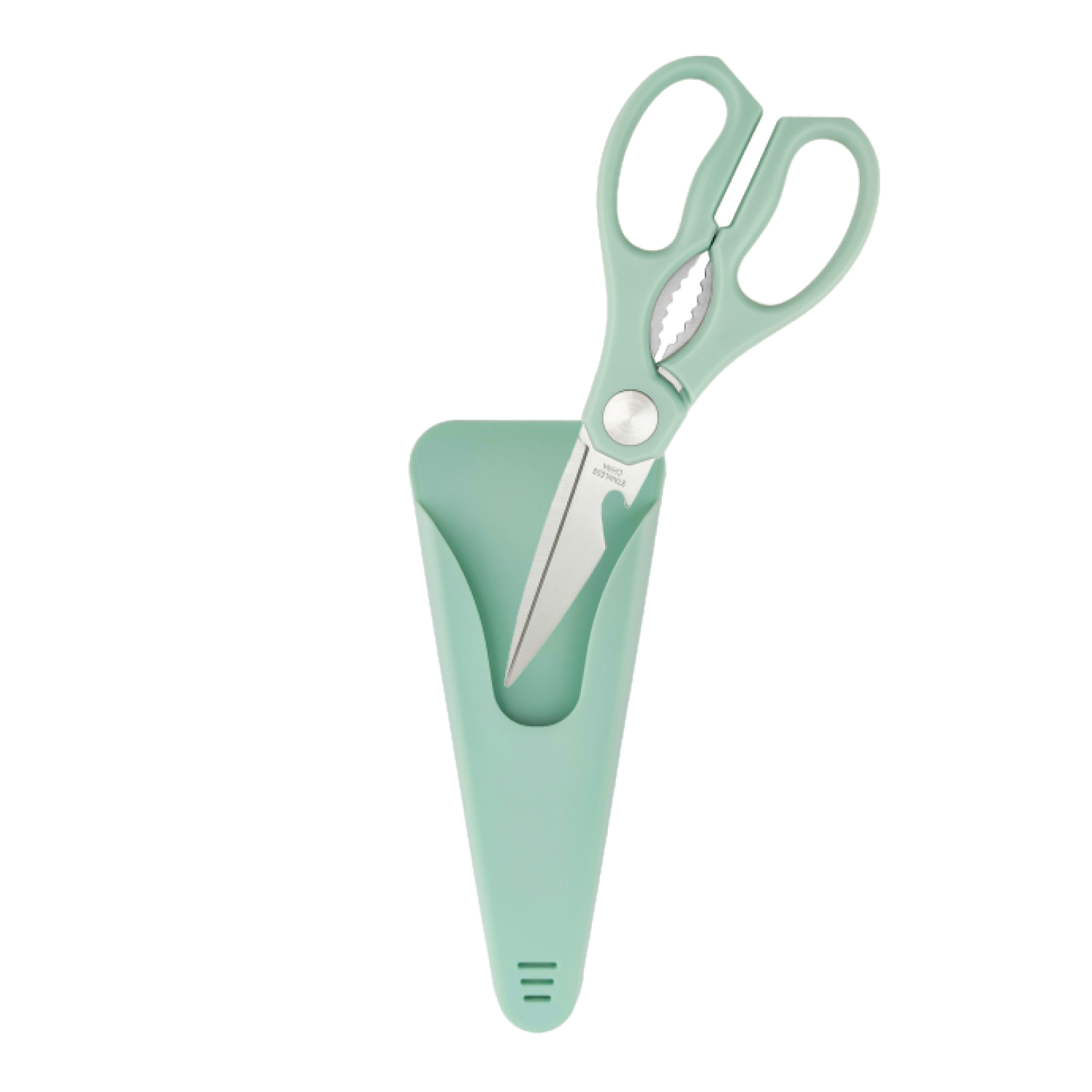
Professional kitchen scissors, often called kitchen shears, are one of the most useful cutting tools in a busy kitchen. A good pair can trim meat, cut herbs, open food packaging, portion vegetables, and handle small tasks that would otherwise require a knife and cutting board. The original Bonet Houseware product description highlights several practical details: stainless steel blades, an ergonomic handle, an integrated blade guard, a mint green multifunctional design, easy dismantling for cleaning, a bottle opener in the handle, and a serrated section for opening screw-top bottles. Those details make the product relevant both for household users and for buyers comparing kitchen scissors for retail, wholesale, or OEM projects.
This guide explains how to evaluate professional kitchen scissors in a practical way. Instead of focusing only on appearance, it looks at cutting performance, safety, cleaning, comfort, multifunction features, and sourcing questions that B2B buyers should ask before placing an order.
Key Takeaways
- Professional kitchen scissors should cut cleanly, feel stable in the hand, and be easy to clean after food contact.
- Stainless steel blades are commonly preferred for kitchen use, but buyers should confirm the specific material, finish, and maintenance guidance with the supplier.
- An ergonomic handle, blade guard, and detachable structure can improve daily convenience when designed well.
- Extra functions such as a bottle opener or screw-top grip are useful only if they do not compromise cutting comfort or hygiene.
- OEM and wholesale buyers should request samples, packaging details, quality-control information, and compliance documentation instead of assuming specifications.
What Makes Kitchen Scissors “Professional”?
The word “professional” should mean more than a sharper-looking product photo. In practical use, professional kitchen scissors should be reliable across repeated kitchen tasks. They should close smoothly, cut with control, resist loosening too quickly, and allow the user to clean food residue from the blade area. For foodservice teams, they also need to be simple enough for multiple staff members to use safely. For household users, they should be comfortable, easy to store, and suitable for common cooking tasks.
Kitchen scissors differ from office scissors because they are designed around food preparation. The blades must handle wet or slippery ingredients, the handles should support a secure grip, and the structure should be easy to rinse and dry. The Bonet Houseware article mentions stainless steel blades and a dismantling design for cleaning and maintenance. These are useful features because food particles can collect near the pivot and between blade surfaces if the scissors cannot be cleaned properly.
Core Cutting Tasks and Daily Kitchen Uses
A well-designed pair of professional kitchen scissors can reduce the need to reach for a knife for every small task. Common uses include trimming fat from meat, cutting cooked poultry into smaller portions, snipping herbs, cutting leafy vegetables, slicing pizza or flatbread, opening sealed food bags, and portioning noodles or dumpling wrappers. The advantage is speed and control, especially when cutting small items directly over a bowl or pan.
However, users should still match the tool to the job. Kitchen scissors are not a replacement for every knife. They are best for flexible, thin, or moderately firm foods. Hard bones, frozen foods, thick shells, or non-food materials may damage the blades or loosen the pivot unless the supplier specifically confirms the scissors are intended for those tasks. If you are buying for a restaurant, school kitchen, meal-prep operation, or retail product line, define the expected use cases before selecting the model.
Blade Material, Edge Design, and Cutting Control
The source article states that the scissors use stainless steel blades. Stainless steel is widely used in kitchen tools because it can offer practical corrosion resistance and is relatively easy to maintain. Still, “stainless steel” is a broad term. B2B buyers should ask the supplier which steel type is used, how the blade is finished, how the cutting edge is sharpened, and what care instructions are recommended. Do not assume a specific steel grade, hardness, or test result unless the supplier provides documentation.
Cutting control depends on more than blade material. The blade shape, edge angle, pivot tension, and handle alignment all affect performance. When reviewing a sample, test the scissors on several common materials: thin plastic food packaging, leafy herbs, cooked chicken skin, soft vegetables, and thicker kitchen wrap. A good pair should cut near the tip as well as near the center of the blade without tearing or forcing the user to squeeze excessively.
Handle Comfort and Safety Features
The original product description mentions an ergonomic handle designed to provide a comfortable grip and reduce fatigue. This matters because kitchen scissors are often used repeatedly during preparation. The handle opening should fit the target user group, the grip should not create pressure points, and the scissors should feel balanced rather than blade-heavy or handle-heavy.
Safety should also be considered during use and storage. The source article notes an integrated blade guard, which helps protect the sharp edges when the scissors are not in use. For household buyers, a guard can reduce the chance of accidental cuts in a drawer. For retail and wholesale buyers, it can also improve the perceived completeness of the product package. When checking samples, confirm whether the guard fits securely, is easy to remove, and does not trap moisture against the blades after washing.
Cleaning, Hygiene, and Maintenance
Kitchen scissors come into contact with raw ingredients, sauces, oil, and packaging. That makes cleaning a major selection factor. The Bonet Houseware description states that the scissors can be dismantled for cleaning and maintenance. A detachable design can make it easier to rinse the pivot area and dry the blades thoroughly, but the connection must feel secure when reassembled.
For daily care, rinse the scissors soon after use, especially after cutting salty, acidic, or protein-rich foods. Wash with warm water and mild detergent, then dry completely before storage. If the supplier states that the product is dishwasher safe, follow the provided instructions; if not, hand washing is the safer assumption. Avoid leaving scissors soaking in water, and do not store them while wet inside a closed drawer or blade cover.
Multifunction Features: Useful or Distracting?
The featured scissors include more than cutting blades. The original article mentions a bottle opener in the handles and a serrated section for opening screw-top bottles. Multifunction details can be practical in a compact kitchen, outdoor cooking kit, or retail product designed for convenience. They can also help differentiate a product in a competitive category.
Even so, multifunction features should support the main purpose rather than distract from it. A bottle opener should not make the handle uncomfortable. A serrated grip should be placed where it can be used safely. Extra notches, teeth, or openings should not create hard-to-clean areas that collect food residue. For OEM buyers, this is a key sample-review point: test every added function, not only the scissor blades.
Comparison Checklist for Selecting Kitchen Scissors
| Selection Factor | What to Check | Why It Matters |
|---|---|---|
| Blade performance | Cut herbs, packaging, soft meat, and vegetables during sample testing | Confirms real kitchen usefulness beyond appearance |
| Blade material | Ask for the stainless steel type, finish, and maintenance guidance | Prevents unsupported assumptions about durability or care |
| Handle comfort | Check grip size, pressure points, and control with wet hands | Improves safety and reduces fatigue during repeated tasks |
| Cleaning design | Confirm whether the scissors dismantle and reassemble securely | Helps remove food residue from the pivot area |
| Safety storage | Review blade guard fit and packaging protection | Reduces risk during storage, shipping, and retail handling |
| Multifunction tools | Test bottle opener and screw-top grip usability | Ensures added functions are genuinely practical |
| OEM readiness | Ask about customization, labeling, inspection, and documentation | Supports smoother wholesale or private-label purchasing |
B2B and OEM Sourcing Guidance
For importers, distributors, giftware brands, supermarket buyers, and private-label kitchenware companies, sourcing professional kitchen scissors requires more than choosing a color. The source article identifies Bonet in an OEM scissors manufacturer context, but commercial details such as MOQ, production capacity, certifications, prices, lead times, and test results are not provided in the original text. Buyers should request these details directly instead of assuming them.
When discussing an OEM or wholesale order, prepare clear questions:
- What blade material and handle material are used, and can documentation be provided?
- Can the product color, packaging, logo placement, or instruction sheet be customized?
- What is the sample process, and how should sample performance be evaluated?
- What are the MOQ, lead time, payment terms, and production schedule for the target order?
- What quality-control checks are performed before shipment?
- Are there compliance documents or test reports relevant to the destination market?
- How are the blade guard, retail packaging, and cartons designed to protect the product in transit?
For a kitchen tool that may contact food, buyers should be especially careful about market requirements. Ask the supplier what documents are available and consult local import or regulatory experts when needed. Avoid making claims on retail packaging unless those claims are supported by supplier documentation and are suitable for the sales region.
Who Should Choose This Type of Kitchen Scissors?
Professional kitchen scissors with stainless steel blades, an ergonomic handle, detachable cleaning design, blade guard, and multifunction handle features are suitable for many cooking environments. Home cooks may appreciate the convenience for everyday prep. Small restaurants and catering teams may use them for quick portioning and packaging tasks. Retailers may consider them as a practical kitchenware item because the functions are easy for shoppers to understand.
The mint green design mentioned in the original article may appeal to buyers looking for a lighter, more recognizable color option. Still, color should be considered alongside grip comfort, cleaning convenience, and blade performance. In the long term, users are more likely to keep using scissors that cut well and clean easily than scissors chosen only for appearance.
Practical FAQ
Can professional kitchen scissors replace a chef’s knife?
No. They are a complementary tool. They are excellent for trimming, snipping, portioning, and opening packaging, but a chef’s knife is still better for chopping, slicing large vegetables, and precision cutting on a board.
Are detachable kitchen scissors easier to clean?
Often, yes. A detachable structure can expose the pivot area where food residue may collect. The key is that the scissors should reassemble securely and remain stable during cutting.
What should I ask before buying kitchen scissors in bulk?
Ask about materials, sample availability, customization options, MOQ, lead time, packaging, quality-control process, and any documentation needed for your destination market. Confirm every important claim in writing.
How should kitchen scissors be stored safely?
Clean and dry them first, then store them with the blade guard in place if supplied. Keep them away from children and avoid loose storage with other sharp tools that may damage the blades.
Do multifunction features matter?
They can be useful, especially a bottle opener or screw-top grip, but only if the main cutting performance remains strong and the added features do not make cleaning or handling more difficult.
Final Buying Advice
The best professional kitchen scissors are practical, comfortable, safe to store, and easy to clean. The features described in the original Bonet Houseware article—stainless steel blades, ergonomic handle, blade guard, detachable cleaning design, bottle opener, serrated screw-top section, and mint green multifunctional appearance—are all relevant selection points. For consumers, the priority should be daily usability and care. For B2B buyers, the priority should be verified specifications, sample testing, packaging review, and clear supplier communication before committing to a wholesale or OEM order.
