




Explore Safety & Creativity with OEM 5 inch Children Scissors
OEM 5 inch children scissors are small classroom and craft tools designed for young users, but they should still be evaluated with the same care as any other sourced product. Buyers for school supply brands, stationery distributors, craft kits, promotional programs and retail assortments need to consider safety, comfort, usability and supplier communication before placing an order.
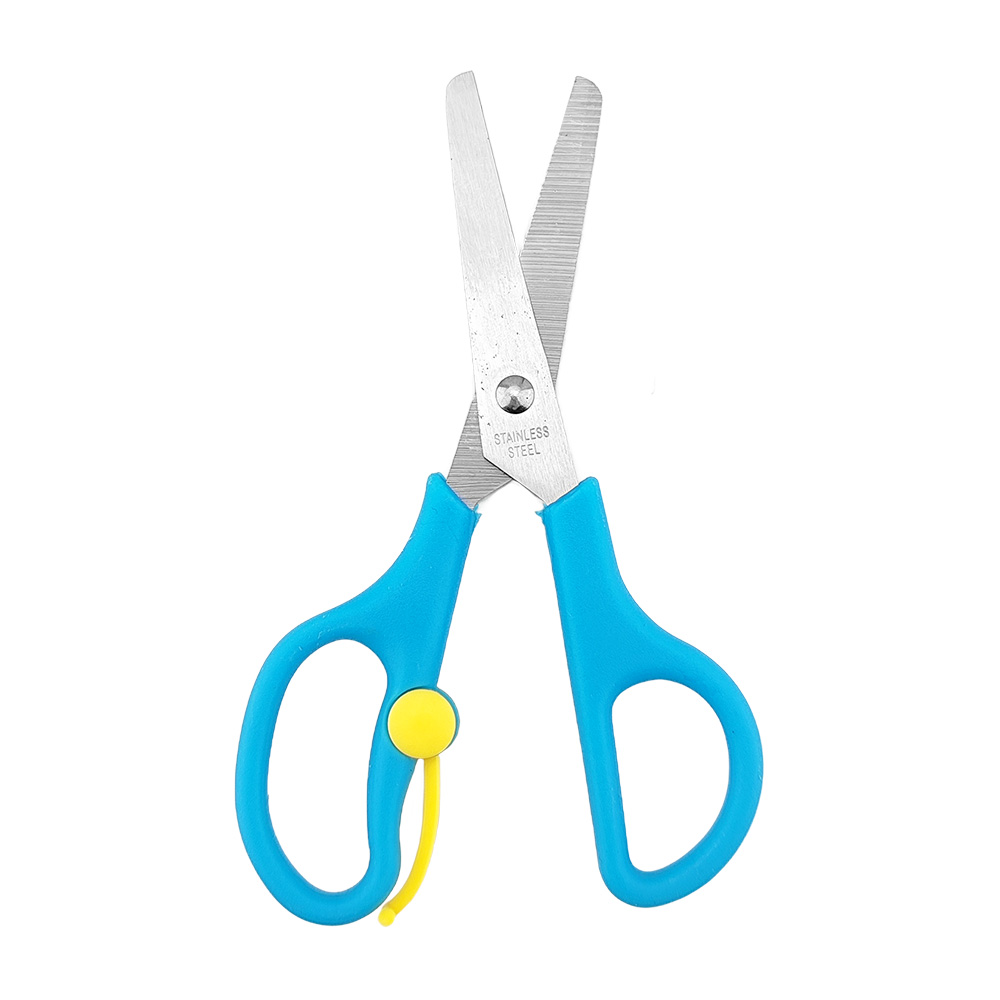
The original product presentation highlights a 5 inch children scissors style with colorful turquoise and yellow accents, rounded tips, ergonomic handles, a blade braking system, stainless steel blades and a spring-assisted mechanism. These are useful points to review, but commercial buyers should still confirm final specifications, materials, packaging, labeling and quality-control expectations directly with the supplier before production.
Key Takeaways
- For children scissors, safety details such as rounded tips and controlled blade action matter as much as cutting performance.
- A 5 inch size is commonly suitable for small hands, classroom craft work and school stationery programs.
- Spring-assisted opening can reduce hand fatigue for children still developing fine motor control.
- OEM buyers should confirm materials, packaging, labeling, samples, inspection standards and any compliance requirements before ordering.
What Makes 5 Inch Children Scissors Different?
Children scissors are not simply smaller versions of adult scissors. A 5 inch format is intended to be easier for young hands to hold and control. The shorter blade length may also help users focus on paper cutting, card projects and simple craft tasks rather than heavy-duty cutting. This makes the product relevant for back-to-school ranges, classroom supply packs, children’s art kits and entry-level stationery assortments.
The product described in the source uses colorful accents, which can make it more approachable for children and easier to identify in a shared classroom. Color should not be treated only as decoration, however. In OEM sourcing, color consistency can affect brand presentation, shelf appeal and repeat-order consistency. Ask the supplier how handle colors are matched, whether custom colors are available and whether color samples can be approved before mass production.
Safety Features Buyers Should Review
The original article mentions rounded tips and a blade braking system. These features are important because children often use scissors while learning basic hand coordination. Rounded tips can reduce the risk of accidental poking during normal craft use, while a controlled blade design can make the scissors feel more manageable.
Buyers should avoid assuming that a product is suitable for every age group without verification. Instead, define the target user clearly: preschool craft, primary school classroom, home art activity or supervised craft kit. Then ask the supplier which safety features are included in the final design and what warnings, age grading or usage instructions can be printed on the packaging.
Comfort, Grip and Spring-Assisted Cutting
Comfort is especially important for children who are practicing repeated cutting motions. The source describes ergonomic handles and a gentle spring mechanism that helps open the blades. This spring-assisted feature may be useful for toddlers or younger children who are still building hand strength, as it can reduce the effort needed between cuts.
When reviewing samples, do not rely only on appearance. Open and close the scissors repeatedly, test them on paper and lightweight craft materials, and check whether the spring action feels smooth and predictable. The handles should feel stable in the hand without sharp molding edges. If the product will be sold under a private label, ask whether the handle shape can be adjusted or whether existing molds must be used.
Cutting Performance for School and Craft Use
The original content states that the scissors are used for paper crafts and may handle materials such as construction paper, fabric scraps and lightweight cardboard. These are useful reference applications, but buyers should test the exact materials expected in their market. A product that works well for thin paper may not be ideal for thicker card, felt or laminated sheets.
Stainless steel blades are also mentioned in the source. Buyers should confirm the exact blade material, finish and edge treatment with the supplier rather than relying on a general description. For school scissors, the goal is not maximum sharpness; it is a balanced edge that cuts paper cleanly while remaining appropriate for supervised children’s use.
Comparison Checklist for OEM Evaluation
| Evaluation Point | Why It Matters | Questions to Ask the Supplier |
|---|---|---|
| Size and hand fit | A 5 inch size should suit young users and classroom tasks. | What is the exact overall length, blade length and handle opening? |
| Tip design | Rounded tips can reduce accidental poking risks during craft use. | Can you provide photos or samples showing the final tip shape? |
| Blade material | Blade material affects durability, cutting feel and corrosion resistance. | What blade material is used, and can this be documented in the specification sheet? |
| Spring mechanism | Spring-assisted opening may help children who tire easily. | Is the spring removable, fixed or optional in the OEM design? |
| Handle color | Color consistency supports retail branding and repeat orders. | Can custom colors be matched, and how are color approvals handled? |
| Packaging and labeling | Packaging must communicate age guidance, warnings and brand information clearly. | What packaging formats are available, and can buyer artwork be applied? |
OEM and Wholesale Sourcing Guidance
For OEM children scissors, the best sourcing process starts with a written specification. Include size, color, blade type, handle material, spring requirement, packaging format, labeling language and intended selling channel. If you are sourcing for schools or children’s retail products, also list any market-specific safety or compliance expectations you need the supplier to address.
Before confirming a production order, consider the following steps:
- Request physical samples of the exact 5 inch children scissors style, including the spring-assisted version if required.
- Test the scissors on the real craft materials included in your kits or sold alongside the product.
- Review handle comfort with the intended user group under adult supervision where appropriate.
- Confirm artwork areas, barcode placement, warning text and carton markings before packaging production.
- Ask what quality checks are performed for blade alignment, opening force, tip shape and visual defects.
Commercial details such as minimum order quantity, lead time, sample cost, mold options and custom packaging fees should be requested directly from the supplier. These details can vary by order design, season and customization level.
Practical Use and Care Notes for End Users
Even a children-focused scissors design should be used with basic care. Retailers and kit brands can improve the customer experience by adding simple guidance on packaging or inserts. Children should use scissors under suitable adult supervision, especially when they are still learning how to cut safely. The scissors should be used for appropriate craft materials rather than hard plastic, wire or other unsuitable items.
After use, wipe the blades clean if glue, tape residue or paper dust builds up. Store the scissors closed and keep them in a classroom bin, pencil case or craft box where the tips are not exposed. If the spring mechanism becomes loose or the blades no longer align well, the product should be removed from use rather than forced.
FAQ
Are 5 inch children scissors suitable for preschool use?
They may be suitable for some preschool craft activities, but age suitability depends on the final design, supervision level and local market requirements. Buyers should confirm age guidance and warning text with the supplier.
What materials should children craft scissors cut?
Typical use includes paper, construction paper and simple craft materials. If your program requires cutting fabric scraps or lightweight cardboard, test samples before ordering.
Why choose spring scissors for kids?
A spring-assisted mechanism can help reopen the blades after each cut, reducing effort for children who are developing hand strength and fine motor skills.
Can OEM children scissors be customized?
Many OEM programs may involve color, packaging or branding discussions, but buyers should ask the supplier which customization options are available for the specific 5 inch model.
What should buyers confirm before bulk ordering?
Confirm dimensions, materials, safety features, sample approval, packaging artwork, labeling, inspection criteria, order quantity, lead time and any market-specific compliance needs.
