




Colander Strainer Factory Sourcing Guide for Buyers
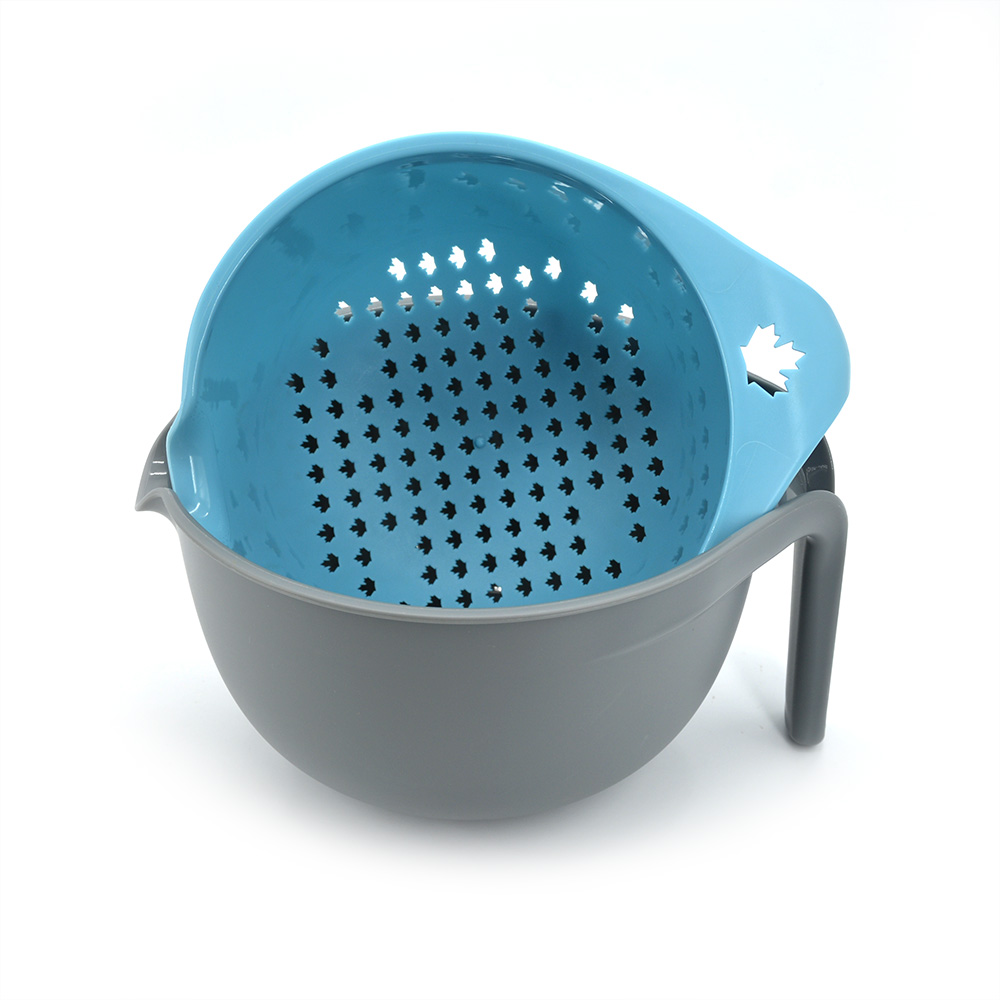
For retailers, importers, kitchenware brands, and promotional product buyers, choosing a colander strainer factory is not only about finding a low unit price. A colander is a simple kitchen tool, but factory decisions affect durability, user comfort, packaging quality, replacement rates, and the consistency of repeat orders. The original article introduced colander manufacturing and mentioned plastic colander producers, including a Two-in-One Mixing Bowl and Colander Set with a grey mixing bowl and a blue colander. This guide expands that topic into a practical sourcing checklist for B2B buyers who need to compare suppliers with less guesswork.
Key Takeaways
- Start with the use case: retail shelves, supermarket programs, private label, gift sets, or online marketplace sales.
- Ask suppliers to confirm material, dimensions, weight, heat-use limits, packaging, and testing options instead of assuming specifications.
- For plastic colanders, review drainage design, handle comfort, wall thickness, stacking, and color consistency.
- Request samples and compare them under real kitchen tasks before approving bulk production.
- Keep OEM discussions clear: artwork, carton marks, color matching, molds, lead time, and change control should be documented.
What a Colander Strainer Factory Typically Provides
A colander strainer factory usually focuses on forming, finishing, inspecting, and packing kitchen draining products. Depending on its setup, the supplier may offer plastic colanders, bowl-and-colander sets, strainers in multiple sizes, nested kitchen sets, or customized colors and packaging. Some factories may support OEM or private label projects, but buyers should not assume the scope. Ask whether the supplier handles mold design, color matching, logo application, retail packaging, export cartons, and production inspections in-house or through partners.
The most useful factory conversations are specific. Instead of asking, “Is this high quality?” ask for the product drawing, actual measurements, material name, sample weight, packaging method, carton quantity, and photos of the drainage holes, base, handles, and rim. These details help you compare offers more accurately.
Product Types to Compare Before Sourcing
Colanders can look similar in catalog photos, but they serve different market needs. A basic plastic colander may work for entry-level retail or promotional programs. A bowl-and-colander combination, such as the Two-in-One Mixing Bowl and Colander Set described in the source article, may suit customers who want rinsing and mixing functions in one compact set. The noted color pairing, a grey mixing bowl with a blue colander, can also help a product stand out visually if it matches your assortment strategy.
Before choosing a design, define the intended user. Is the buyer rinsing berries, draining pasta, washing vegetables, or preparing meal kits? A product intended for heavier foods may need a more stable base and comfortable handles. A product for small kitchens may need nesting or stacking features. For online sales, the product should photograph well, but it also needs packaging that protects edges and prevents deformation during shipping.
Comparison Checklist for Colander Buyers
| Evaluation Area | What to Check | Questions to Ask the Supplier |
|---|---|---|
| Material | Plastic type, color consistency, odor, finish | What material is used, and can you provide material documentation if required? |
| Design | Drainage hole pattern, rim strength, handle shape, base stability | Can you share drawings or measurements for the current mold? |
| Function | Drain speed, grip comfort, nesting, bowl fit | Can samples be tested with vegetables, fruit, and cooked pasta? |
| OEM Options | Custom color, logo, packaging, carton marks | Which customizations are available, and what information is needed for a quote? |
| Quality Control | Appearance checks, dimensions, packing inspection | What inspection steps are used before shipment? |
| Commercial Terms | MOQ, lead time, sample policy, payment terms | What are the current MOQ, production lead time, and sample costs? |
Material and Manufacturing Questions to Ask
The original article refers to plastic colander manufacturers, but it does not specify the exact material grade or technical performance of any product. Buyers should therefore treat material as an open sourcing question. Ask the factory to identify the plastic used and confirm whether it is suitable for the markets and use cases you plan to sell into. If your sales channel requires compliance documents, migration testing, or specific labeling, discuss this early and request written confirmation from the supplier.
Manufacturing consistency matters as much as the material name. Review whether the rim is smooth, whether the drainage holes have rough edges, whether the bowl and colander fit properly in a set, and whether colors remain consistent across production batches. If a supplier promotes eco-conscious production or recycled content, ask for clear documentation and avoid using such claims in your own marketing unless they are verified for your target market.
How to Evaluate Samples Like a Buyer, Not a Catalog Reader
Sample approval should go beyond appearance. Use the sample the way a customer would. Rinse leafy vegetables, drain washed fruit, and test how easily water escapes. If the item includes a matching bowl, check whether the colander sits securely and whether the two pieces separate without sticking. Place the sample on a wet counter to assess stability. Hold it when full to judge handle comfort and flex.
- Measure the sample and compare it with the supplier’s stated dimensions.
- Check surface finish, color, odor, and any sharp or unfinished edges.
- Test drainage speed with several food types.
- Review stacking or nesting if the product will ship in sets.
- Photograph the sample for internal approval and future production comparison.
Keep one approved sample sealed as a reference. If you later place a production order, compare bulk goods against that approved sample before shipment.
OEM and Wholesale Sourcing Considerations
For OEM colander projects, clarity reduces disputes. Confirm whether the factory can match a Pantone color or only offers standard colors. If you need a grey mixing bowl and blue colander combination similar to the product described in the source, ask whether those colors are existing options or require custom production. Also confirm whether a logo can be molded, printed, labeled, or applied only on packaging.
Packaging should be discussed early because it affects cost, carton size, shelf presentation, and damage risk. For wholesale buyers, plain bulk packaging may be enough. For retail buyers, you may need barcode placement, product instructions, care wording, hang tags, or display-ready cartons. Do not assume the supplier will create compliant copy for your market; provide your own requirements and have them reviewed where necessary.
Quality Control Points Before Shipment
A practical quality plan for colanders should include visual inspection, dimension checks, color review, fit testing for sets, packaging checks, and carton marking verification. If the order involves custom color or packaging, inspection should compare production units against approved samples and approved artwork. Buyers should also ask how the factory handles nonconforming goods and whether rework is possible before shipment.
For larger or repeat orders, consider a pre-shipment inspection by your own team or a third party. The goal is not to complicate the purchase; it is to catch issues while goods are still at the factory. Colanders are everyday items, so small defects such as rough drainage holes, warped rims, unstable bases, or weak packaging can quickly affect customer reviews and return rates.
Practical FAQ
What should I ask a colander strainer factory first?
Start with product type, material, dimensions, available colors, packaging options, MOQ, sample timing, production lead time, and whether OEM customization is supported.
Is a plastic colander suitable for wholesale kitchenware programs?
It can be, depending on the target market and product requirements. Ask the supplier to confirm the material, intended use, packaging, and any documentation your sales channel requires.
How do I compare two similar colander quotes?
Compare sample weight, size, material, drainage design, packaging, carton quantity, customization, inspection process, and shipping impact. A cheaper quote may not be cheaper if packaging is weak or the product is lighter than expected.
Can I request custom colors for a bowl and colander set?
Many suppliers may offer color options, but availability depends on existing molds, production planning, and order quantity. Ask whether the color is standard or custom and what approval process is required.
What should be included in an approved production sample?
The final sample should include the correct product shape, color, finish, fit between parts, logo if applicable, and packaging. Keep it as the benchmark for production inspection.
