




Explore the Best Multi-Functional Kitchen Shears
Multi-functional kitchen shears are among the most useful small tools in a kitchen because they handle jobs that are awkward with a knife. They can cut food packaging, trim herbs, portion poultry, open bags, and help with quick prep when a cutting board is not convenient. For household buyers, the goal is to choose shears that feel safe, clean easily, and cut reliably. For retailers, wholesalers, and OEM buyers, the goal is broader: evaluate design, durability, packaging, after-sales support, and whether the supplier can answer technical questions clearly.
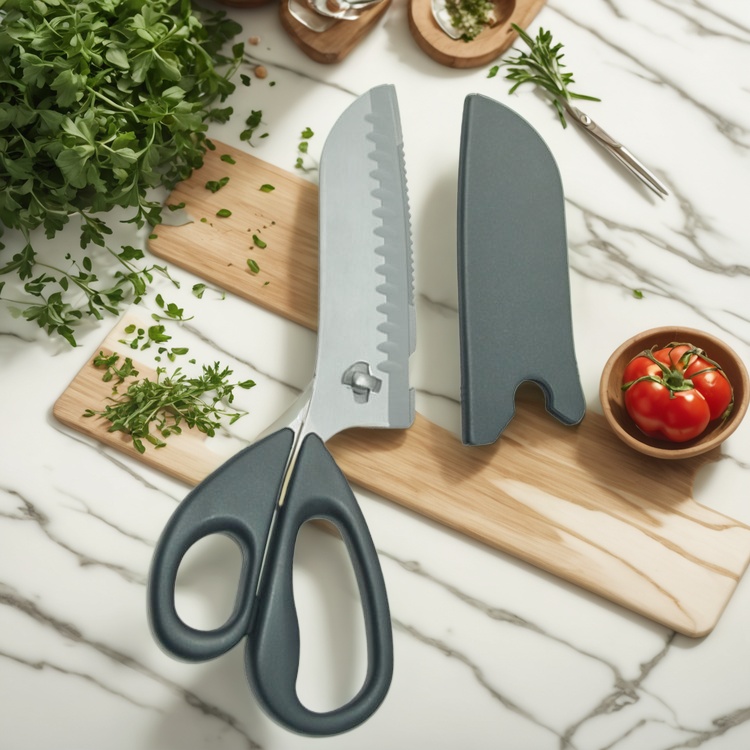
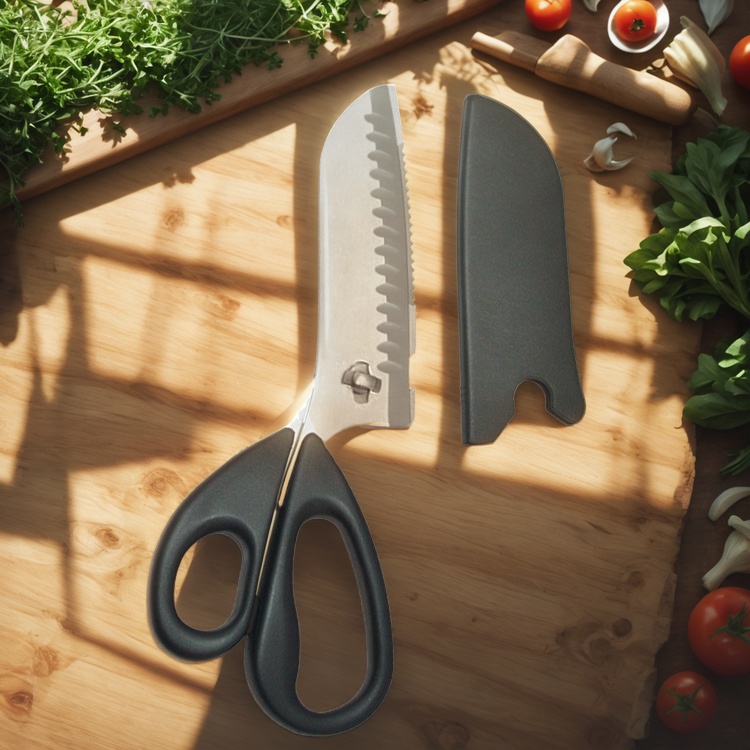
The original product description highlights several useful points: robust stainless steel blades, a serrated edge, detachable blades for cleaning, an ergonomic handle, an option for custom kitchen shears OEM, and a black blade cover for safer storage. Those are meaningful features, but buyers should still verify material details, testing standards, production capacity, pricing, lead time, and packaging requirements directly with the supplier before placing an order.
Key Takeaways
- Choose kitchen shears based on cutting performance, cleaning access, grip comfort, and storage safety.
- Detachable blades can make washing easier, especially after cutting meat, herbs, or sticky packaging.
- A serrated edge can improve grip on slippery foods and tough packaging, but blade quality should be verified.
- OEM and wholesale buyers should ask for samples, specification sheets, packaging options, and quality-control details.
- Do not rely on appearance alone; handle balance, hinge strength, and cleaning method affect daily use.
What Makes Kitchen Shears Truly Multi-Functional?
A practical pair of multi-functional kitchen shears should do more than cut paper or thin plastic. In daily use, people reach for shears to snip green onions, cut cooked meat into smaller pieces, trim fat, open sealed food bags, cut parchment, divide noodles, or break down light packaging. The best design is not necessarily the most complicated one. It is the design that supports frequent cutting tasks without making the tool heavy, difficult to wash, or unsafe to store.
The serrated edge mentioned in the source article is a useful feature because it can help hold food in place while cutting. Smooth blades may slide on slippery skins, herbs, or flexible packaging, while serrations can add bite. However, serration pattern, sharpening quality, and blade alignment all affect performance. If you are buying for a store brand or wholesale channel, request a sample and test it on the exact tasks your customers care about.
Important Features to Compare Before Buying
Kitchen shears are simple at first glance, but small design differences change the user experience. A pair that works well for opening cartons may not be comfortable for trimming herbs. A model that feels sturdy may still be difficult to clean if food residue collects near the hinge. Use the table below as a practical checklist for consumer selection or B2B sample evaluation.
| Feature to Check | Why It Matters | Questions to Ask |
|---|---|---|
| Blade material | Affects cutting feel, corrosion resistance, and maintenance needs. | What stainless steel is used, and how should it be cleaned? |
| Serrated edge | Helps grip slippery food and packaging during cutting. | Is the serration on one blade or both, and can it be resharpened? |
| Detachable blades | Improves access for washing and drying around the hinge. | How do the blades separate, and is the mechanism stable in use? |
| Handle design | Influences comfort, control, and hand fatigue during repetitive tasks. | Is the grip comfortable for different hand sizes? |
| Blade cover | Supports safer drawer storage and protects the cutting edge. | Is the cover included, secure, and suitable for retail packaging? |
| OEM options | Important for branding, packaging, and assortment planning. | What customization is available, and what are the MOQ and lead time? |
Use and Care Guidance for Everyday Kitchens
Even good shears perform poorly if they are used or stored incorrectly. Avoid cutting very hard materials unless the supplier clearly states that the tool is designed for that purpose. Kitchen shears are usually intended for food preparation and light packaging, not for metal wire, bones beyond their intended capacity, or frozen items that may damage the cutting edge.
- Wash the shears soon after cutting raw meat, fish, or sticky foods.
- If the blades are detachable, separate them according to the supplier's instructions before cleaning.
- Dry the blades thoroughly before storage to reduce the risk of staining or corrosion.
- Use the blade cover when storing the shears in a drawer.
- Keep kitchen shears separate from craft scissors to avoid cross-use with non-food materials.
For households, detachable blades are especially helpful because the hinge area can trap residue. For shared kitchens, restaurants, or food-prep areas, cleaning procedures should be more formal. Confirm whether the shears are dishwasher-safe before putting them in a machine, because handle materials, coatings, and hinge design may have different care requirements.
How B2B Buyers Should Evaluate an OEM Kitchen Shears Supplier
When the topic is OEM, wholesale, or supplier selection, the purchasing decision should be evidence-based. A product page may show useful features, but commercial buyers need to confirm details that affect quality, cost, and risk. The original article mentions custom kitchen shears OEM, which makes the product relevant for private-label programs, promotional kitchenware, and retail assortments. Before moving forward, ask the supplier direct questions and request written confirmation.
Important sourcing questions include: What blade material is used? What handle material is used? Can the supplier provide drawings or specification sheets? What customization is available for logo, color, packaging, blade cover, or instruction inserts? What is the minimum order quantity? What is the sample lead time and mass-production lead time? What inspection process is used before shipment? Are there any test reports or compliance documents applicable to your target market? These details should not be assumed.
Sample Testing Checklist for Retailers and Wholesalers
Before approving a bulk order, test samples in conditions that reflect real customer use. A short internal review can prevent returns and complaints later. Cut common food packaging, herbs, cooked meat, and flexible plastic. Open and close the shears repeatedly. Separate and reassemble detachable blades to see whether the mechanism is intuitive. Check whether the black blade cover stays in place during storage and shipping simulation.
- Cutting test: evaluate clean cuts, blade alignment, and whether food slips.
- Comfort test: check grip pressure after repeated use.
- Cleaning test: inspect the hinge and detachable parts after washing.
- Storage test: confirm that the blade cover fits securely.
- Packaging test: review barcode space, safety warnings, and retail display needs.
Common Mistakes to Avoid
One common mistake is choosing shears only by weight. Heavy shears may feel strong, but they can fatigue users if the handle shape is not comfortable. Another mistake is treating detachable blades as automatically better. They are useful, but only if the separation mechanism is secure, easy to understand, and not likely to loosen during normal use. For B2B buyers, the biggest mistake is approving a product based only on photos. Always request samples and confirm specifications in writing.
Marketing claims should also be reviewed carefully. Avoid broad claims about professional performance, safety, or compliance unless the supplier can provide supporting details. Product pages can introduce features, but sourcing teams should make final decisions based on samples, documents, and target-market requirements.
FAQ
Are multi-functional kitchen shears better than a knife?
They are not a replacement for every knife task, but they are faster and safer for many small jobs, such as cutting herbs, opening food bags, trimming cooked foods, or working with flexible packaging.
Why are detachable blades useful?
Detachable blades make it easier to clean and dry the area around the hinge. This is especially helpful after cutting raw meat, oily foods, or sticky ingredients.
What should OEM buyers ask before placing an order?
Ask about blade and handle materials, customization options, MOQ, sample timing, production lead time, packaging choices, inspection procedures, and any documents required for the destination market.
Does a serrated edge matter?
A serrated edge can improve grip on slippery foods and tough packaging. Buyers should still test samples because serration quality and blade alignment affect cutting performance.
How should kitchen shears be stored?
Clean and dry them first, then store them with the blade cover if one is supplied. Covered storage helps protect the edge and reduces accidental contact in a drawer.
