




Explore the Versatility of Multi-Functional Scissors
Multi-functional scissors are designed to reduce tool changes during daily kitchen preparation. Instead of using a separate knife, bottle opener, and basic pair of scissors for every small task, a well-designed pair of kitchen shears can handle trimming herbs, opening food packaging, cutting seafood, portioning poultry, and other practical jobs. For consumers, the main question is how to choose a pair that is safe, comfortable, and easy to clean. For buyers sourcing OEM scissors, the question is broader: how to evaluate design, materials, packaging, quality control, and supplier communication without relying on vague product claims.
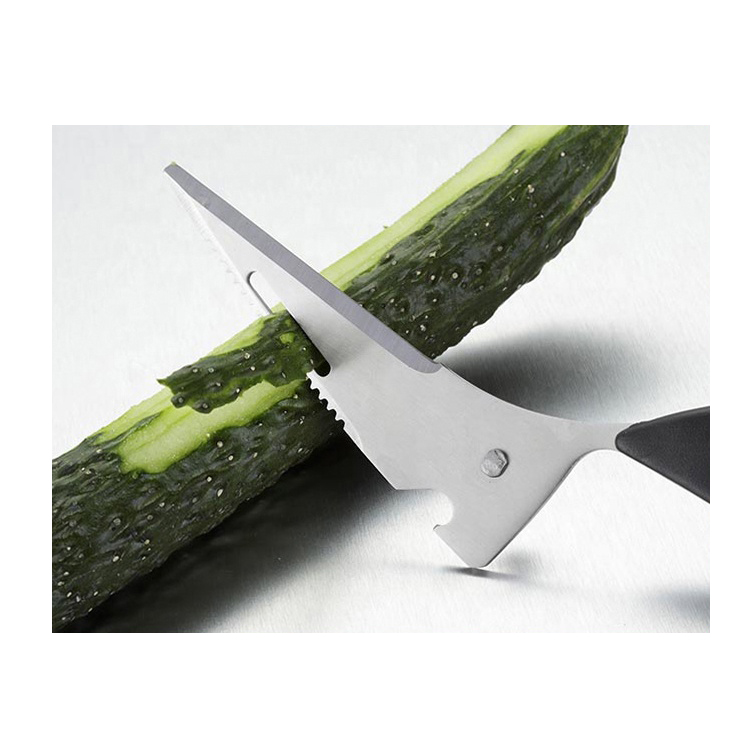
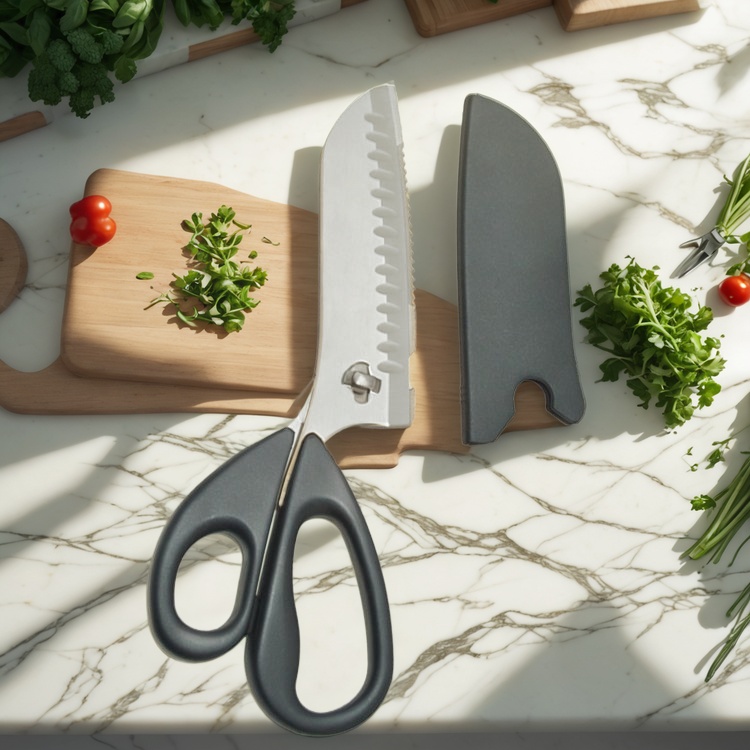
The original product article highlights a 2 in 1 scissors concept, a knife and scissors combo, ergonomic non-slip silicone handles, precision-ground stainless steel blades, a serrated blade, a protective sheath, and a built-in bottle opener. Those are useful features to review, but each should be checked carefully against samples, drawings, and supplier documentation before a purchasing decision is made.
Key Takeaways
- Multi-functional scissors are most useful when the extra functions match real kitchen tasks, not just marketing claims.
- Blade geometry, handle comfort, cleaning access, and storage safety matter more than the number of advertised features.
- For OEM scissors, buyers should request samples, confirm materials, review packaging options, and ask how inspections are handled.
- Consumers should clean and dry kitchen scissors promptly, especially after cutting meat, seafood, or acidic foods.
What Multi-Functional Scissors Are Designed to Do
Multi-functional scissors, often called kitchen shears, combine standard cutting blades with one or more additional functions. Depending on the design, these may include a serrated edge for gripping tougher surfaces, a nut or shell-cracking notch, a bottle opener, a protective sheath, or a knife-like cutting area. The goal is not to replace every knife in the kitchen. Instead, the goal is to make frequent small cutting tasks faster and more controlled.
A 2 in 1 scissors design can be useful when one blade section is optimized for clean slicing while another helps grip slippery ingredients. For example, a serrated area may help when cutting seafood shells or certain packaged foods. However, buyers should not assume every 2 in 1 design performs equally. The hinge tension, blade alignment, handle size, and edge finishing all affect performance.
How to Evaluate a 2 in 1 Scissors Design
When comparing 2 in 1 kitchen scissors, start with the tasks you expect them to perform. A home user may need a compact tool for herbs, packaging, poultry trimming, and occasional seafood. A restaurant or catering team may care more about repeated use, grip comfort, and cleaning efficiency. A wholesale buyer may focus on consistency across samples and production batches.
Check whether the scissors open and close smoothly without wobble. The blades should meet evenly along the cutting path. If a serrated edge is present, inspect whether it grips food effectively without tearing more than necessary. Handles described as ergonomic or non-slip should be tested with dry and slightly wet hands. If the product includes silicone handles, ask the supplier for the exact handle material description and any relevant safety documentation instead of relying on a short product phrase.
Knife and Scissors Combo: Benefits and Limits
A knife and scissors combo can be convenient, especially for users who want one tool for quick prep. The scissors can cut herbs directly over a bowl, trim fat from meat, open sealed bags, or section cooked food. A knife-like edge may help with slicing tasks where straight pressure is useful. A protective sheath is also practical because kitchen drawers often contain many sharp tools.
Still, a combo tool has limits. It should not be treated as a substitute for a chef's knife when chopping dense vegetables, cutting through large bones, or doing precision knife work. If a bottle opener is built into the sheath or handle area, test whether it feels stable in use and whether it interferes with cleaning, storage, or grip. A useful multi-function tool should add convenience without making the basic scissor function awkward.
Comparison Checklist for Product Selection
| Selection Point | What to Check | Why It Matters |
|---|---|---|
| Blade design | Standard edge, serrated section, alignment, and cutting smoothness | Determines whether the scissors cut cleanly or crush food |
| Handle comfort | Grip shape, opening size, and feel with wet hands | Reduces fatigue and improves control during repeated use |
| Cleaning access | Food traps near hinge, texture, sheath contact points | Important for hygiene after cutting meat, seafood, or herbs |
| Storage safety | Protective sheath fit and blade coverage | Helps prevent accidental cuts in drawers or transport |
| OEM readiness | Logo options, packaging, sample approval, inspection process | Helps buyers avoid unclear expectations before production |
Use and Care Guidance for Everyday Kitchens
Good care extends the working life of multi-functional scissors. After cutting raw meat, poultry, or seafood, wash the scissors carefully with warm water and dish soap, then dry them fully before storage. Do not leave them wet in a sink or closed inside a sheath. Moisture trapped around the hinge or blade edge can shorten product life, even when stainless steel is used.
- Use the right tool for the task; avoid forcing scissors through material beyond their intended use.
- Rinse promptly after cutting salty, acidic, or sticky foods.
- Dry the blades, hinge, and handle area before putting the scissors away.
- Store with the sheath if one is provided and fits securely.
- Check hinge tightness and blade condition regularly if the scissors are used often.
OEM Scissors Sourcing: Questions Buyers Should Ask
For importers, distributors, private-label brands, and wholesale buyers, OEM scissors sourcing should begin with clear specifications. Do not rely only on product names such as premium, professional, or high-grade. Ask the supplier to define the blade material, handle material, surface finish, packaging structure, logo application method, carton details, and available customization choices. If compliance documentation is required for your market, request the relevant documents and confirm whether they apply to the exact product configuration you plan to order.
Before placing a bulk order, ask practical questions: Can the supplier provide pre-production samples? How are blade sharpness, alignment, and handle bonding checked? What packaging options are available? Are replacement parts or alternative sheaths offered? What information must be supplied for artwork approval? What inspection standard will be used before shipment? These questions help turn a general OEM discussion into a controlled sourcing process.
How to Brief a Supplier Clearly
A strong sourcing brief saves time for both the buyer and the factory. Include the intended market, target retail channel, expected use case, preferred functions, packaging requirements, labeling needs, and any restrictions on claims. If you want a knife and scissors combo, define which function is essential and which is optional. If you need non-slip handles, describe the required feel, color, and cleaning expectations rather than simply asking for a comfortable grip.
Photos and reference samples can help, but they should be supported by written requirements. When reviewing samples, test them in realistic kitchen conditions. Cut paper, herbs, soft packaging, seafood shells, and cooked or raw food only where appropriate. Record the results so the final approved sample can be used as a benchmark for production.
Practical FAQ
Are multi-functional scissors better than regular kitchen scissors?
They can be better if the added functions match your cooking or product range. If the extra features make the tool bulky or harder to clean, a simpler pair may be more practical.
What does 2 in 1 scissors usually mean?
It usually means the scissors combine two practical cutting or utility functions, such as a standard cutting edge and a serrated section. The exact meaning should be confirmed with the supplier or product description.
Can a knife and scissors combo replace a kitchen knife?
No. It is useful for quick cutting and trimming tasks, but a proper kitchen knife is still better for chopping, slicing large ingredients, and precision prep.
What should OEM buyers confirm before ordering?
Confirm materials, sample approval, logo method, packaging, inspection process, documentation needs, and how the supplier handles quality issues. Avoid assuming details that are not written in the quotation or specification sheet.
How should these scissors be cleaned?
Wash them after use, especially after contact with raw food, salt, or acidic ingredients. Dry the blades and hinge thoroughly before storage, and avoid trapping moisture inside the sheath.
