




Explore Top Flour Sifter Factory and Baking Tools
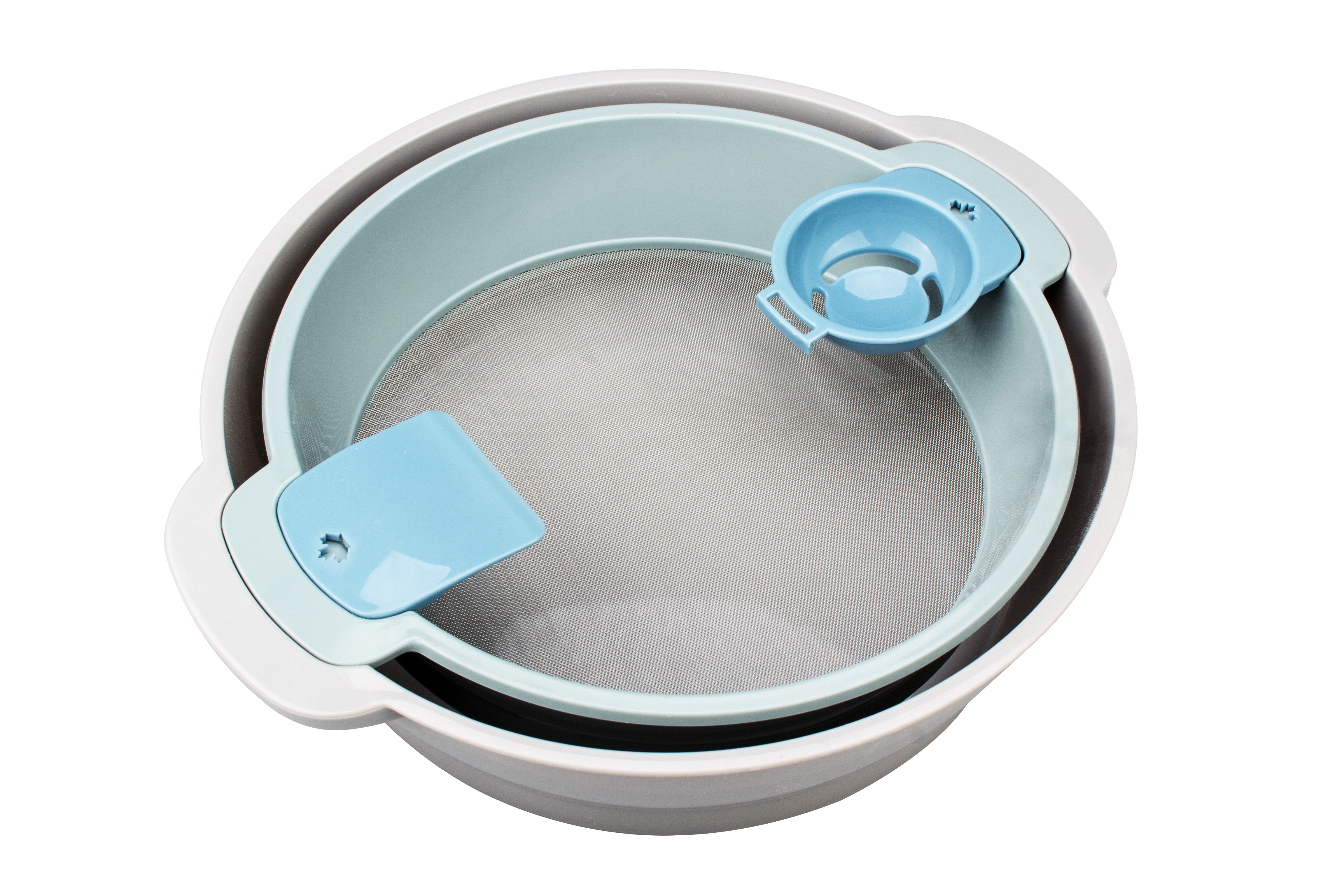
For retailers, distributors, and kitchenware buyers, sourcing a flour sifter is not only about finding a low-cost baking accessory. The right product should sift flour evenly, feel comfortable in the hand, store neatly, and support the baking routines of both home users and professional bakers. The original product focus is a Baking Sieve Set that includes finely meshed sifters, ergonomic handles, a handy scraping tool, and a measuring cup that can nest within the sieve for compact storage. Those are useful details, but a serious sourcing decision should go further: buyers need to compare product construction, user experience, packaging, inspection standards, and supplier communication before placing an order.
This guide explains how to evaluate a flour sifter factory or baking tools supplier without relying on unsupported claims. Use it as a practical checklist when requesting samples, reviewing quotations, or preparing an OEM or wholesale project.
Key Takeaways
- A good flour sifter should produce smooth, lump-free dry ingredients and be easy to control during repeated use.
- Useful set components may include a fine-mesh sieve, ergonomic handle, scraping tool, and measuring cup, especially when they nest for compact storage.
- B2B buyers should ask suppliers clear questions about materials, dimensions, packaging, logo options, testing, lead time, and after-sales handling.
- Do not judge a flour sifter only by appearance; sample testing with flour, cocoa powder, and powdered sugar can reveal real performance.
What a Flour Sifter Factory Should Help Buyers Solve
A flour sifter factory or manufacturer should help buyers solve three practical problems: consistent sifting, user comfort, and sellable presentation. Finely meshed sifters are important because they help break up clumps and create smoother ingredients for pastries, bread, cakes, and other baked goods. For end users, this can improve mixing and reduce uneven pockets of dry flour in a recipe.
For a wholesale buyer, the question is not simply, “Does it sift?” It is, “Will customers use it comfortably, clean it easily, store it conveniently, and feel that it matches the value promised on the package?” A set with a scraping tool and measuring cup can add convenience, but the components should be stable, well-finished, and logical to pack together. If the cup nests within the sieve, confirm that it does so securely and does not scratch or deform the mesh during transport.
Core Product Features to Review in a Baking Sieve Set
The original article mentions a Baking Sieve Set designed for amateur and professional bakers. That is a broad audience, so buyers should check whether the design works for both occasional home use and frequent kitchen use. Start with the mesh. Fine mesh supports smooth sifting, but it should not clog too quickly with common dry ingredients. Ask for the mesh count or sample a physical unit rather than assuming performance from photos.
Next, inspect the handle. Ergonomic handles can make sifting easier, especially when a user is working with larger batches or multiple recipes. However, “ergonomic” should be validated by touch: is the grip comfortable, is the edge smooth, and does the handle feel stable when the sieve is full? If the set includes a scraping tool, check whether it reaches the mesh surface effectively without damaging it. If it includes a measuring cup, confirm the markings, fit, and readability before approving packaging copy.
Comparison Checklist for Supplier Evaluation
| Evaluation Area | What to Check | Questions to Ask the Supplier |
|---|---|---|
| Mesh performance | Fine, even mesh that helps create lump-free flour and dry ingredients | Can you provide mesh details and samples for flour, cocoa, and powdered sugar testing? |
| Handle comfort | Smooth edges, secure connection, comfortable grip during repeated use | What handle designs are available, and can samples be compared before order confirmation? |
| Set components | Sieve, scraping tool, measuring cup, and nesting storage design | Are all accessories included by default, or are they optional for different wholesale packages? |
| Packaging | Retail-ready box, protective insert, barcode space, and clear instructions | What packaging options are available, and can artwork be reviewed before production? |
| Quality inspection | Mesh condition, handle strength, surface finish, component fit, carton protection | What inspection steps are used, and can buyers define an acceptable quality standard? |
How to Test Flour Sifter Samples Before Ordering
Sample testing is one of the most important steps in baking tool sourcing. A flour sifter may look acceptable in a catalog image but perform poorly when used with fine powder or humid flour. Prepare a simple sample test plan and apply it to every supplier under consideration.
- Visual inspection: Check for bent mesh, sharp edges, loose handles, uneven seams, or accessories that do not fit properly.
- Sifting test: Use flour first, then test cocoa powder or powdered sugar if your target customers commonly bake cakes or pastries.
- Comfort test: Hold the sieve for several minutes and simulate repeated sifting to see whether the handle creates strain.
- Nesting test: Place the measuring cup and scraping tool inside the sieve to confirm compact storage and shipping stability.
- Cleaning test: Rinse and dry the product according to the supplier’s guidance, then check whether residue remains in the mesh.
Record results with photos and notes. This makes it easier to compare factories objectively and reduces disputes later in the sourcing process.
OEM, Wholesale, and Private Label Questions
If you are sourcing from a China flour sifter manufacturer or other overseas supplier, clarify commercial and customization details early. Do not assume that logo printing, color changes, packaging design, or accessory combinations are available under the same conditions for every order. Ask suppliers to explain their options rather than relying on vague descriptions.
Useful B2B questions include: What materials are used for the sieve, handle, scraping tool, and measuring cup? What dimensions and weights are available? Can the supplier provide product drawings or specification sheets? What packaging formats can be quoted? Are instruction inserts available? What are the sample cost, sample lead time, production lead time, and order requirements? How are defects handled after delivery? If compliance documents or test reports are needed for your market, ask what can be provided and verify that the documents match the exact product you intend to buy.
Packaging and Merchandising Considerations
For retail buyers, packaging can affect both damage rates and customer understanding. A baking sieve set with multiple components should show clearly what is included. If the measuring cup nests within the sieve, the package should prevent movement during transport. If a scraping tool is included, consider whether it needs a separate slot, band, or protective wrap.
Packaging copy should be accurate. Claims such as material grade, dishwasher safety, food-contact compliance, or professional certification should only be printed if the supplier can support them for the exact product. Clear, modest wording is usually safer and more useful: describe the fine-mesh sifting function, compact nesting storage, and included accessories without exaggeration.
Choosing the Right Flour Sifter Supplier
A strong supplier is not defined only by a catalog page. Look for responsive communication, consistent sample quality, transparent answers, and willingness to discuss inspection details. If you are comparing several flour sifter factories, request the same information from each one so quotations can be compared fairly. A lower price may be attractive, but it can be misleading if it excludes accessories, uses different packaging, or changes the finish.
Buyers should also plan for reorder consistency. Ask whether future batches will match the approved sample, how changes are communicated, and whether packaging files are controlled. For baking tools, small differences in mesh tension, handle finish, or accessory fit can influence customer reviews.
Practical FAQ
What makes a good flour sifter for baking?
A good flour sifter has a fine, even mesh that helps create smooth, lump-free dry ingredients. It should also feel comfortable to hold, be easy to clean, and suit the storage habits of the target customer.
Is a Baking Sieve Set better than a single sieve?
A set can be more useful when it includes practical accessories such as a scraping tool and measuring cup. For wholesale buyers, the set should be tested as a complete package to confirm that each item adds real value.
What should I ask a flour sifter factory before ordering?
Ask about materials, sizes, packaging, sample availability, logo options, inspection standards, production lead time, order requirements, and any documents needed for your sales market.
How can I check whether the mesh is suitable?
Request samples and test them with flour and other fine dry ingredients. Look for smooth sifting, limited clogging, and no loose wires, deformation, or rough edges.
Can suppliers customize flour sifters for private label sales?
Many suppliers may offer customization, but options vary. Confirm logo methods, packaging artwork requirements, accessory combinations, sample timing, and costs directly with the supplier before making commitments.
