




Explore Trendy Office Scissors for Stylish Cutting
Office scissors are a small product category, but they carry real importance for stationery buyers, craft retailers, office supply distributors, promotional product teams, and private-label programs. A pair of scissors may sit on a desk for years, so buyers often look for more than basic cutting ability. They want a tool that feels comfortable, looks current, and performs reliably across common office and creative tasks.
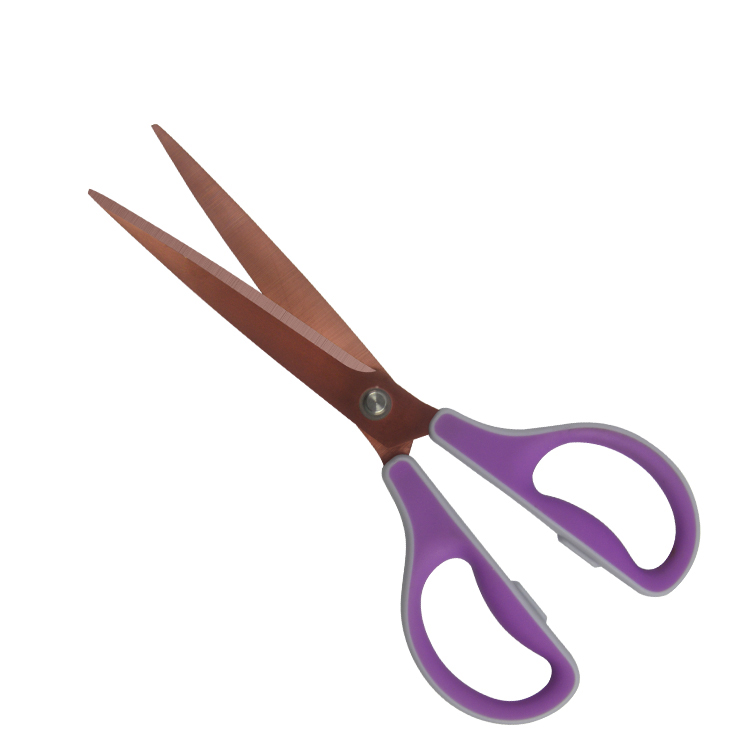
The original product concept behind these trendy office scissors focuses on a modern appearance, ergonomic handling, and practical cutting for paper, cardstock, and fabric. The design described includes stainless steel blades with a brushed bronze finish, purple soft-grip handles, and looped handles for control. For B2B buyers, the important question is not only whether the scissors look attractive, but whether the supplier can support consistent quality, packaging needs, and repeatable specifications.
Key Takeaways
- Trendy office scissors should balance appearance, comfort, and cutting performance rather than relying on color alone.
- Explicit product details include stainless steel blades, a brushed bronze finish, purple soft-grip handles, and looped handles.
- Buyers should request samples and confirm cutting performance on the materials relevant to their market.
- For wholesale or OEM sourcing, ask suppliers about packaging, labeling, inspection standards, lead times, and available customization.
What Makes Office Scissors “Trendy”?
A trendy office scissor is usually defined by visible design choices: contemporary colors, distinctive finishes, softer handle materials, and a shape that suits modern workspaces. In this case, the brushed bronze blade finish and rich purple handle color create a more decorative look than standard black or grey scissors. That can be useful for giftable stationery sets, craft assortments, boutique office supplies, and branded desktop collections.
However, trend value should not replace function. A fashionable finish may attract attention, but repeat customers will judge the product by how it cuts, how it feels in the hand, and whether the handles remain comfortable during longer use. When assessing samples, buyers should inspect blade alignment, pivot movement, handle molding, grip texture, and overall balance.
Product Features to Evaluate Before Ordering
The source article describes scissors with stainless steel blades, a brushed bronze finish, and purple soft-grip looped handles. Those are useful product attributes, but a professional buyer should still verify the exact production specification before placing an order. Ask whether the blade finish is decorative only, how it should be cleaned, and whether the same color and finish can be maintained across repeat batches.
The looped handle design is relevant because it affects control and comfort. For office and craft users, handles should provide enough space for a range of hand sizes without sharp edges or pressure points. Soft-grip material can improve comfort, but buyers should check whether it feels secure, whether it is neatly bonded or molded, and whether the color matches the approved sample.
Common Applications: Office, Craft, and Retail Use
These scissors are positioned for office tasks and crafting. In practical terms, that may include cutting standard copy paper, envelopes, labels, wrapping paper, cardstock, and selected fabric materials. Buyers should define the main use case clearly. A school stationery buyer may prioritize safe handling and affordability, while a craft retailer may focus on precision, appearance, and comfort during repetitive cuts.
For corporate gifting or desk accessory programs, the visual finish may be especially important. For craft and hobby channels, test cuts matter more. It is sensible to prepare a small material test set and ask the supplier to cut the same substrates you expect end users to cut. Keep the test simple and repeatable: one sheet of paper, several layers of paper, cardstock, and a fabric sample if fabric cutting is part of your sales promise.
Comparison and Sourcing Checklist
The table below can help purchasing teams compare samples from different office scissors suppliers without relying only on photos or catalog descriptions.
| Checkpoint | What to Review | Questions to Ask the Supplier |
|---|---|---|
| Blade material and finish | Stainless steel blades and brushed bronze appearance | Is the blade specification fixed for production, and how is finish consistency controlled? |
| Cutting performance | Clean cuts on office paper, cardstock, and intended craft materials | Can you provide samples for internal cutting tests before bulk ordering? |
| Handle comfort | Purple soft-grip looped handles, smooth edges, stable grip | What handle material options and color-matching processes are available? |
| Packaging | Retail card, box, set packaging, or bulk pack | Can packaging be customized, and what artwork requirements apply? |
| Quality control | Blade alignment, pivot tightness, handle finish, visual defects | What inspection criteria are used before shipment? |
| Commercial terms | MOQ, lead time, sample cost, payment terms | What are the current order requirements and production timelines? |
How B2B Buyers Should Assess an Office Scissors Supplier
When the search intent includes “office scissors supplier” or “ergonomic scissors wholesale,” the buying process should be structured. A product may look appealing in a listing, but commercial reliability depends on communication, sample accuracy, production control, and after-sales support.
- Request a physical sample. Photos cannot confirm blade sharpness, pivot smoothness, handle comfort, or finish durability.
- Define the approved specification. Record blade material, finish, handle color, packaging, labeling, and any branding requirements.
- Ask about customization carefully. If you need OEM branding, confirm logo methods, artwork files, color tolerances, and approval steps.
- Confirm inspection points. Agree on checks for cutting performance, surface appearance, handle defects, and packaging condition.
- Clarify commercial details. MOQ, lead time, sample policy, carton packing, and payment terms should be confirmed directly with the supplier.
Avoid assuming capacity, certifications, compliance coverage, or testing results unless the supplier provides current documentation. If your market requires specific safety or labeling standards, ask for relevant proof and review it before purchase.
Use and Care Guidance for End Users
Retailers and distributors can reduce returns by giving clear use guidance. Office scissors should be used on appropriate materials and stored safely when not in use. If these scissors are marketed for paper, cardstock, and fabric, avoid extending the claim to heavy plastic, wire, or industrial materials unless separately tested.
- Wipe blades clean after cutting adhesive labels or tape.
- Keep the pivot area free of paper dust and debris.
- Store scissors in a dry desk drawer, pouch, or holder.
- Do not use office scissors as a screwdriver, scraper, or box pry tool.
- For fabric projects, test on a scrap piece first to confirm the cut quality.
Clear care instructions are especially useful for private-label packaging, online product pages, and customer service teams. They set realistic expectations and help customers understand the intended use.
Positioning These Scissors in a Product Range
Trendy office scissors can fit several merchandising strategies. They can be sold as a single desk tool, paired with notebooks and pens in a stationery collection, included in a craft starter kit, or offered as part of a branded office supply range. The brushed bronze and purple design gives the product a stronger visual identity than plain utility scissors, which may support retail display and gifting use.
For wholesale buyers, the best approach is to match the product to a defined audience. Office supply channels may emphasize comfort and daily use. Craft retailers may highlight clean cutting and control. Gift and lifestyle retailers may focus on color, finish, and desk presentation. Each channel may need different packaging and different product copy.
Practical FAQ
Are these scissors suitable for crafting?
They are described as office scissors for crafting and can be evaluated for paper, cardstock, and fabric use. Buyers should test samples on their target materials before making claims in retail listings.
What product details are confirmed from the source?
The source describes stainless steel blades, a brushed bronze finish, purple soft-grip material, and looped handles. Additional specifications should be confirmed with the supplier.
Can these office scissors be sourced for OEM or wholesale programs?
They may be suitable for wholesale or OEM discussions, but buyers should ask the supplier about MOQ, customization options, packaging formats, lead times, and approval procedures.
What should buyers check in a sample?
Check cutting smoothness, blade alignment, pivot tension, handle comfort, color consistency, finish quality, packaging, and any branding or labeling requirements.
Should a buyer request compliance documents?
If your destination market or sales channel requires specific documentation, request current evidence from the supplier and review it before placing an order.
Final Thoughts
Trendy office scissors can be a strong addition to a stationery, craft, or office supply assortment when design and performance are considered together. The brushed bronze blade finish and purple soft-grip looped handles give this product a distinctive look, while the sourcing process should focus on sample testing, specification control, and clear supplier communication. For B2B buyers, the goal is simple: choose scissors that look good on the desk, cut reliably in real use, and can be supplied with consistent quality across repeat orders.
