




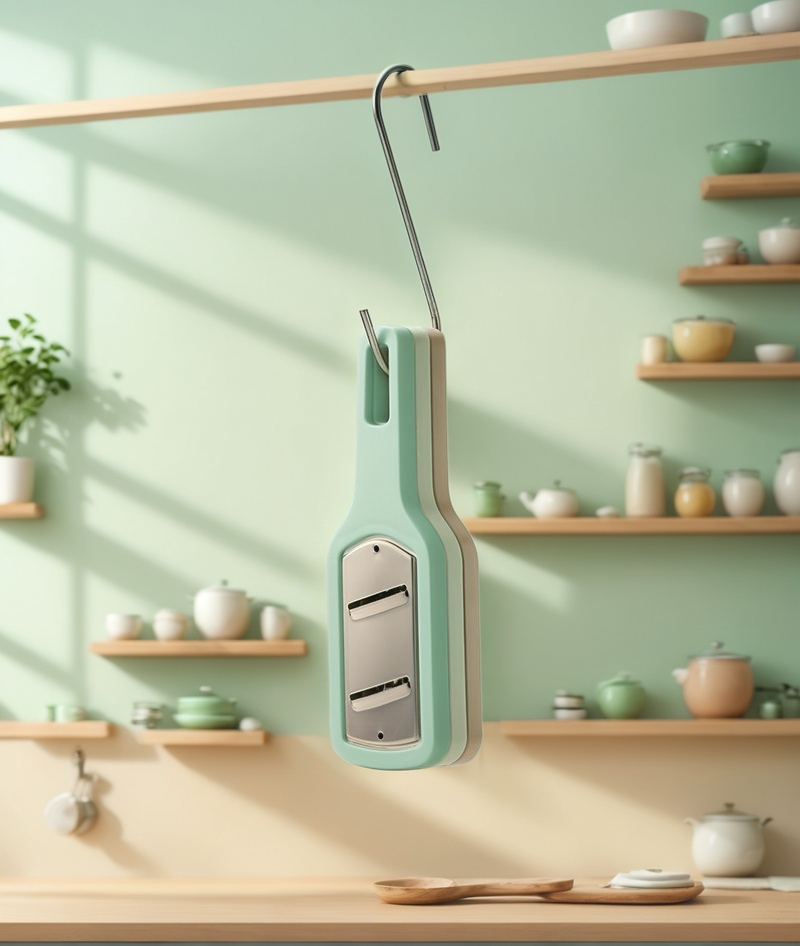
Exploring Grater OEM Opportunities in Yangjiang
For kitchenware brands, importers, distributors, and private-label retailers, sourcing a grater from an OEM supplier in Yangjiang can be a practical way to develop a product that fits a defined market position. Yangjiang is widely known as a kitchenware and cutlery manufacturing hub, and buyers can often find suppliers experienced in hand tools, prep tools, and related household items. However, a successful OEM project depends on more than finding a factory that can make a grater. It requires clear specifications, quality expectations, packaging requirements, communication discipline, and a realistic view of cost, lead time, and compliance responsibilities.
This guide explains how to approach Yangjiang grater OEM sourcing with a buyer-focused checklist, so you can compare factories more effectively and reduce common risks before placing a wholesale or custom order.
Key Takeaways
- Yangjiang is a strong place to research OEM kitchen utensil suppliers, but factories should still be verified individually.
- Define the grater type, blade design, handle, packaging, and target retail channel before requesting quotations.
- Ask suppliers for material options, sample timelines, production lead times, inspection steps, and compliance documents relevant to your market.
- Do not rely only on unit price; evaluate communication, tooling control, sample accuracy, and quality consistency.
Why Buyers Look to Yangjiang for Grater OEM Projects
Yangjiang has a long association with kitchen tools and related houseware manufacturing. For buyers, the main advantage is supplier concentration. When many manufacturers and supporting vendors operate in the same region, it can be easier to compare grater designs, discuss handle concepts, review packaging options, and source complementary utensils for a broader product line.
The region can also be useful for businesses that want to move beyond generic stock items. An OEM arrangement may allow a buyer to adjust the product appearance, choose a handle shape, request a specific color direction, develop retail packaging, or create a coordinated kitchen prep set. The original article also referenced products such as a multi-functional peeler for effortless kitchen prep, which shows how graters may sit within a wider kitchen utensil assortment.
That said, buyers should avoid assuming that every supplier offers the same capability. Some may focus on existing molds and wholesale stock, while others may be more suitable for custom development. The first step is to match your project type with the right supplier profile.
Define the Grater You Want Before Contacting Factories
A vague inquiry such as “please quote a kitchen grater” usually produces vague answers. Before contacting a Yangjiang grater manufacturer or trading partner, prepare a simple product brief. It does not need to be complex, but it should describe the commercial intent and the basic product requirements.
Useful details include:
- Grater style: handheld, box, flat, rotary, container-based, or multifunctional food grater.
- Target user: home cook, supermarket customer, e-commerce shopper, promotional buyer, or professional kitchen user.
- Blade or grating surface expectations: coarse, fine, slicing, zesting, or multi-surface design.
- Handle direction: plastic, metal, soft-touch, hanging hole, non-slip concept, or color requirement.
- Packaging: bulk pack, color box, blister card, paper sleeve, hang tag, or e-commerce-ready carton.
- Branding needs: logo placement, label design, barcode, instruction leaflet, or private-label packaging.
If you do not know the exact material grade, thickness, or construction, do not invent it in the brief. Instead, ask the supplier to recommend available options and explain the trade-offs in cost, durability, weight, and appearance.
OEM Customization Options to Discuss
The core value of OEM kitchen utensils is controlled customization. For a grater, customization may involve both functional and visual elements. A supplier may be able to adjust the blade pattern, handle profile, color scheme, logo location, packaging artwork, or set configuration. However, each change can affect tooling, lead time, unit cost, and inspection requirements.
Buyers should ask whether a proposed change uses existing tooling or requires new tooling. Existing molds can be faster and lower risk, while a custom mold may create stronger product differentiation but usually requires more development control. If a factory offers a pastel, beige, black, or other color direction, request physical samples or color references rather than approving from a screen image only.
For private-label programs, also confirm who owns the final artwork, who controls mold usage, and whether the same design can be sold to other buyers. These questions are commercial and should be clarified in writing before mass production.
Supplier Comparison Checklist
When comparing Yangjiang products wholesale or OEM quotations, price is only one factor. A low unit cost can become expensive if samples are inconsistent, packaging is weak, or communication is unclear. Use a structured comparison so every supplier is evaluated against the same criteria.
| Evaluation Area | What to Ask | Why It Matters |
|---|---|---|
| Product capability | Have you made similar graters or multifunctional food graters before? | Relevant experience reduces development risk. |
| Material options | What blade, handle, and body materials are available, and what are the cost differences? | Material choice affects durability, price, and market positioning. |
| Customization | Which changes use existing tooling, and which require new tooling? | This affects timeline, ownership, and upfront cost. |
| Quality control | What inspections are performed before shipment? | Buyers need predictable quality, not only a good sample. |
| Packaging | Can you support our retail or e-commerce packaging requirements? | Packaging impacts shelf presentation, protection, and logistics. |
| Commercial terms | What are the MOQ, lead time, payment terms, and sample process? | These details determine whether the project fits your buying plan. |
Quality, Compliance, and Sample Review
Before confirming a wholesale order, request samples that represent the intended production version. Review the grating performance, handle comfort, edge finish, packaging fit, labeling, and carton strength. If the grater will be sold in a regulated market, ask the supplier what documents are available and then verify what your market legally requires. Do not assume that a product is compliant simply because it looks similar to items already on store shelves.
A practical sample review should include basic handling tests by your own team. Check whether the grater feels stable, whether the handle is comfortable, whether the surface is easy to clean, and whether packaging protects the product during transport. If possible, document sample feedback with photos and a numbered revision list. This helps prevent misunderstandings when moving from sample approval to mass production.
Wholesale Planning and Supply Chain Questions
For businesses scaling an online store, retail program, or distributor catalog, Yangjiang kitchenware wholesale sourcing can support broader assortment planning. A grater can be sold alone, included in a food prep range, or paired with peelers, slicers, and other utensils. The advantage of a coordinated range is that packaging, colors, and branding can create a consistent shelf or online presentation.
Before scaling, ask suppliers practical questions: What is the minimum order quantity? How long does sampling take? What is the normal production lead time after deposit and artwork approval? Can the supplier pack mixed items together? What carton dimensions and weights should be expected? Can they support third-party inspection before shipment? These answers help buyers plan inventory, freight, launch dates, and cash flow.
Practical FAQ
Is Yangjiang a good place to source grater OEM products?
Yangjiang is a well-known kitchenware manufacturing area, so it is a useful region to research grater OEM and wholesale suppliers. Buyers should still evaluate each supplier’s capability, samples, communication, and quality process.
What should I include in a grater OEM inquiry?
Include the grater style, target market, estimated order quantity, customization needs, packaging type, logo requirements, destination market, and any quality or compliance expectations.
Can I customize the handle color and packaging?
Many OEM suppliers may offer color and packaging customization, but availability depends on existing materials, tooling, order quantity, and production arrangements. Ask for samples and written confirmation.
Should I choose an existing model or develop a new mold?
An existing model is usually faster and simpler. A new mold may offer stronger differentiation but requires clearer design control, cost discussion, ownership terms, and sample approval.
How do I reduce risk before placing a bulk order?
Request representative samples, confirm specifications in writing, review packaging, ask about inspection steps, clarify lead times and MOQ, and consider third-party inspection for larger orders.
Final Sourcing Advice
A grater OEM project in Yangjiang can be a strong opportunity when the buyer approaches it with clear requirements and careful supplier evaluation. Focus on the full sourcing picture: product function, customization limits, packaging, quality checks, communication, and wholesale planning. The best supplier is not simply the one with the lowest quote, but the one that can consistently deliver the product your customers expect.
