




Exploring Multi-Functional Kitchen Shears for Every Kitchen
Multi-functional kitchen shears are useful because they reduce the number of small tools needed for everyday food preparation. A well-designed pair can trim herbs, cut packaging, portion poultry, open bottles, and crack small nuts, depending on its built-in features. For retailers, distributors, and OEM buyers, the goal is not simply to choose a product that looks convenient. The better question is whether the shears are easy to use, simple to clean, durable enough for the target market, and supported by clear supplier information.
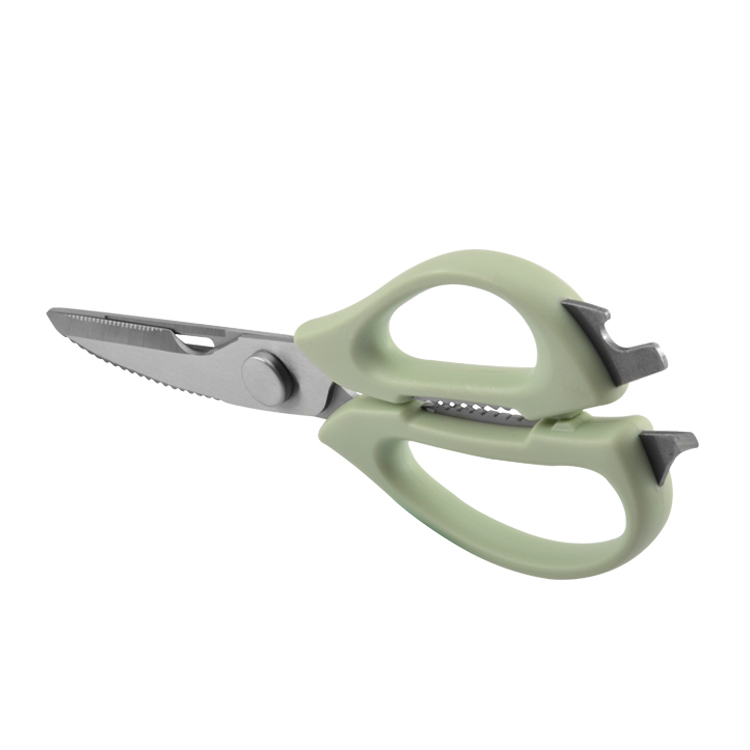
The original product information describes kitchen shears made by a Yangjiang scissors factory, with stainless steel blades, serrated cutting edges, sage green ergonomic handles, and added functions including a bottle opener and nutcracker. Those are useful starting points for product evaluation. However, buyers should still verify material details, packaging options, inspection standards, and commercial terms directly with the supplier before placing orders.
Key Takeaways
- Multi-functional kitchen shears should be judged by cutting performance, grip comfort, cleaning access, and added functions.
- Stainless steel blades and serrated edges are useful features, but buyers should ask the supplier to confirm the exact material and finish.
- OEM buyers should clarify logo, packaging, color, inspection, sample, and lead-time requirements before confirming a program.
- For wholesale sourcing, consistent quality matters more than adding too many secondary features.
What Makes Kitchen Shears Multi-Functional?
Standard kitchen scissors are mainly used for cutting food or packaging. Multi-functional kitchen shears add practical secondary functions to the same tool. In this case, the source article identifies a bottle opener and nutcracker in addition to cutting blades. These additions can make the tool more appealing for home cooks, gift sets, supermarket kitchenware aisles, and general houseware assortments.
Still, more functions do not automatically mean a better product. Each added function should be easy to understand and should not interfere with the main cutting action. If the bottle opener feels awkward, the nutcracker area is too small, or the handle shape becomes uncomfortable, the product may disappoint users. Buyers should test the shears in realistic kitchen tasks rather than relying only on catalog photos.
Blade Design, Handle Comfort, and Daily Use
The original description mentions stainless steel blades with sharp and serrated cutting areas. Serration can help grip slippery materials such as herbs, meat skin, or food packaging. For daily use, buyers should check whether the blades meet cleanly along the full cutting length, whether the tips align, and whether the cutting action feels smooth without excessive hand pressure.
Handle comfort is equally important. The product is described with ergonomic sage green handles, which can help differentiate the item visually while supporting a more secure grip. When evaluating samples, test the handle with different hand sizes. The grip should not create pressure points near the thumb or palm, and the handle opening should allow repeated cutting without fatigue. If the product is intended for food service, elderly users, or long prep sessions, comfort becomes a stronger selling point than color alone.
Comparison Checklist for Buyers
| Evaluation Area | What to Check | Supplier Questions |
|---|---|---|
| Blade performance | Sharpness, serration, blade alignment, smooth cutting action | What blade material and hardness are used? How is sharpness checked? |
| Handle design | Grip comfort, color consistency, fit for different hand sizes | Can handle color or material be customized for OEM orders? |
| Extra functions | Bottle opener and nutcracker usability without blocking the cutting task | Are these functions tested during production inspection? |
| Cleaning | Food residue traps, hinge access, drying convenience | Are there cleaning or care instructions for retail packaging? |
| Packaging | Retail card, box, barcode, instructions, warning text | What packaging formats are available and what artwork files are needed? |
OEM and Wholesale Sourcing Guidance
Because this topic includes OEM scissors, kitchen scissors manufacturing, and a Yangjiang scissors factory, B2B buyers should approach sourcing with a clear specification sheet. A useful specification should include blade material requirements, handle color, logo method, packaging style, order quantity, inspection criteria, and target market. If any of these details are missing, ask the supplier before requesting a final quotation.
Yangjiang is widely associated with knife and scissors production, but location alone is not enough to qualify a supplier. Ask for production photos, current product samples, packaging samples, and quality-control procedures. If compliance documentation is required for your destination market, request the relevant documents from the supplier and have them reviewed by your own compliance team or testing partner. Do not assume that a product automatically meets a legal standard unless the supplier provides appropriate evidence.
For OEM projects, confirm whether the supplier can support custom colors, private label packaging, product instructions, and carton markings. Also ask what changes affect cost or timing. A small logo print may be simple, while a new mold, new handle color, or custom retail package may require additional review. Clear questions at the beginning reduce misunderstandings later.
How to Evaluate Samples Before Ordering
Sample testing should reflect the intended customer experience. A buyer sourcing for a value retail channel may focus on basic cutting performance and packaging cost. A buyer sourcing for a premium kitchenware line may place more weight on hand feel, finishing quality, and long-term edge performance. In either case, the sample should be tested across multiple common tasks.
- Cut thin packaging, herbs, and thicker food items to compare blade control.
- Check whether the serrated area grips without tearing more than necessary.
- Use the bottle opener and nutcracker functions to confirm they are practical.
- Wash and dry the shears according to the supplier's care instructions.
- Inspect the hinge, handles, and blade edges after repeated use.
If the shears are described as rust-resistant, ask the supplier what material, surface treatment, or care guidance supports that claim. Stainless steel can still stain or corrode under poor care conditions, especially if left wet or exposed to salt and acidic residues. Clear use-and-care instructions help reduce returns and customer complaints.
Retail Positioning and Customer Education
For consumer-facing sales, the strongest message is practical usefulness. Customers want to know what the shears can cut, how they feel in the hand, how to clean them, and where the extra functions are located. Avoid vague promotional language and focus on tasks: trimming herbs, cutting poultry skin, opening food packaging, opening bottles, and cracking small nuts.
Good packaging can explain these functions without overcrowding the design. A simple icon set, short care notes, and safety reminders can help shoppers understand the product quickly. If the shears are sold online, include clear photos of the blade, handle, hinge, and extra functions. For B2B buyers, these same assets can support distributor catalogs, marketplace listings, and retail product pages.
Practical FAQ
Are multi-functional kitchen shears better than regular scissors?
They can be more useful in the kitchen because they combine cutting with added functions such as a bottle opener or nutcracker. The advantage depends on whether the main cutting performance remains strong.
What should OEM buyers confirm before ordering?
Confirm blade material, handle color, logo method, packaging format, sample approval process, inspection standards, lead time, payment terms, and any compliance documents required for the destination market.
How should kitchen shears be cleaned?
Follow the supplier's care instructions. In general, food residue should be removed promptly, the blades should be dried after washing, and the hinge area should not be left wet for long periods.
Can the product image and features be used for retail listings?
Use only approved images and confirmed feature claims from the supplier. If a listing mentions stainless steel blades, serrated edges, ergonomic handles, a bottle opener, or a nutcracker, those details should match the actual product supplied.
Final Selection Advice
Multi-functional kitchen shears are strongest when they remain simple, comfortable, and reliable. The product described here offers several useful elements: stainless steel blades, serrated cutting action, ergonomic sage green handles, and built-in bottle opener and nutcracker functions. For sourcing teams, the next step is to verify the details that are not visible in a short product description. Ask direct questions, test samples carefully, and make sure the final specification matches the needs of your sales channel.
