




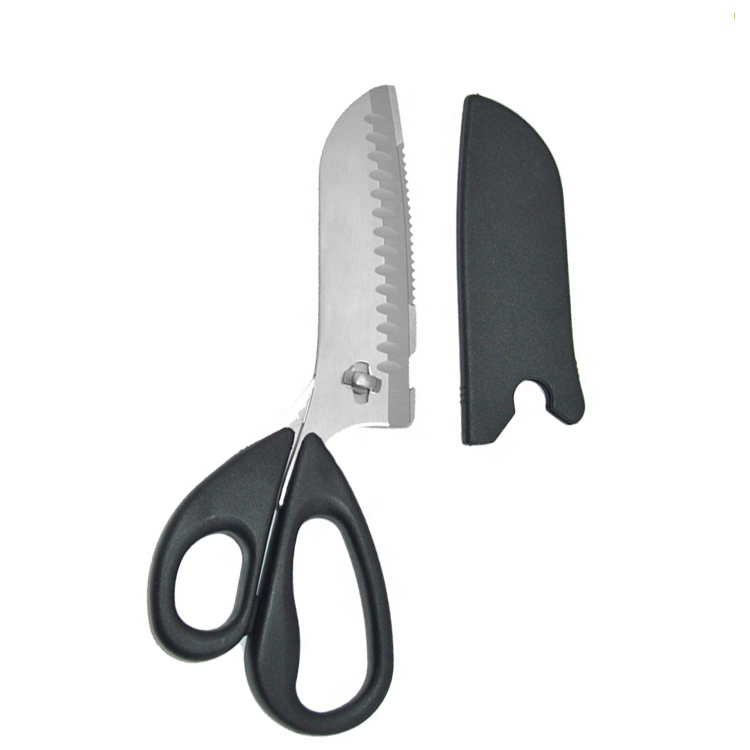
Exploring Multi-Functional Scissors: Ultimate Kitchen Companion
Multi-functional scissors have become a practical tool for kitchens that need faster prep, cleaner cutting, and fewer single-purpose accessories. A good pair can trim herbs, cut packaging, portion meat, and handle small utility tasks without reaching for a knife every time. For home cooks, the value is convenience. For retailers, wholesalers, and OEM buyers, the value depends on whether the product design, safety features, materials, and packaging match the intended market.
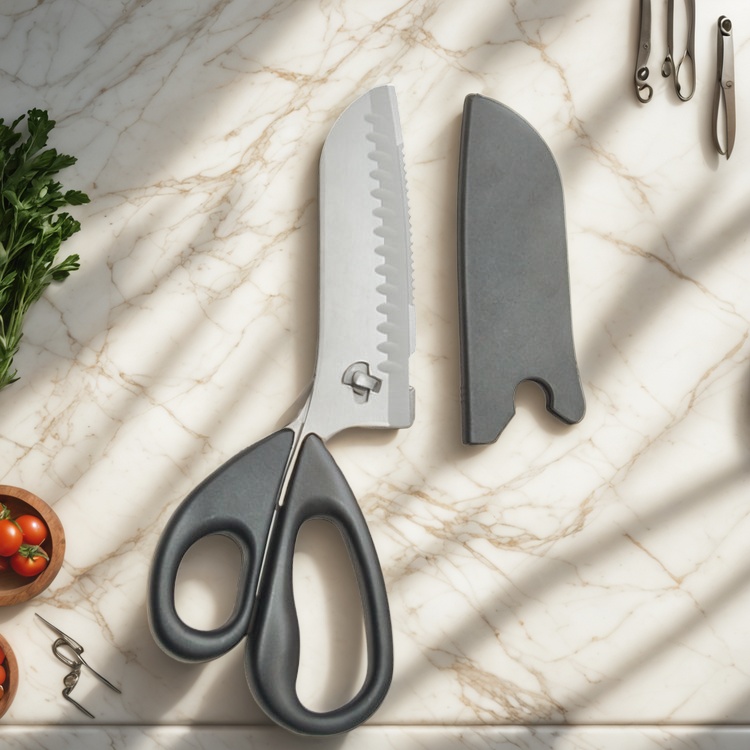
The original product description highlights a 2 in 1 scissors design, serrated and flat cutting edges, a non-slip ergonomic handle, a protective blade sheath, a built-in bottle opener, and a black exterior design. It also describes the scissors as suitable for both left- and right-handed users. These are useful features, but buyers should still confirm material grade, dimensions, packaging, test standards, and customization details directly with the supplier before placing an order.
Key Takeaways
- Multi-functional kitchen scissors are most useful when they combine clean cutting, safe storage, and comfortable handling.
- A serrated edge can help with tougher foods or packaging, while a flat edge is useful for cleaner cuts on herbs and softer ingredients.
- For OEM scissors, buyers should ask for confirmed specifications instead of assuming steel grade, compliance, MOQ, or test performance.
- Safety details such as a blade sheath, grip design, and easy cleaning should matter as much as appearance.
What Makes Multi-Functional Scissors Useful in the Kitchen?
Kitchen scissors are not just smaller substitutes for knives. Their advantage is control. When cutting herbs, trimming food portions, snipping packaging, or preparing small ingredients, scissors let the user work directly over a bowl, pan, or cutting board. This can reduce prep time and limit mess, especially for repetitive cutting tasks.
A multi-functional design adds more value when the extra features support real kitchen routines. The source article mentions a knife and scissors combo concept, which suggests the tool is designed for both slicing and scissor-style cutting. It also notes a built-in bottle opener in the sheath. These details can be useful, but they should not distract from the core requirement: the scissors must cut consistently, feel stable in the hand, and store safely after use.
Feature Checklist for Product Selection
Whether buying one pair for household use or evaluating an OEM kitchen scissors project, it helps to compare features in a structured way. The table below separates confirmed features from important questions to ask before purchasing or sourcing.
| Selection Point | Why It Matters | What to Check |
|---|---|---|
| Serrated edge | Helps grip tougher surfaces such as meat, herbs with stems, or packaging. | Ask how the serration is designed and whether it suits the target use. |
| Flat cutting edge | Supports cleaner cuts for softer foods and general prep. | Check sharpness retention expectations and cleaning instructions. |
| Handle design | A non-slip ergonomic handle can reduce strain and improve control. | Request samples to test comfort for different hand sizes. |
| Blade sheath | Protects the cutting edge and reduces storage risk. | Confirm fit, durability, and whether it is included in retail packaging. |
| Bottle opener | Adds utility without requiring a separate tool. | Check whether the feature is in the sheath or scissors body. |
| OEM customization | Important for branding, packaging, and market positioning. | Ask about logo methods, colors, packaging formats, MOQ, and lead time. |
How to Use 2 in 1 Kitchen Scissors Effectively
A 2 in 1 scissors design is most helpful when users treat it as a prep tool rather than a replacement for every kitchen knife. For herbs, hold the bunch firmly and cut in short, controlled motions. For food packaging, wipe the blades afterward so residues do not transfer to ingredients. For meat or poultry, use the scissors only when the blades are suitable for that task and clean them immediately after use.
The original article describes serrated cutting for meat and packaging, plus a flat edge for herbs. That combination can be practical because the two edges support different types of contact: grip and precision. However, users should avoid cutting hard bones, frozen foods, metal ties, or other materials unless the supplier specifically confirms the scissors are designed for those tasks.
Safety, Cleaning, and Storage Guidance
Safety is one of the main reasons to choose kitchen scissors carefully. Sharp blades are useful only when they are controlled. A non-slip handle can help reduce accidental movement, especially when hands are wet. A protective blade sheath is also valuable because kitchen drawers often contain many loose tools.
- Wash the scissors after contact with raw food, especially meat or poultry.
- Dry the blades fully before storage to help maintain appearance and cutting performance.
- Use the blade sheath when storing the scissors in a drawer or carrying them.
- Keep the cutting edge away from children and avoid leaving scissors in a sink full of water.
- Follow the supplier's cleaning guidance if dishwasher safety is not clearly confirmed.
If the scissors separate for cleaning, confirm how the hinge locks back into place. If they do not separate, pay extra attention to the pivot area, where food residue can collect. Buyers should not assume dishwasher compatibility unless it is stated by the supplier.
OEM and Wholesale Sourcing Considerations
For OEM scissors, the best sourcing decision is based on verified details, not broad product claims. The article identifies Bonet Houseware Co., Ltd. and presents the item as multi-functional kitchen scissors, but it does not provide confirmed MOQ, production capacity, compliance testing, packaging specifications, or steel grade. Those details should be clarified during the inquiry stage.
Wholesale buyers should prepare a clear request before contacting any supplier. Useful questions include: What blade material and thickness are available? Can the handle color be customized? Is the black design standard or optional? What logo methods are supported? What packaging formats are available for retail and e-commerce? Can the supplier provide product photos, instruction inserts, barcodes, or carton details? What testing documents are available for the destination market?
For private-label programs, ask for pre-production samples and confirm the final approved sample before mass production. Review the blade finish, handle comfort, sheath fit, bottle opener function, packaging print quality, and carton labeling. These small checks can prevent larger problems when selling through retail, online marketplaces, or distributor channels.
Who Should Consider a Knife and Scissors Combo?
A knife and scissors combo is suitable for users who want one compact tool for frequent small cutting jobs. It can be helpful in home kitchens, outdoor food preparation, office pantries, and compact apartments where drawer space is limited. It may also work well as part of a kitchen tool set if the design matches the rest of the product line.
For B2B buyers, the product is more attractive when it has a clear use case. A basic consumer retail version may emphasize safe storage and everyday cutting. A promotional version may focus on branding and packaging. A higher-positioned retail version may require stronger documentation, better finishing, and more detailed product instructions. The right choice depends on channel requirements, target price point, and customer expectations.
FAQ
What are multi-functional scissors used for?
They are used for common kitchen tasks such as cutting herbs, trimming food, opening packaging, and other light prep jobs. Specific uses depend on the blade design and supplier instructions.
Are these scissors suitable for both left- and right-handed users?
The source article states that the ergonomic handle is ideal for both left- and right-handed users. Buyers should still test samples for comfort, especially if selling to a broad customer base.
Does the product include a blade sheath?
The original description mentions a robust blade sheath that protects the sharp edges and includes a built-in bottle opener. Confirm the final packaging contents with the supplier before ordering.
Can OEM buyers customize these kitchen scissors?
OEM scissors often allow some level of customization, but details such as logo placement, color, packaging, MOQ, and lead time must be confirmed directly with the supplier.
How should kitchen scissors be cleaned?
Wash them after use, remove food residue from the pivot area, and dry them before storage. Do not assume dishwasher safety unless the supplier clearly confirms it.
