





Exploring OEM Tailor Scissors: Precision & Quality
OEM tailor scissors are not just standard cutting tools with a private label. For sewing brands, textile distributors, craft retailers, and promotional product buyers, they are a product category where cutting feel, blade alignment, handle comfort, packaging, and quality consistency all affect repeat orders. The original article introduced OEM tailor scissors, professional factory selection, high quality manufacturing, and Yangjiang as a known scissors production base. This rewrite expands those ideas into a practical sourcing guide for buyers comparing suppliers and preparing an OEM inquiry.
Key Takeaways
- OEM tailor scissors should be evaluated by cutting performance, finish consistency, handle comfort, packaging options, and quality control process.
- Do not rely only on product photos; request samples and test them on the fabrics or materials your customers commonly use.
- Ask the factory what materials, blade treatment, pivot design, and inspection steps apply to the exact model you plan to order.
- Yangjiang is widely associated with knife and scissors manufacturing, but buyers should still verify each supplier individually.
- Commercial details such as MOQ, lead time, branding cost, and carton packing should be confirmed in writing before placing an order.
What OEM Tailor Scissors Mean for B2B Buyers
In sourcing, OEM usually means the supplier manufactures scissors according to a buyer’s branding, packaging, color, handle design, or specification requirements. For tailor scissors, the purpose is often professional fabric cutting, sewing kits, craft retail, uniform production, school supply programs, or wholesale distribution. The buyer may choose an existing model and add branding, or discuss custom adjustments if the factory supports them.
The most important point is to define the product use before asking for a quotation. Scissors for light household sewing may not need the same construction as scissors intended for frequent cutting in a workshop. A distributor serving tailoring shops may prioritize long-term edge retention and comfortable grips. A retailer may care more about blister card design, display packaging, and price positioning. Clear search intent helps both buyer and supplier avoid vague specifications.
How to Evaluate a Professional Tailor Scissors Factory
A professional tailor scissors factory should be able to explain its production process in practical terms. Buyers can ask how blades are formed, ground, sharpened, polished, assembled, and inspected. If the product page or supplier description mentions materials, blade finish, handle design, or adjustable tension, ask whether those features apply to the specific model being quoted. Avoid assuming that every product in a catalog shares the same construction.
Factory evaluation should also include communication quality. A reliable supplier should answer questions directly, provide clear photos or videos when needed, and identify what can and cannot be customized. For OEM projects, small misunderstandings can affect logo placement, packaging artwork, color matching, handle shape, and carton labels. Good early communication often reduces production risk later.
Product Selection Criteria for OEM Tailor Scissors
When comparing wholesale tailor scissors, buyers should test samples in realistic conditions. Cut woven cotton, denim, felt, lining fabric, thread, and paper patterns if those materials are relevant to your market. Check whether the blades bite smoothly from heel to tip or push fabric away. Open and close the scissors repeatedly to feel pivot tension and handle comfort.
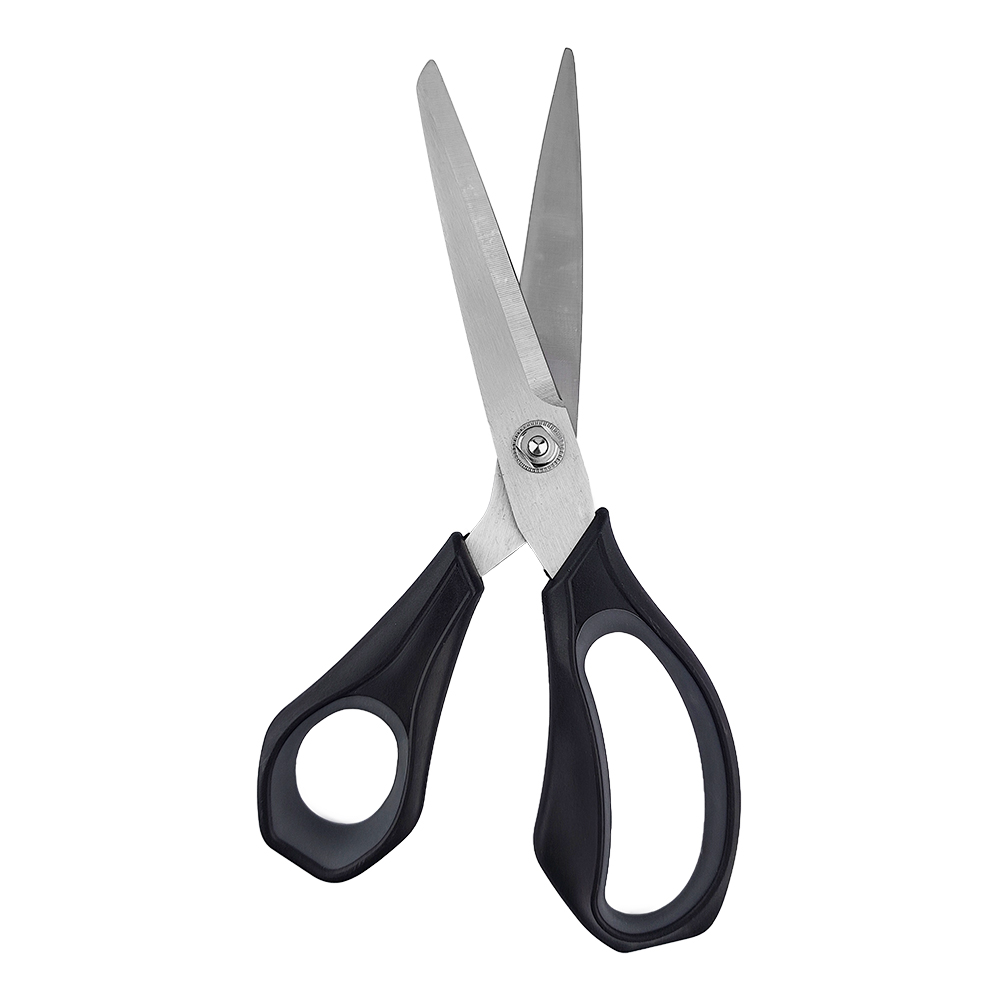
The original article referred to ergonomic handles, soft-grip textures, matte finish, larger looped handles, and an adjustable pivot screw. These can be useful product features when they are present on the exact model, but they should not be treated as universal. Ask the supplier to confirm handle material, handedness, pivot structure, surface finish, and whether the screw is decorative or actually adjustable.
Comparison Checklist for Supplier Shortlisting
| Review Area | What to Check | Questions to Ask the Supplier |
|---|---|---|
| Cutting performance | Smooth cutting across target fabrics | Can you provide samples for fabric testing before bulk order? |
| Blade and finish | Alignment, edge consistency, surface finish | What blade material and finishing process apply to this model? |
| Handle comfort | Grip size, shape, texture, user fatigue | Is the handle suitable for long cutting sessions or light household use? |
| OEM branding | Logo position, packaging, color options | Which branding methods are available and what artwork files are needed? |
| Quality control | Inspection steps before shipment | What checks are performed for sharpness, assembly, and appearance? |
| Commercial terms | MOQ, lead time, packing, payment terms | Can you confirm all order terms in a proforma invoice or quotation? |
Why Yangjiang Matters in Scissors Sourcing
Yangjiang is commonly known as a manufacturing center for knives, scissors, and related metal tools. For buyers searching for Yangjiang tailor scissors, this location can provide access to experienced toolmaking suppliers and a broad range of product types. However, location alone is not a quality guarantee. A buyer still needs to assess the factory, sample quality, export experience, communication, and order control.
If you are comparing several Yangjiang scissors suppliers, use the same sample test for each one. Request the same packaging requirements, the same logo instructions, and the same target order quantity. This makes quotations easier to compare. If one supplier quotes much lower than others, clarify what changed: material, thickness, finishing, packaging, inspection level, or shipping terms.
OEM Customization Details to Confirm
Customization can add value, but it also adds decision points. Before confirming an OEM tailor scissors order, prepare a written specification sheet. This does not need to be complex, but it should reduce ambiguity. Include product size, color, handle style, logo position, packaging format, inner box or carton requirements, barcode needs, and any market labeling requirements that apply to your sales channel.
- Confirm whether the selected model is available for private label or requires a custom mold.
- Ask for artwork templates for logo printing, hang tags, blister cards, or cartons.
- Request pre-production samples if branding or packaging is customized.
- Clarify acceptable color tolerance if handle color is important.
- Agree on inspection criteria for scratches, loose pivots, poor printing, or packaging damage.
Quality Questions Buyers Should Ask
Because the original article made broad claims about quality, durability, and precision, buyers should convert those claims into measurable supplier questions. For example, instead of asking whether the scissors are high quality, ask how the factory checks blade alignment. Instead of asking whether the scissors are sharp, ask what cutting test is used before packing. Instead of assuming stainless steel or another material grade, ask the supplier to identify the material used for the quoted model and whether documentation is available.
For professional or regulated sales channels, buyers may also need to ask about documentation, labeling, packaging safety, or destination-market requirements. Do not assume certifications, test reports, or compliance status unless the supplier provides valid documents for the exact product and order batch.
FAQ
What is the difference between OEM tailor scissors and standard wholesale scissors?
Standard wholesale scissors are usually sold as existing catalog items. OEM tailor scissors may include buyer branding, packaging, color selection, or specification adjustments, depending on what the factory supports.
Should I choose a factory or a trading company?
A factory may provide stronger production control, while a trading company may offer broader sourcing options. In either case, evaluate sample quality, communication, documentation, and accountability before ordering.
What samples should I request before a bulk order?
Request unbranded product samples first for cutting tests. If the project includes OEM packaging or logo printing, request a pre-production sample that shows the final branding and packing method.
Can tailor scissors be used for paper and plastic?
Some models may cut paper, thin plastics, and fabric, as the original article noted, but use should match the supplier’s specification. Cutting hard or unsuitable materials may reduce edge performance.
What should be confirmed before paying a deposit?
Confirm the final model, material description, branding method, packaging, MOQ, lead time, inspection standard, payment terms, shipping terms, and responsibility for any artwork or sample changes.
Final Buying Advice
OEM tailor scissors sourcing works best when buyers treat the product as a performance tool, not only a branded accessory. Start with the end user, test real samples, ask specific manufacturing questions, and document every commercial detail. Whether sourcing from a Yangjiang tailor scissors supplier or another manufacturing base, the goal is the same: consistent scissors that match your market, packaging, and quality expectations without relying on assumptions.
