





Fabric Cutting Scissors for Tailors: Precision & Durability
Clean cutting is one of the quiet foundations of good sewing. Before stitching, fitting, pressing, or finishing, the fabric has to be cut accurately. A poor pair of scissors can pull threads, chew edges, shift pattern pieces, and make detailed work harder than it needs to be. For tailors, dressmakers, quilting hobbyists, and craft users, choosing the right fabric cutting scissors is therefore a practical decision, not just a tool preference.
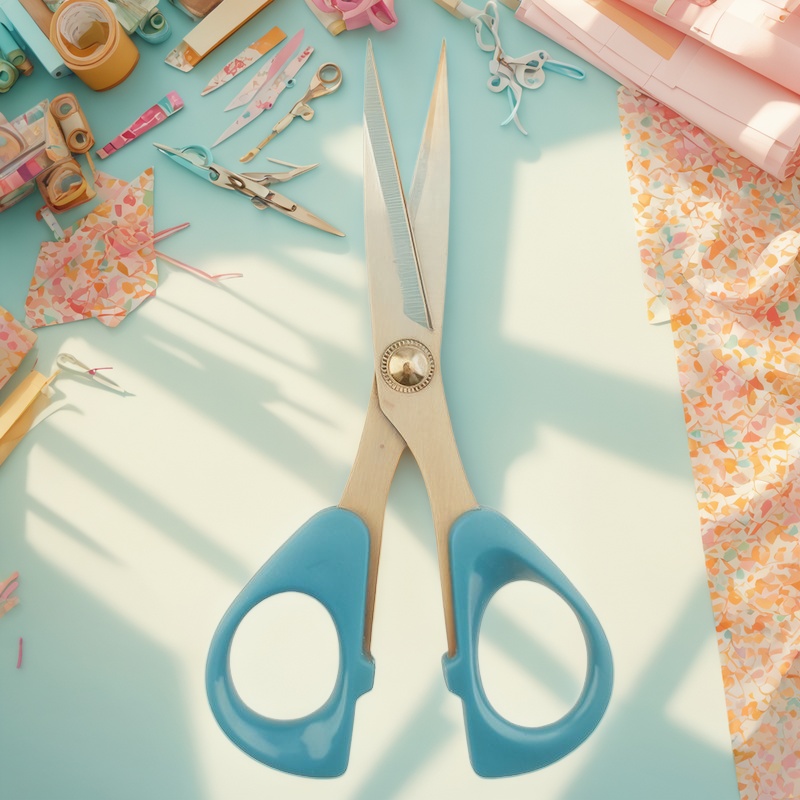
The AquaGrip Precision Scissors are presented as a sewing and craft cutting tool designed for both hobbyists and professionals. The original product description highlights a stainless steel blade, an ergonomically curved handle, soft touch grips, an aqua color finish, and use across fabric, paper, ribbons, and other crafting materials. This guide explains how to evaluate those features and how to use scissors correctly so they remain reliable over time.
Why Dedicated Fabric Cutting Scissors Matter
Fabric behaves differently from paper or packaging materials. Woven cotton, silky fabric, fleece, denim, lining, ribbon, and interfacing all respond differently to pressure and blade angle. A dedicated pair of tailor scissors helps keep cuts smooth because the blades are not dulled by general household tasks.
Using one pair for everything may seem convenient, but it often shortens the useful life of the cutting edge. Paper, cardboard, tape, and plastic can reduce sharpness faster than fabric. Once scissors begin to crush rather than slice, the fabric edge may look uneven or frayed, which can affect seam accuracy and the final appearance of a garment or craft project.
What to Look for in Tailor Scissors
When comparing fabric cutting scissors, focus on features that influence control, comfort, and consistency. Product descriptions can sound similar, so it helps to evaluate each part of the scissors and match it to your work style.
- Blade material: The AquaGrip model is described as having a stainless steel blade. Buyers should still ask how the blade is finished, sharpened, and maintained if ordering in quantity.
- Blade sharpness: Good scissors should cut from the pivot area to the tip without leaving uncut threads.
- Handle comfort: An ergonomically curved handle and soft touch grips can reduce strain during longer cutting sessions.
- Control at the tip: Accurate tips are useful for notches, curves, appliqué, and trimming seam allowances.
- Intended use: If you cut heavy fabrics frequently, ask the supplier whether the model is suitable for that workload.
AquaGrip Precision Scissors: Feature Review
The AquaGrip Precision Scissors are positioned for sewing, tailoring, and craft use. Based on the original product information, their main stated features include a refined stainless steel blade, a curved ergonomic handle, soft touch grips, and a lightweight yet strong build. The aqua handle color is a visual identifier, but the practical value lies in how the tool feels during repeated cuts.
For users who work with patterns, the ability to follow long straight lines as well as tighter curves is important. A comfortable grip can help keep the hand steady, especially when cutting large fabric panels. For smaller craft projects, the same control is useful when trimming ribbons, paper shapes, or decorative materials.
However, buyers should avoid assuming details that are not specified. If you need exact blade length, total weight, hardness, packaging format, or bulk order terms, those details should be confirmed directly with the supplier before purchasing.
Comparison Checklist for Selection
The table below can help individual users or purchasing teams compare fabric scissors before committing to a model.
| Selection Point | Why It Matters | Question to Ask |
|---|---|---|
| Blade material | Affects corrosion resistance, sharpening, and durability | What stainless steel is used, and how should it be maintained? |
| Cutting feel | Determines how smoothly fabric is sliced | Can the scissors cut cleanly from base to tip? |
| Handle design | Influences comfort during repeated cutting | Is the grip suitable for long sessions or different hand sizes? |
| Fabric range | Prevents mismatch between tool and material | Which fabrics are recommended or not recommended? |
| Care requirements | Helps preserve sharpness and alignment | How should the scissors be cleaned, stored, and sharpened? |
Best Practices for Accurate Fabric Cutting
Even high-quality scissors perform better when used with careful technique. Before cutting, press the fabric if appropriate, smooth out wrinkles, and position pattern pieces securely. Keep the lower blade resting close to the cutting surface, and open the scissors wide enough to make longer, smoother cuts rather than short choppy cuts.
- Reserve fabric scissors mainly for fabric to protect the cutting edge.
- Cut on a stable table rather than holding fabric in the air.
- Move the fabric as little as possible after the pattern is placed.
- Use the blade tip for notches and corners instead of forcing deep cuts.
- Test on a scrap piece when cutting unfamiliar materials.
For delicate fabric, slow down and support the material so it does not shift. For thicker layers, avoid overloading the scissors beyond what they can cut cleanly. If resistance feels excessive, cut fewer layers at a time.
Care and Maintenance Tips
Fabric scissors need simple but consistent care. Wipe the blades after use to remove lint, fibers, adhesive residue, or dust. Store them closed in a dry place where the tips and edges will not be knocked against other tools. If the pivot becomes stiff, follow the supplier’s maintenance instructions rather than applying random products that may stain fabric later.
Do not cut wire, pins, thick plastic, or rough packaging unless the scissors are specifically intended for that purpose. If the blades no longer meet cleanly or the scissors start folding fabric instead of cutting it, professional sharpening or replacement may be needed. For shared sewing rooms, label fabric scissors clearly so they are not used for office paper or general utility cutting.
Key Takeaways
- Dedicated fabric cutting scissors help protect fabric edges and improve pattern accuracy.
- The AquaGrip Precision Scissors are described with a stainless steel blade, ergonomic curved handle, soft touch grips, and aqua finish.
- Comfort matters for tailors and crafters who cut for long periods.
- Confirm unspecified details such as size, packaging, order terms, and recommended materials before bulk purchasing.
- Good technique and careful storage can extend the useful life of scissors.
Practical FAQ
Can fabric cutting scissors be used on paper?
The AquaGrip scissors are described as suitable for paper, ribbons, and other crafting materials as well as fabric. If your priority is long-term fabric cutting performance, it is still wise to keep one pair reserved mainly for textiles.
Are stainless steel blades enough to guarantee sharp cutting?
No. Stainless steel is a useful material description, but sharpness also depends on blade geometry, finishing, alignment, and maintenance. Ask the supplier for specific care and performance guidance if you need professional or bulk use.
What makes ergonomic scissors useful?
An ergonomic curved handle and soft touch grips may improve comfort and control, especially during repeated cuts. Fit can vary by hand size, so users who cut frequently should test the grip when possible.
How should I store tailor scissors?
Store them closed, clean, and dry. Keep the blades away from hard tools that can damage the edge, and avoid dropping them because impact can affect blade alignment.
What should buyers ask before sourcing these scissors in quantity?
Ask about exact dimensions, blade specifications, packaging, available colors, quality checks, lead time, MOQ, sample policy, and whether the scissors are recommended for the fabrics your customers commonly cut.
