




Fabric Cutting Scissors: Precision, Comfort, and Care
Fabric cutting scissors are one of the simplest tools in a sewing kit, but they have a major effect on the quality of finished work. A clean cut helps fabric pieces match the pattern, reduces fraying, and makes sewing more predictable. A poor pair of scissors can drag, chew, or shift the fabric, creating uneven edges before the project has even reached the machine.
This guide rewrites the basics for shoppers, sewing learners, craft users, and small studio teams who want practical selection advice rather than vague product claims. The focus is on what to look for in fabric cutting scissors, how to compare everyday features, and how to care for the tool so it remains useful across repeated projects.
Key Takeaways
- Use dedicated fabric cutting scissors for textiles; avoid sharing them with paper, packaging, or wire.
- Look for sharp stainless steel blades, a stable pivot, and handles that fit your grip comfortably.
- Comfort matters during long cutting sessions, especially for quilting, garment making, and batch craft work.
- Good cutting technique and regular cleaning can extend useful performance without complicated maintenance.
Why Fabric Cutting Scissors Matter
Textiles behave differently from paper. Cotton, felt, denim, lining, and synthetic fabrics can slide, stretch, or compress under pressure. When scissors are dull or poorly aligned, the user often compensates by squeezing harder. That extra force can distort the fabric and strain the hand.
Purpose-made fabric scissors help the blade pass through material with less pushing and tugging. This is important when cutting garment pattern pieces, trimming seam allowances, preparing applique shapes, or making repeated straight cuts for craft production. Even small inaccuracies can multiply when pieces are sewn together, so the first cut should be as controlled as possible.
What to Look For in Professional Tailor Tools
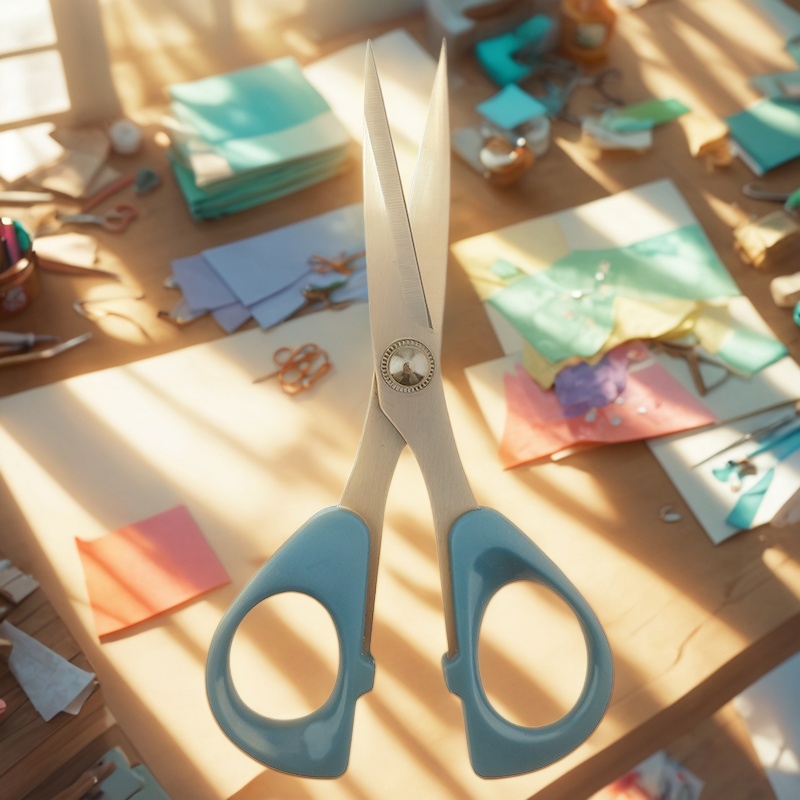
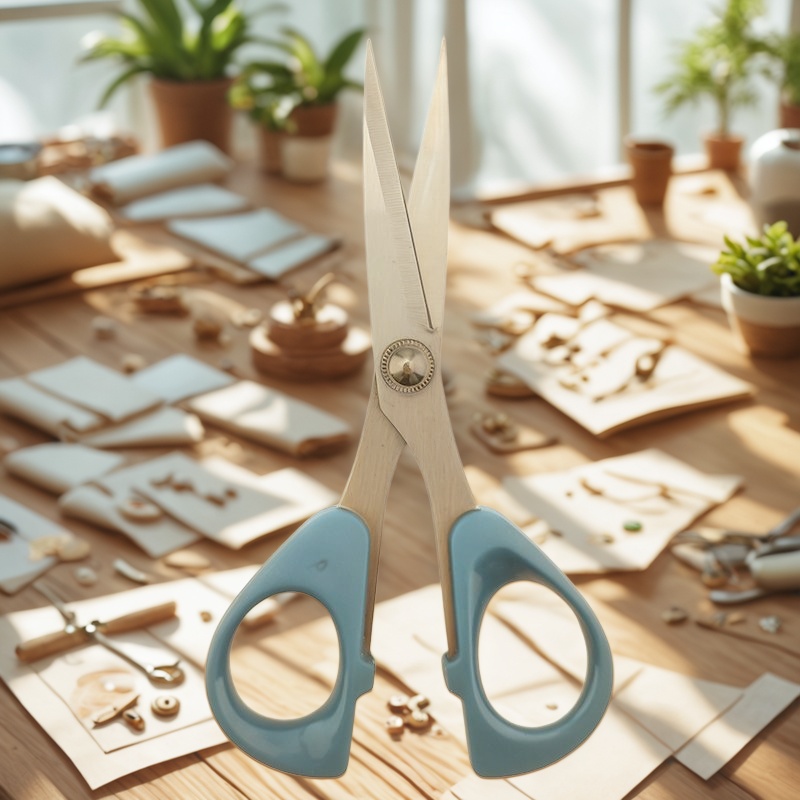
The original product description highlights Everyday Precision Scissors made with stainless steel blades, a secure pivot point, and contoured sky-blue handles. Those are useful features to understand because they relate directly to cutting accuracy and user comfort.
Stainless steel is commonly chosen for household and craft scissors because it offers a practical balance of strength, corrosion resistance, and ease of cleaning. Sharpness is still the real test: a blade should start the cut without folding the fabric and should continue through the full blade length with minimal snagging.
The pivot point is also important. If the pivot is loose, the blades may separate slightly during the cut, causing fabric to slip between them. If it is too tight, the scissors feel stiff and tiring. A secure, smooth pivot helps keep both blades working together.
Comparison Checklist for Choosing Fabric Scissors
Before buying fabric cutting scissors, compare the features that affect daily use. The best choice depends on the materials you cut, your hand size, and whether the tool will be used for sewing, tailoring, quilting, or mixed craft work.
| Feature to Check | Why It Matters | What to Ask or Test |
|---|---|---|
| Blade material | Affects durability, cleaning, and edge performance. | Are the blades stainless steel, and how should they be maintained? |
| Blade sharpness | Determines whether fabric cuts cleanly or shifts. | Can the scissors cut light fabric without pulling or chewing? |
| Pivot stability | Supports smooth, controlled blade movement. | Do the blades open and close evenly without looseness? |
| Handle shape | Influences fatigue during long sessions. | Does the grip suit your hand and cutting angle? |
| Hand orientation | Important for left-handed and shared-studio users. | Is the design ambidextrous or made for one hand only? |
| Intended use | Prevents premature dulling from unsuitable materials. | Will the scissors be reserved for fabric, or also used for paper crafts? |
Comfort and Control During Long Cutting Sessions
Comfort is not a decorative feature; it affects accuracy. When the hand becomes tired, the user may rush, lift the fabric, or cut away from the marked line. Contoured handles, such as the sky-blue handles described in the original article, are intended to sit more naturally in the hand and reduce unnecessary pressure.
Ambidextrous design can be useful in classrooms, craft rooms, and family sewing spaces where more than one person may use the same scissors. Left-handed users should still test the cutting view and grip if possible, because comfort depends on handle geometry, blade visibility, and personal cutting style.
How to Cut Fabric More Accurately
Good scissors perform best when paired with careful technique. Start by laying fabric flat on a stable surface. Smooth wrinkles without stretching the material, and use pattern weights, pins, or clips as appropriate for the fabric type. Keep the lower blade close to the table when making long cuts so the fabric remains supported.
- Reserve one pair of scissors for fabric only.
- Cut with long, steady strokes rather than short chopping motions when working on straight lines.
- For curves and notches, slow down and rotate the fabric instead of twisting your wrist sharply.
- Check the first cut on a scrap piece when working with a new or delicate textile.
- Store scissors closed and away from other metal tools that could damage the edges.
If you use the same scissors for paper crafts, remember that paper can dull blades more quickly than many fabrics. The original article notes use for light tailoring and intricate paper crafts, but for the cleanest sewing results, dedicated textile scissors are usually the safer habit.
Care and Maintenance Tips
Fabric scissors do not require complicated care, but small habits make a difference. Wipe blades after cutting lint-heavy fabric or adhesive-backed materials. Keep the pivot area free of thread dust. If scissors become sticky, clean them gently according to the supplier’s care instructions rather than using harsh chemicals that may affect the handle or finish.
Do not force scissors through materials they are not designed to cut. Thick plastic, metal, wire, and heavy packaging can damage the blade edge or pivot alignment. If the scissors begin to fold fabric instead of cutting it, or if the blades feel rough when closing, it may be time to ask the supplier about sharpening, adjustment, or replacement guidance.
When to Replace or Upgrade
A dependable pair of durable tailor scissors should feel consistent from the first cut to the last. Consider replacing or upgrading if the blades no longer meet cleanly, the pivot cannot be adjusted or has become unstable, or the handle shape causes discomfort during normal use. For serious sewing, it is often better to keep one trusted pair for precision work and a second general pair for less delicate cutting tasks.
When comparing products online, avoid judging only by color or general descriptions. Ask practical questions: What materials are the blades made from? Is the pivot designed for smooth movement? Are the handles suitable for left- and right-handed users? What care instructions does the supplier recommend? Clear answers help you choose scissors that fit the way you actually work.
FAQ
Can fabric cutting scissors be used on paper?
They can cut paper, and the original article mentions paper crafts. However, if your priority is clean textile cutting, it is better to keep a dedicated pair for fabric because paper use can dull the blades over time.
Are stainless steel blades good for sewing scissors?
Stainless steel is a practical material for many sewing and craft scissors because it is durable and easy to clean. Sharpness, blade alignment, and pivot stability are still important when judging performance.
What makes scissors comfortable for long projects?
Handle shape, finger opening size, cutting angle, and smooth blade movement all affect comfort. Contoured handles may reduce hand fatigue, especially during repeated cutting.
How do I know if my scissors are becoming dull?
Common signs include fabric folding between the blades, ragged edges, snagging, or the need to squeeze harder than usual. Test on a scrap of fabric before beginning an important project.
Should left-handed users choose special scissors?
Some scissors are ambidextrous, while others are hand-specific. Left-handed users should check whether the handle and blade visibility feel natural before relying on a pair for detailed cutting.
