




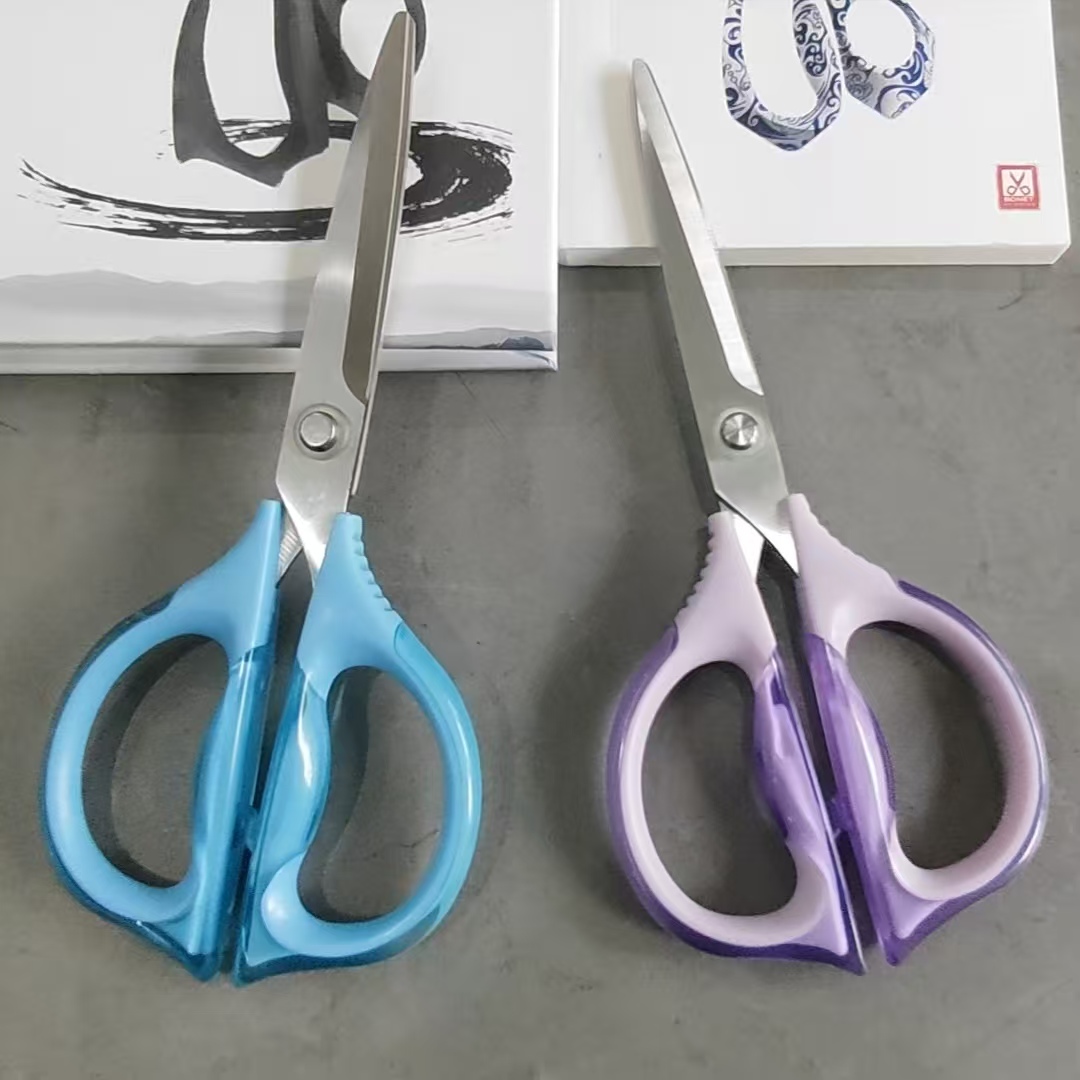
Fantory Amber Scissors: Precision Meets Style
Scissors are simple tools, but in schools, offices, craft rooms, packing stations, and retail stationery ranges, small design choices can affect comfort, control, and user satisfaction. The Fantory Amber Scissors are presented as an everyday cutting tool with an emphasis on ergonomic handling, stainless steel blades, and a modern amber-toned appearance. For individual buyers, the key question is whether they feel comfortable and cut cleanly for routine tasks. For B2B buyers, the question is broader: can the product fit a wholesale stationery program, corporate supply order, or possible OEM stationery scissors project without creating avoidable quality or communication risks?
This guide rewrites the original product introduction into a practical evaluation framework. It preserves the explicit details available: lightweight durable polymer handles, a contoured ergonomic shape, a soft cushioned grip, stainless steel blades, and use across paper, cardboard, and fabric. Where commercial information is not provided, the article explains what buyers should ask before ordering.
Key Takeaways
- Fantory Amber Scissors are positioned for daily cutting tasks in office, school, craft, and general work environments.
- Explicit product details include contoured polymer handles, cushioned grip, and stainless steel blades.
- Wholesale and OEM buyers should verify packaging, branding options, sampling, lead time, inspection criteria, and after-sales handling before purchase.
- For end users, comfort, blade alignment, cutting smoothness, and safe storage matter more than appearance alone.
What Makes These Scissors Worth Evaluating?
The main appeal of Fantory Amber Scissors is the combination of familiar utility and more considered handling. The original description highlights a lightweight yet durable polymer handle shaped to sit naturally in the hand. That matters because scissors are often used repeatedly, not just once. A poorly shaped handle can create pressure points, especially during classroom preparation, packaging work, office filing, or craft cutting.
The amber design also gives the scissors a recognizable look, which can be useful for stationery assortments where buyers want products that do not appear generic. However, sourcing decisions should not be based on color alone. Buyers should evaluate whether the handle finish, grip feel, blade movement, and packaging presentation match the intended market, whether that is student stationery, office supplies, craft tools, or promotional merchandise.
Handle Comfort and Everyday Control
The handle is described as a lightweight durable polymer with a contoured ergonomic shape and soft cushioned grip. These are useful features for general-purpose scissors because they can improve control and reduce discomfort during longer cutting sessions. For consumer-facing use, the best way to judge comfort is to test the scissors with typical tasks: trimming paper, opening mail, cutting labels, preparing cardboard templates, or working with light fabric.
For wholesale buyers, comfort should be tested by more than one person. Hand size, left- or right-hand preference, grip strength, and cutting frequency can all influence how a product feels. If the product will be used in schools or workplaces, buyers should ask whether samples can be reviewed by actual users before confirming a bulk order. Do not assume that a handle shape that looks ergonomic will suit every application.
Blade Performance: What to Check Before Buying
The original article states that the scissors use stainless steel blades and are intended to cut materials such as paper, cardboard, and fabric. Stainless steel is widely used for scissor blades, but the source does not specify grade, hardness, coating, blade thickness, or edge angle. B2B buyers should therefore request these details if performance consistency is important.
When testing a sample, check whether the blades meet cleanly from pivot to tip, whether the pivot feels too loose or too tight, and whether the scissors cut without tearing. Test several materials that match your intended use. For office supply programs, paper and envelopes may be enough. For craft or packaging use, buyers may also test thin cardboard and fabric, as mentioned in the source. If the scissors are intended for children, safety, size, and local market requirements should be discussed with the supplier before purchase.
Comparison Checklist for Sourcing Decisions
Use the checklist below to compare Fantory Amber Scissors samples with other wholesale stationery scissors or OEM stationery scissors options. The goal is not to find the most complicated product, but the one that fits the channel, budget, and end user.
| Evaluation Point | What to Check | Questions to Ask the Supplier |
|---|---|---|
| Handle comfort | Grip shape, cushioning, pressure points, hand fit | Can samples be tested by different users before bulk order? |
| Blade quality | Clean cutting, alignment, pivot smoothness, tip performance | What blade material details and quality checks can be provided? |
| Material suitability | Performance on paper, cardboard, and fabric | Which materials are recommended and which should be avoided? |
| Wholesale packaging | Retail card, bulk pack, barcode, labeling, carton protection | What packaging options are available for different channels? |
| OEM or branding | Logo placement, color options, packaging artwork | What customization options, artwork files, and approval steps are required? |
| Commercial terms | MOQ, lead time, payment terms, inspection process | What are the current order requirements and how are defects handled? |
Wholesale and OEM Buying Guidance
If you are sourcing for a distributor, retailer, school supply program, or corporate procurement list, treat the Fantory Amber Scissors as a product to be verified through samples and written specifications. The original article mentions wholesale stationery scissors and OEM stationery scissors, but it does not provide minimum order quantities, capacity, pricing, certifications, inspection standards, or production lead times. Those details should be requested directly from the supplier and confirmed in writing.
A practical B2B sourcing process can include the following steps:
- Request product samples and compare them with your target price segment.
- Confirm the exact handle material description, blade details, size, weight, and packaging format.
- Ask whether branding, private label packaging, or color adjustments are available.
- Review artwork approval procedures before any OEM production begins.
- Define acceptable quality limits for blade alignment, handle finish, pivot smoothness, and packaging damage.
- Clarify lead time, carton packing, shipping marks, and after-sales handling before placing a purchase order.
These steps help avoid misunderstandings. They are especially important when the same product may be sold through different channels, such as e-commerce, retail stationery shelves, educational supply tenders, or office procurement catalogs.
Use and Care Tips for Longer Service
For individual users, good care can help preserve cutting performance. Use the scissors for the materials they are suited to, and avoid cutting wire, hard plastic, or adhesive-heavy materials unless the supplier confirms suitability. Wipe the blades after cutting tape or labels, because adhesive residue can affect smooth movement. Store the scissors dry and closed, especially in shared workspaces or school settings.
If the pivot begins to feel stiff, clean around the joint before assuming the product is defective. If the blades no longer meet properly, avoid forcing them through thick material, as that can worsen alignment. In offices and classrooms, it is also useful to assign scissors to specific tasks, such as paper cutting only, so that general wear is easier to manage.
Who Are These Scissors Best For?
Fantory Amber Scissors are most relevant for buyers seeking general-purpose stationery scissors with a more distinctive appearance and comfort-focused handle design. They may suit office desks, study areas, craft tables, school supply lists, and general administrative use. The cushioned grip and contoured handle make them worth testing where repeated cutting is expected.
For heavy industrial cutting, specialized tailoring, food preparation, or safety-critical environments, buyers should look for tools designed and documented for those specific uses. The available source information supports everyday stationery and craft-oriented use, not specialized professional claims.
FAQ
What materials can Fantory Amber Scissors cut?
The original product description mentions paper, cardboard, and fabric. Buyers should test samples on the exact materials they plan to use and ask the supplier about recommended limits.
Are these scissors suitable for wholesale orders?
They are positioned as a possible wholesale stationery scissors option, but buyers should confirm MOQ, pricing, packaging, lead time, inspection standards, and defect handling directly with the supplier.
Can they be used for OEM stationery projects?
The source suggests OEM potential, but it does not list specific customization options. Ask about logo placement, packaging artwork, color changes, sample approval, and production requirements.
Do the scissors have stainless steel blades?
Yes, the original article states that the blades are stainless steel. It does not specify the steel grade or hardness, so B2B buyers should request detailed specifications if needed.
How should I maintain them?
Keep the blades clean and dry, avoid cutting unsuitable hard materials, remove adhesive residue after use, and store the scissors closed in a safe location.
