




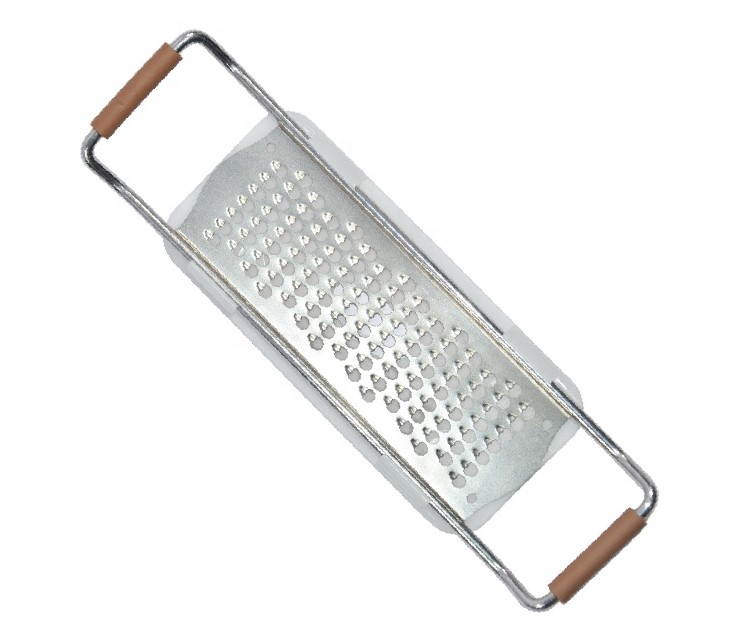
How to Choose a Stainless Steel Grater Supplier for Kitchenware Sourcing
Finding the right stainless steel grater supplier is not only about locating a product that looks good in a catalog. For importers, distributors, supermarket buyers, and kitchenware brands, the decision affects product consistency, user safety, packaging presentation, after-sales issues, and repeat orders. A grater may be a small kitchen tool, but it has several details that should be checked carefully: blade sharpness, handle comfort, surface finishing, rust resistance, cleaning convenience, and how the product is packed for retail or wholesale channels.
The original product focus is a stainless steel grater solution for everyday kitchen tasks such as zesting citrus, shredding cheese, and preparing vegetables. The source article also mentions a five-piece grater set, ergonomic non-slip handles, hanging loops for storage, and dishwasher-safe cleaning. These are useful features for buyers to evaluate, but they should still be verified through samples, supplier documents, and your own quality inspection process before placing a large order.
Key Takeaways
- Choose a stainless steel grater supplier based on verified product quality, not only price.
- Request samples to test sharpness, handle grip, cleaning ease, and durability under repeated use.
- For wholesale or OEM sourcing, ask clear questions about packaging, labeling, customization, inspection, lead time, and replacement policy.
- Compare grater types by kitchen task: fine zesting, medium shredding, coarse grating, slicing, or multi-piece sets.
- Avoid vague claims; confirm material, finish, and compliance requirements with the supplier before ordering.
Understand the Search Intent: What Buyers Need from a Grater Supplier
A buyer searching for a stainless steel grater supplier is usually looking for a dependable source, not a single retail purchase. The supplier may need to support bulk orders, private label packaging, stable quality, and communication during sampling and production. Buyers may also be comparing a one-piece grater, a box grater, a flat handheld grater, or a complete grater set for different sales channels.
Before contacting suppliers, define the target market. A professional kitchen may prioritize blade efficiency and comfort during frequent use. A retail gift set may require a neat package, clear care instructions, and a visually consistent set. An online marketplace seller may care about product weight, photo consistency, carton protection, and customer reviews related to sharpness or handle strength. The more specific the sourcing brief, the easier it is to compare suppliers fairly.
Product Features to Check in Stainless Steel Graters
The most important component of a stainless steel grater is the cutting surface. It should feel sharp enough to process common ingredients without excessive pressure. Buyers should test the grater with hard cheese, citrus peel, carrots, ginger, and other foods relevant to the final market. A grater that performs well with one ingredient may not work equally well for another.
The source article highlights a five-piece grater set designed for different textures. If you are considering a set, check whether each piece has a clear purpose. A useful set should not simply repeat similar grating patterns. It should offer practical differences such as fine zesting, medium grating, coarse shredding, and slicing. If the product includes ergonomic non-slip handles, test them with dry and wet hands. A handle that looks comfortable in photos may feel bulky, slippery, or unbalanced during real use.
Other helpful details include an end hanging loop for storage and dishwasher-safe design. For B2B sourcing, ask the supplier how these claims are supported. Can the handle material tolerate repeated dishwasher cycles? Does the hanging loop withstand normal kitchen use? Are care instructions included in the packaging? These questions help reduce customer complaints after the product reaches the market.
Supplier Evaluation Checklist
Use a structured checklist when comparing stainless steel grater suppliers. This keeps the sourcing process objective and makes it easier to explain decisions to purchasing, quality control, or product development teams.
| Evaluation Area | What to Check | Questions to Ask the Supplier |
|---|---|---|
| Material and finish | Stainless steel surface, smooth edges, clean polishing, resistance to visible rust after normal washing | What stainless steel grade is used, and can it be documented? |
| Blade performance | Sharpness, consistency of grating holes, low clogging, safe food contact edges | Can samples be tested before bulk order confirmation? |
| Handle and grip | Comfort, non-slip feel, balance, strength at the joint | What handle material is used, and has it been tested for repeated use? |
| Set configuration | Whether each grater size has a distinct function | Can the set be adjusted for a specific market or retailer? |
| Cleaning and storage | Dishwasher-safe claim, hanging loop, compact storage | What care instructions should be printed on packaging? |
| Packaging | Retail box, color card, blister, barcode, carton protection | Can private label packaging be supported, and what files are required? |
| Quality control | Inspection standard, defect handling, sample approval process | How are sharpness, appearance, and packing defects checked? |
Wholesale and OEM Questions to Ask Before Ordering
For wholesale and OEM kitchenware sourcing, a supplier conversation should go beyond product photos. Ask whether the supplier can provide pre-production samples, packaging mockups, and clear confirmation of the final product configuration. If your market requires specific labeling, language, barcode placement, or care instructions, confirm these details early.
- What is included in the quoted product: one grater, a five-piece set, packaging, inserts, or accessories?
- Can the supplier confirm the material, handle composition, and surface finish in writing?
- What customization options are available for logo, color, packaging, or set combination?
- What is the expected production lead time after sample approval?
- How are defects handled if the delivered goods do not match the approved sample?
- What inspection standard can be used before shipment?
Do not assume that all supplier claims apply automatically to every version of the product. A grater with a different handle, package, or blade pattern may require separate sample approval. If compliance documents are needed for your market, ask the supplier what they can provide and have those documents reviewed by the appropriate professional or testing partner.
How to Test Samples in a Practical Way
Sample testing does not need to be complicated, but it should be consistent. Create a small test plan and use the same ingredients for every supplier sample. For example, test fine grating with citrus peel, medium shredding with cheese, and coarse grating with carrots or potatoes. Record how much pressure is required, whether the food clogs the blade, whether the output texture is even, and whether the handle remains comfortable.
After use, wash the sample according to the supplier's care recommendation. If the product is described as dishwasher safe, run several cleaning cycles and inspect the handle, metal surface, and joint areas. Look for discoloration, looseness, rough edges, trapped food, or early signs of rust. These observations are more useful than relying only on product descriptions.
Packaging, Retail Presentation, and After-Sales Risk
Kitchen graters are sharp tools, so packaging should protect both the product and the person handling it. For retail channels, packaging also needs to explain what the grater is for and how to clean it safely. A five-piece set may need clearer labeling than a single grater because customers should understand which piece to use for each task.
Ask for carton drop protection details, inner packing method, barcode placement, and photo samples of packed goods. If selling online, consider whether the product can arrive without bent edges, scratched surfaces, or damaged handles. Small packaging weaknesses can create high return rates even when the product itself is acceptable.
Choosing the Best Fit, Not Just the Lowest Price
A low unit price may be attractive, but it can become costly if the grater is uncomfortable, dull, hard to clean, or poorly packed. The best stainless steel grater supplier is the one that can match your quality expectations, communicate clearly, and keep the approved sample consistent in bulk production.
When comparing offers, separate product cost from total sourcing risk. Consider sample quality, packaging reliability, response speed, customization support, inspection cooperation, and the supplier's willingness to answer technical questions. If key details are missing, treat them as open questions rather than assumptions.
FAQ
What should I look for in a stainless steel grater supplier?
Look for consistent sample quality, clear material information, practical blade performance, safe finishing, reliable packaging, and responsive communication. For wholesale or OEM orders, also ask about customization, inspection, and defect handling.
Is a five-piece grater set better than a single grater?
A five-piece set can be useful if each grater has a distinct purpose, such as fine zesting, shredding, coarse grating, or slicing. If the pieces perform nearly the same task, a smaller set or single grater may be more suitable.
Can stainless steel graters be washed in a dishwasher?
The source article mentions dishwasher-safe design, but buyers should confirm this with the supplier for the exact product version. Test samples through repeated cleaning cycles before making a bulk purchase decision.
What OEM details should be confirmed before production?
Confirm logo placement, packaging artwork, barcode requirements, care instructions, set configuration, sample approval, production lead time, inspection method, and how nonconforming goods will be handled.
How can buyers reduce quality risks?
Use approved samples, written specifications, pre-shipment inspection, clear packaging requirements, and practical use testing. Avoid relying on catalog descriptions alone when sourcing kitchen tools in bulk.
