




Finding Precision with Textile Cutting Tools
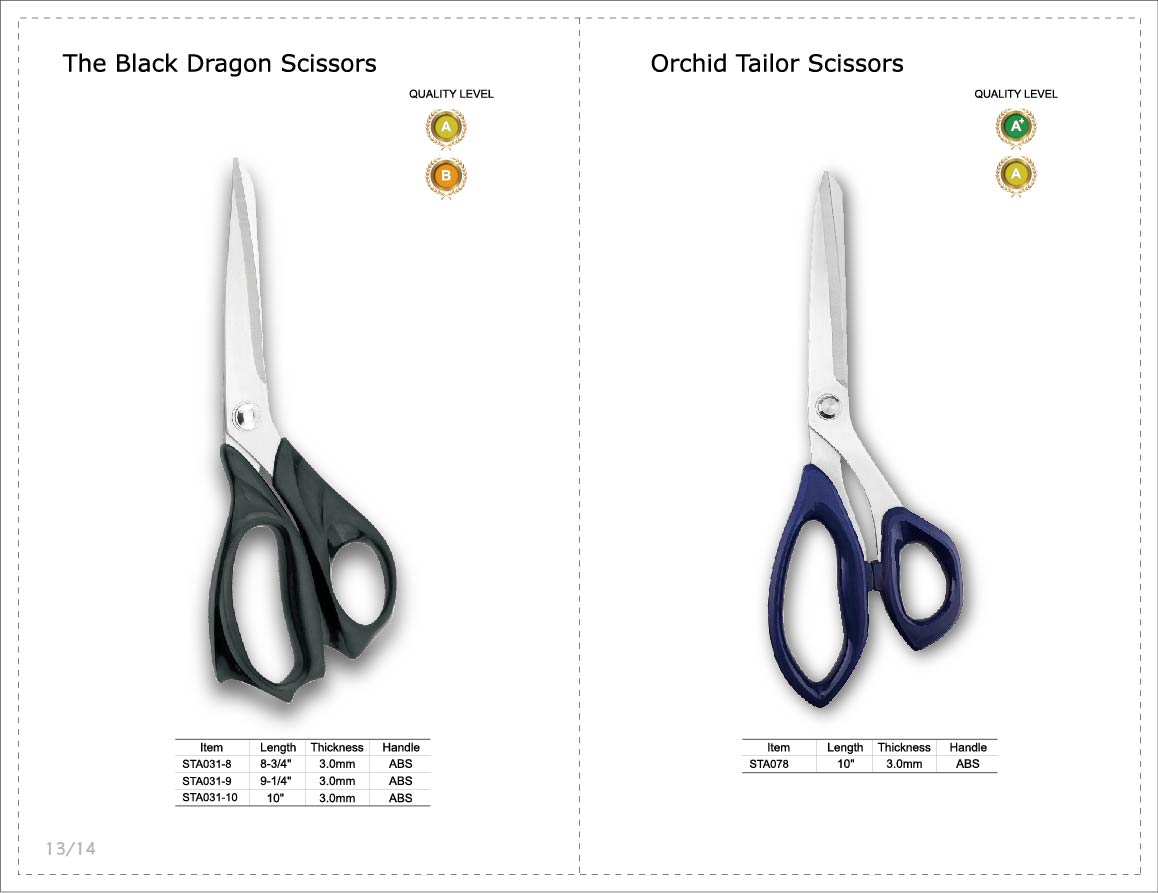
Textile cutting tools influence the accuracy, speed and consistency of fabric work. In tailoring, dressmaking, sample development and small-batch production, a clean cut can reduce rework and help pieces align correctly during sewing. A poor tool can pull woven fabric, chew through layers, or make it harder to follow a pattern line.
This guide rewrites the original product introduction into a more practical reference for buyers and users comparing tailor scissors. It preserves the explicit product details available: the Black Dragon Scissors are offered in 8-3/4 inch, 9-1/4 inch and 10 inch lengths, with a 3.0mm thick blade and lightweight ABS handles. The Orchid Tailor Scissors are described with a 10-inch blade, 3.0mm blade thickness, ergonomic ABS handles, orchid color and a dual 'A' quality rating. Any commercial or compliance details not stated should be confirmed directly with the supplier before purchase.
Key Takeaways
- Choose textile scissors by fabric type, cutting length, hand comfort and workshop use case.
- Longer tailor scissors can support straighter cuts across pattern pieces, while shorter sizes may feel easier to control.
- Blade thickness and handle design matter, but buyers should also ask about material, finishing, inspection and packaging.
- For wholesale or OEM sourcing, request samples and written specifications before confirming bulk orders.
What Makes a Textile Cutting Tool Accurate?
Accuracy is not only about sharpness. A useful pair of fabric scissors should open and close smoothly, hold fabric securely between the blades and allow the user to follow a cutting line without twisting the wrist. For professional environments, consistency between units can be as important as the performance of one sample pair.
When evaluating textile cutting tools, consider the full cutting experience. Does the blade begin the cut cleanly at the tip? Can it cut along a long seam allowance without leaving jagged edges? Does the handle remain comfortable after repeated use? These practical observations are especially important for tailors, sample makers and procurement teams buying for multiple users.
Product Options Mentioned in the Original Article
The Black Dragon Scissors are presented as versatile textile cutting tools for a range of fabric-cutting tasks. The available lengths listed in the original article are 8-3/4 inch, 9-1/4 inch and 10 inch. This range gives buyers room to match the tool to the cutting job. A shorter option may suit detail work or users who prefer a lighter feel, while a 10-inch option can be useful for longer cuts on flat fabric.
The same source states that the Black Dragon Scissors have a 3.0mm thick blade and lightweight ABS handles. A thicker blade can feel stable during cutting, though buyers should still ask what blade material, surface treatment and edge finishing are used, because those details are not provided in the original copy.
The Orchid Tailor Scissors are described for tailoring and dressmaking, with a 10-inch blade, 3.0mm blade thickness, ergonomic ABS handles and an orchid color. The original also references a dual 'A' quality rating. Because rating systems can vary by supplier, B2B buyers should request a definition of that rating, the inspection criteria behind it and whether the same grade applies to every shipment.
Comparison Checklist for Buyers
| Selection Point | Why It Matters | Questions to Ask |
|---|---|---|
| Scissor length | Affects control, cutting stroke and suitability for long pattern lines. | Which length is recommended for light fabrics, heavy fabrics or general tailoring? |
| Blade thickness | The original products list 3.0mm blades, which may support stable cutting. | What is the blade material, hardness range and edge-finishing process? |
| Handle material | ABS handles are stated for both product lines and may reduce weight. | Is the handle shape available in different colors, molds or branding options? |
| Quality control | Consistent opening, closing and cutting performance are important in bulk orders. | What inspection steps are used before packing, and can a sample be approved? |
| Packaging and labeling | Retail, wholesale and workshop supply may require different packaging. | What packaging options, barcode needs or private-label requirements can be supported? |
How to Choose for Tailoring, Dressmaking and Workshops
For individual tailors and dressmakers, the best textile cutting tool is usually the one that cuts cleanly while reducing hand fatigue. A 10-inch tailor scissor can be helpful for long, smooth cuts in dress panels, linings and pattern work. However, users with smaller hands or frequent detail tasks may prefer an 8-3/4 inch or 9-1/4 inch option for better control.
For workshops and sourcing teams, the choice should be based on repeatable performance rather than appearance alone. Ask multiple users to test samples on the fabrics they handle every day. Include common materials such as cotton, polyester blends, lining fabric or denim only if those fabrics are relevant to your business. Record feedback on cutting smoothness, grip comfort, blade alignment and whether the scissors leave clean edges after repeated use.
B2B Sourcing Guidance for Textile Scissors
If you are sourcing textile cutting tools from a factory, supplier, wholesaler or OEM partner, request information in writing before placing a larger order. The original article mentions Yangjiang textile tools as a manufacturing context, but it does not provide verified factory capacity, MOQ, certifications, test reports, prices or delivery schedules. Those details should not be assumed.
- Ask for a product specification sheet covering length, blade thickness, handle material and available colors.
- Request production samples and compare them with the supplier's written description.
- Clarify whether branding, packaging or color customization is available, and what conditions apply.
- Confirm how the supplier defines quality grades, including any meaning behind a dual 'A' rating.
- Discuss inspection standards, acceptable defect criteria and how issues are handled after delivery.
Good sourcing decisions depend on transparency. A supplier that can answer practical questions about materials, finishing, packing and quality control is easier to evaluate than one that only provides general claims.
Use and Care Tips for Longer Cutting Life
Even well-made tailor scissors can perform poorly if they are used for the wrong task. Keep textile scissors dedicated to fabric whenever possible. Cutting paper, tape, plastic packaging or wire can dull the edge and affect precision. Store scissors closed and dry, and avoid dropping them because a fall can affect blade alignment.
After use, wipe lint from the blades and pivot area. If the scissors feel stiff, ask the supplier or a qualified sharpening service about proper maintenance. Do not over-tighten the pivot without understanding the design, because a scissor that is too tight may strain the hand and cut unevenly.
FAQ
Which length of textile scissors should I choose?
Choose based on the work. Longer scissors, such as 10-inch tailor scissors, can help with long straight cuts. Shorter sizes like 8-3/4 inch or 9-1/4 inch may feel easier to control for smaller hands or detail cutting.
Are ABS handles suitable for professional fabric cutting?
The original article lists lightweight or ergonomic ABS handles for the featured scissors. Suitability depends on handle shape, balance and user comfort, so sample testing is recommended before workshop-wide purchasing.
What should wholesale buyers verify before ordering?
Verify product specifications, sample quality, packaging, branding options, inspection process, lead time, payment terms and any claimed quality grade. Do not assume MOQ, certifications or test results unless the supplier provides them.
Can one pair of scissors cut every textile?
One versatile pair can cover many common fabrics, but heavy, delicate or specialty textiles may need different blade lengths or tool types. Test on your actual materials before standardizing a purchase.
