




Finding the Best Fabric Shear Supplier: A Practical B2B Guide
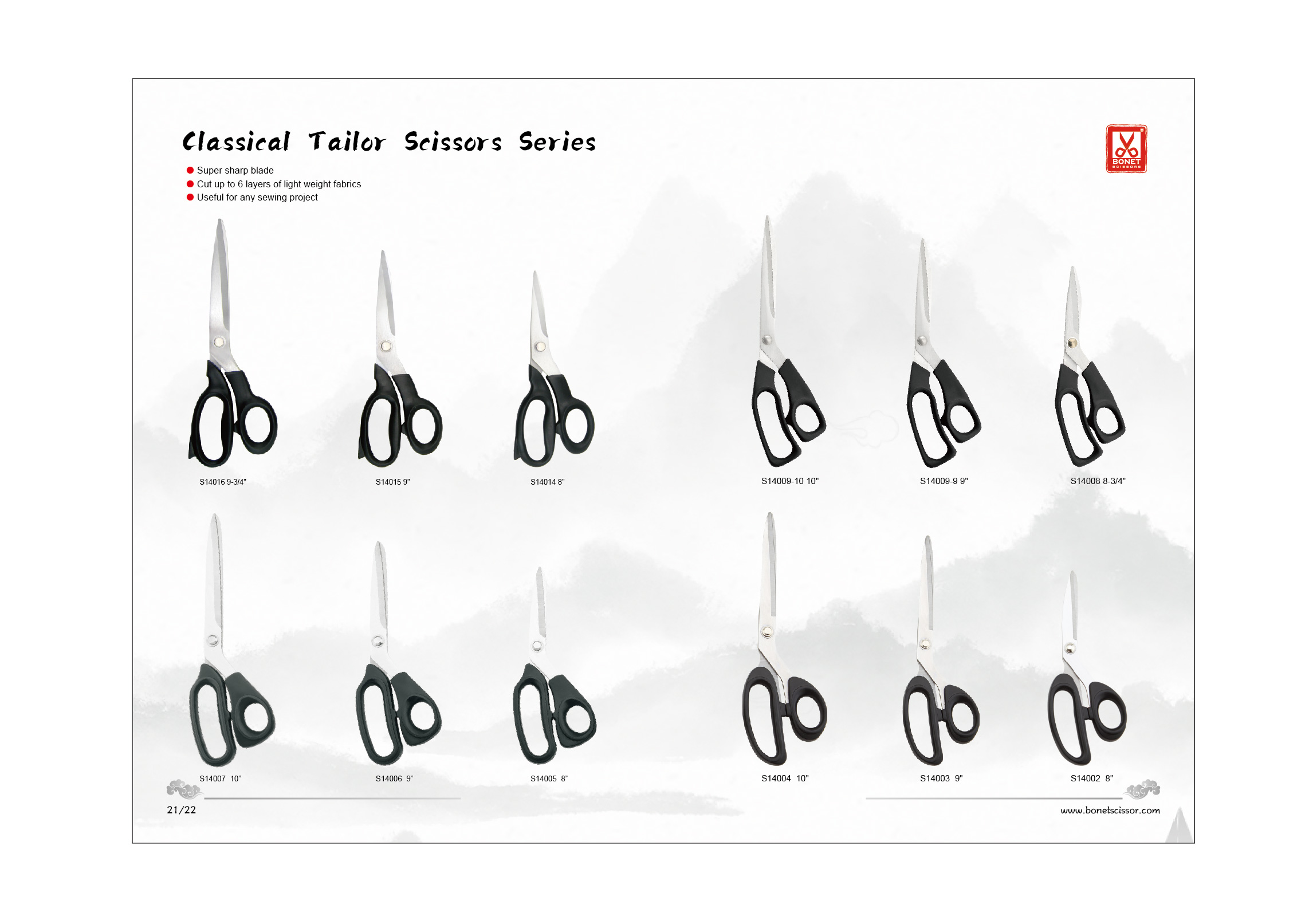
Choosing a fabric shear supplier is not only about finding a sharp pair of scissors. For distributors, sewing-tool brands, garment workshops, craft retailers, and OEM buyers, the right supplier should offer consistent product quality, clear communication, dependable packaging options, and practical support before repeat orders begin. Fabric shears are used for precision cutting, so small differences in blade alignment, handle comfort, and finishing can affect user satisfaction.
This guide explains how to evaluate a fabric shear supplier for wholesale or OEM sourcing. It also covers how to compare common tailor scissor sizes, what to check in samples, and which questions to ask before confirming an order.
Key Takeaways
- Start with the end user: tailor shops, sewing students, craft users, and industrial buyers may need different scissor sizes.
- Request samples and inspect cutting feel, blade alignment, handle comfort, and packaging quality before ordering in bulk.
- Do not rely only on product photos; ask for clear details about materials, finishing, size range, branding options, and quality-control steps.
- For OEM or wholesale orders, confirm commercial details such as MOQ, lead time, carton packing, logo method, and after-sales handling directly with the supplier.
What Makes a Good Fabric Shear Supplier?
A good fabric shear supplier should help buyers choose products that fit their market instead of offering only a generic catalog. Fabric shears may look similar online, but their performance depends on practical details: how smoothly the blades open and close, whether the tips meet cleanly, whether the handle shape suits long cutting sessions, and whether the finish is consistent across a batch.
For B2B buyers, supplier reliability also matters. Ask how the supplier handles sample confirmation, production communication, inspection, packaging, and shipping documentation. If you are developing a private-label product, confirm whether OEM branding is available and what artwork files, logo placement, and packaging formats are required. Avoid assuming that a supplier can meet every specification until it is confirmed in writing.
How to Match Fabric Shears to Your Target Market
Before comparing quotations, define your target customer. A sewing school may prefer affordable, easy-to-handle scissors. A tailoring workshop may prioritize larger shears for long cuts. A craft retailer may need attractive packaging and a mixed-size assortment. A professional sewing brand may focus on smooth operation and durable presentation.
The original product reference mentions a Classical Tailor Scissors Series with size options including smaller 5-3/4 inch scissors and larger 10 inch models. These sizes suggest a useful range: compact scissors can support detailed trimming, while larger tailor scissors are often chosen for longer cuts on bigger fabric panels. If you plan to sell multiple sizes, build your assortment around real user tasks rather than simply adding every available model.
Fabric Shear Size Comparison Checklist
The table below can help buyers compare fabric shear options during sample review. Use it as a checklist when deciding which sizes to include in a wholesale or OEM program.
| Item to Compare | Smaller Shears, such as 5-3/4 inch | Larger Shears, such as 10 inch | Buyer Questions |
|---|---|---|---|
| Typical use | Detail cutting, trimming, craft tasks | Longer cuts and larger fabric pieces | Which end users are you targeting? |
| Handling | Usually easier to store and control | May require more hand space and control | Is the handle comfortable for repeated use? |
| Retail assortment | Good for entry-level or accessory sets | Good for tailor and sewing-tool ranges | Should you offer one size or a size series? |
| Sample testing | Check tip accuracy and smooth movement | Check blade alignment along the full length | Can the supplier provide samples for evaluation? |
| Packaging | May suit compact retail packaging | Needs packaging that protects longer blades | What packing formats are available? |
What to Inspect in Fabric Shear Samples
Sample inspection is one of the most important steps in selecting a supplier. A product page can show the general appearance, but it cannot fully demonstrate cutting feel or consistency. When your samples arrive, test each pair on light, medium, and heavier fabrics that represent your market. If your customers often cut layered fabric, ask the supplier what cutting performance the model is designed for, and test it under your own conditions.
- Blade alignment: The blades should meet correctly from the pivot area to the tips.
- Cutting smoothness: The shears should not feel rough, loose, or overly tight during repeated opening and closing.
- Tip performance: The tips should support accurate cutting, especially for detail work.
- Handle comfort: Check whether the grip shape causes pressure during longer use.
- Surface finish: Look for scratches, burrs, uneven coating, or inconsistent polishing.
- Packaging protection: Confirm that the blades are protected well enough for transport and retail handling.
Questions to Ask Before Wholesale or OEM Orders
When sourcing fabric shears, many issues can be avoided by asking clear questions early. Do not assume details such as material grade, hardness, testing standards, order quantity, or branding method unless the supplier provides them. If these details are important for your market, request written confirmation and, where appropriate, supporting documents.
- What sizes are available in the tailor scissors or fabric shear range?
- Can the supplier provide pre-production samples before bulk manufacturing?
- What logo, label, or packaging customization options are available?
- What is the minimum order quantity for standard items and customized items?
- What is the estimated production lead time after sample and artwork approval?
- How are products inspected before shipment?
- What carton packing and shipping marks can be provided?
- How does the supplier handle quality feedback or replacement discussions?
How to Compare Suppliers Beyond Price
Price is important, but it should not be the only factor. A very low quotation may not include the packaging you need, the finish level your customers expect, or the inspection process required for consistent orders. Compare quotations line by line: product size, packaging type, logo method, sample cost, production lead time, payment terms, and shipping responsibility.
Communication is another useful indicator. A sourcing partner should answer questions directly, clarify limitations, and avoid vague promises. For ongoing wholesale business, consistent communication often saves more cost than a small difference in unit price. If your order involves private label packaging, provide clear artwork and ask for a digital mockup or sample confirmation before mass production.
FAQ: Fabric Shear Supplier Selection
What is the best size for professional fabric shears?
There is no single best size for every user. Smaller scissors, such as 5-3/4 inch models, can suit trimming and detail work, while larger 10 inch tailor scissors are often selected for longer fabric cuts. Many B2B buyers carry more than one size.
Should I request samples before placing a bulk order?
Yes. Samples allow you to check cutting feel, blade alignment, handle comfort, finish, and packaging. They also help confirm whether the item fits your target retail or professional market.
Can fabric shears be customized for OEM orders?
Customization may be possible, but it depends on the supplier. Ask about logo placement, packaging options, artwork requirements, MOQ, lead time, and whether a pre-production sample can be approved before bulk production.
How do I avoid quality problems in wholesale orders?
Set clear expectations before ordering. Confirm product details, request samples, define packaging, ask about inspection steps, and keep written records of approved samples, artwork, and order terms.
What should I ask a fabric shear supplier first?
Start with size range, sample availability, product details, packaging options, MOQ, lead time, and quality-control process. These answers will help you compare suppliers more accurately than price alone.
