




Finding the Right Knife Sharpener Supplier for You
Choosing a knife sharpener supplier is not only about finding a low unit price. For wholesalers, kitchenware brands, retailers, food-service distributors, and procurement teams, the better question is whether a supplier can provide a product that matches the intended user, packaging channel, quality expectations, and after-sales requirements. A hand-held knife sharpener may look simple, but buyers still need to review its sharpening design, stability, usability, packaging options, and consistency before placing bulk orders.
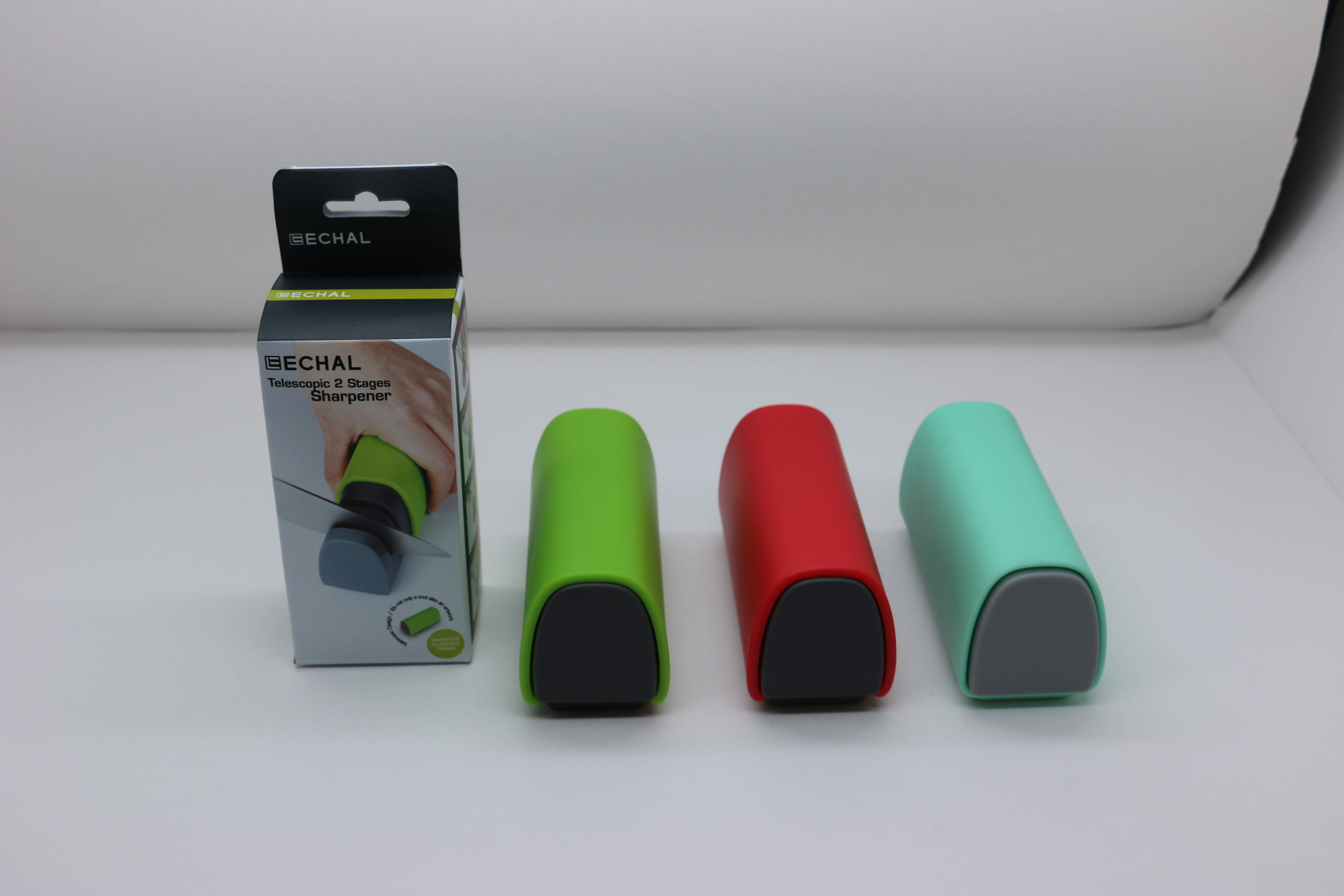
The original product focus is a compact hand-held knife sharpener with a lime green ergonomic design, a nonslip base, and two calibrated slots for step-by-step sharpening. Those details make it relevant for everyday kitchen use and for resale programs where consumers want a straightforward sharpening tool. However, a good sourcing decision should be based on verified product information, samples, and clear supplier communication rather than assumptions.
Key Takeaways
- Define the target market first: home kitchen, food-service, workshop, retail, promotional, or wholesale distribution.
- Ask suppliers to clarify the function of each sharpening slot, expected use cases, replacement guidance, and care instructions.
- Check stability, grip, hand comfort, packaging strength, and consistency across samples before approving bulk production.
- For OEM or wholesale orders, confirm customization options, lead time, inspection process, carton details, and commercial terms in writing.
What Type of Knife Sharpener Supplier Do You Need?
Different suppliers serve different buying needs. A retailer may need shelf-ready packaging and consistent color presentation. A distributor may prioritize carton durability, barcode labeling, and repeat availability. A private-label brand may need OEM packaging support and clear product documentation. A food-service buyer may care more about ease of cleaning, stability on a countertop, and whether staff can use the sharpener safely with minimal training.
If you are sourcing a hand-held model like the lime green sharpener described in the original article, identify whether it is meant for consumer resale or more frequent professional use. The original description notes an ergonomic body, a nonslip base, and two calibrated slots. These features are useful talking points, but buyers should ask the supplier to explain the materials, abrasive components, recommended knife types, and any limitations. Do not assume compatibility with every blade style unless the supplier documents it.
Product Features to Verify Before Buying Wholesale
A sharpener should be evaluated as a practical tool, not just a catalog item. Start with grip comfort. A hand-held sharpener should feel stable when held or placed on a flat surface. The nonslip base mentioned in the source is important because movement during sharpening can affect both safety and sharpening consistency. Test the base on common surfaces such as stainless steel counters, wooden tables, and laminated worktops.
Next, review the two-slot sharpening process. Ask what each slot is intended to do. Some sharpeners use one slot for coarse sharpening and another for finishing, honing, or polishing, but the exact function depends on the product design. Request instructions for angle guidance, number of recommended pulls, cleaning method, and whether the sharpener is intended for straight-edge kitchen knives only. These details help reduce customer complaints and returns.
Supplier Comparison Checklist
Use a structured checklist to compare potential suppliers. This keeps the purchasing discussion practical and prevents decisions based only on photos or short descriptions.
| Evaluation Area | What to Check | Questions to Ask the Supplier |
|---|---|---|
| Product function | Two-slot process, sharpening guidance, suitable knife types | What does each slot do, and which blades should not be used? |
| Usability | Grip comfort, nonslip base, hand position, cleaning | Can you provide user instructions and care guidance? |
| Consistency | Sample quality, color consistency, slot alignment | How do you inspect finished products before shipment? |
| Packaging | Retail box, instruction sheet, carton protection | What packaging formats are available for wholesale or OEM orders? |
| Commercial terms | MOQ, lead time, payment terms, repeat order support | What are the current terms for my order quantity and destination? |
| Documentation | Product data, labeling, export documents | Which documents can you provide before shipment? |
How to Assess Quality Without Over-Relying on Claims
Quality claims should be supported by samples, clear specifications, and inspection records. Before confirming a bulk order, request pre-production or current-stock samples. Use several knives of similar condition to compare how easily the sharpener restores an edge. Check whether the unit remains stable on the counter and whether the handle shape is comfortable for left- and right-handed users. Also look for rough edges, loose parts, uneven color, or weak packaging.
For B2B buyers, it is reasonable to ask about the supplier’s quality control steps. Instead of asking only whether the product is high quality, ask what is checked, when it is checked, and what acceptance standard is used. If your market has specific labeling or compliance requirements, raise those requirements early and ask the supplier what documents they can provide. Avoid assuming certifications, test results, or material grades unless they are supplied and verified.
Wholesale and OEM Sourcing Considerations
Wholesale knife sharpeners are often purchased for retail shelves, online stores, food-service supply catalogs, or promotional programs. In these channels, packaging and instructions can be just as important as the sharpener itself. A compact hand-held sharpener with a bright lime green design may stand out visually, but the final presentation should match your brand position and sales channel.
If you need OEM support, ask whether color, logo placement, instruction sheets, barcodes, packaging artwork, and carton marks can be customized. Confirm whether customization affects MOQ, production time, sample fees, or unit price. Also ask how changes are approved: a digital artwork proof may not be enough for all buyers, so a physical pre-production sample may be necessary before mass production.
- Request product photos, specifications, and packaging details.
- Order samples and test them under realistic use conditions.
- Confirm commercial terms, production schedule, and inspection plan.
- Approve packaging artwork and labeling before production.
- Arrange final inspection or request inspection photos before shipment.
Matching the Sharpener to the End User
A home user may want a simple sharpener that is easy to store and use occasionally. A restaurant kitchen may need a tool that can be cleaned easily and understood quickly by multiple staff members. A reseller may need a product that is easy to explain in short online descriptions. The two calibrated slots described in the original article can be useful for step-by-step sharpening, but instructions should be clear enough that customers know how much pressure to apply and when to stop.
Do not position a hand-held sharpener as suitable for every blade or every industrial task unless the supplier confirms it. Heavy-duty industrial sharpening may require different equipment from a compact kitchen sharpener. If your search intent is an industrial knife sharpener supplier, clarify whether you mean sharpeners for commercial kitchens, meat processing, workshops, or manufacturing blades. Each application has different performance and safety expectations.
Practical FAQ
What should I ask a knife sharpener supplier first?
Start with the intended use, slot functions, suitable knife types, available packaging, MOQ, lead time, and sample policy. These answers quickly show whether the supplier fits your buying plan.
Is a two-slot sharpener better than a single-slot model?
It can be more convenient if the slots are designed for different steps, such as initial sharpening and finishing. Ask the supplier to define the purpose of each slot and provide instructions.
Can I order wholesale knife sharpeners with my brand?
Many suppliers may offer OEM or private-label options, but details vary. Ask about logo placement, packaging artwork, sample approval, MOQ, cost impact, and production lead time.
How do I reduce risk before a bulk order?
Test samples, confirm written specifications, review packaging, agree on inspection criteria, and clarify how defective or inconsistent goods will be handled before shipment.
Are hand-held sharpeners suitable for industrial use?
Some may work for frequent kitchen or workshop maintenance, but true industrial use can require specialized equipment. Define the application and ask the supplier for documented suitability.
Final Sourcing Advice
The right knife sharpener supplier should help you understand the product, not just quote it. For a hand-held lime green sharpener with a nonslip base and two calibrated slots, the main sourcing priorities are usability, stability, clear instructions, packaging reliability, and repeatable quality. Compare suppliers with the same questions, test real samples, and document all commercial and technical details before committing to wholesale or OEM production.
