




Finding Your Ideal Knife Sharpener Supplier: A Comprehensive Guide
Choosing a knife sharpener supplier is not only about finding a low unit price. For retailers, distributors, restaurant supply buyers, and private-label brands, the better question is whether a supplier can provide consistent products, clear communication, packaging support, and dependable fulfillment. A sharpener may look simple, but end users care about safe handling, predictable sharpening results, and clear instructions. This guide explains how to evaluate suppliers and how to assess a product such as a Dual-Stage Compact Knife Sharpener without relying on unsupported claims.
Key Takeaways
- Start by matching the sharpener type to your target market: home users, food-service buyers, retailers, or industrial tool rooms.
- For a dual-stage compact model, confirm the role of each stage, such as carbide for coarse sharpening and ceramic rods for fine honing.
- Ask suppliers direct questions about sampling, packaging, quality checks, lead times, spare parts, and after-sales support.
- Do not assume certifications, material grades, or performance data; request documentation when these details matter to your market.
- Wholesale buying should consider total landed cost, not only quoted unit price.
Define Your Buying Goal Before Contacting Suppliers
Before comparing quotations, define what you need the knife sharpeners to do in your product range. A retailer may need compact, easy-to-explain sharpeners for home kitchens. A distributor may need cartons that are simple to store, scan, and ship. A food-service supplier may prioritize durability, replacement availability, and instructions suitable for staff training. An OEM or private-label buyer may care about packaging design, logo placement, and stable repeat production.
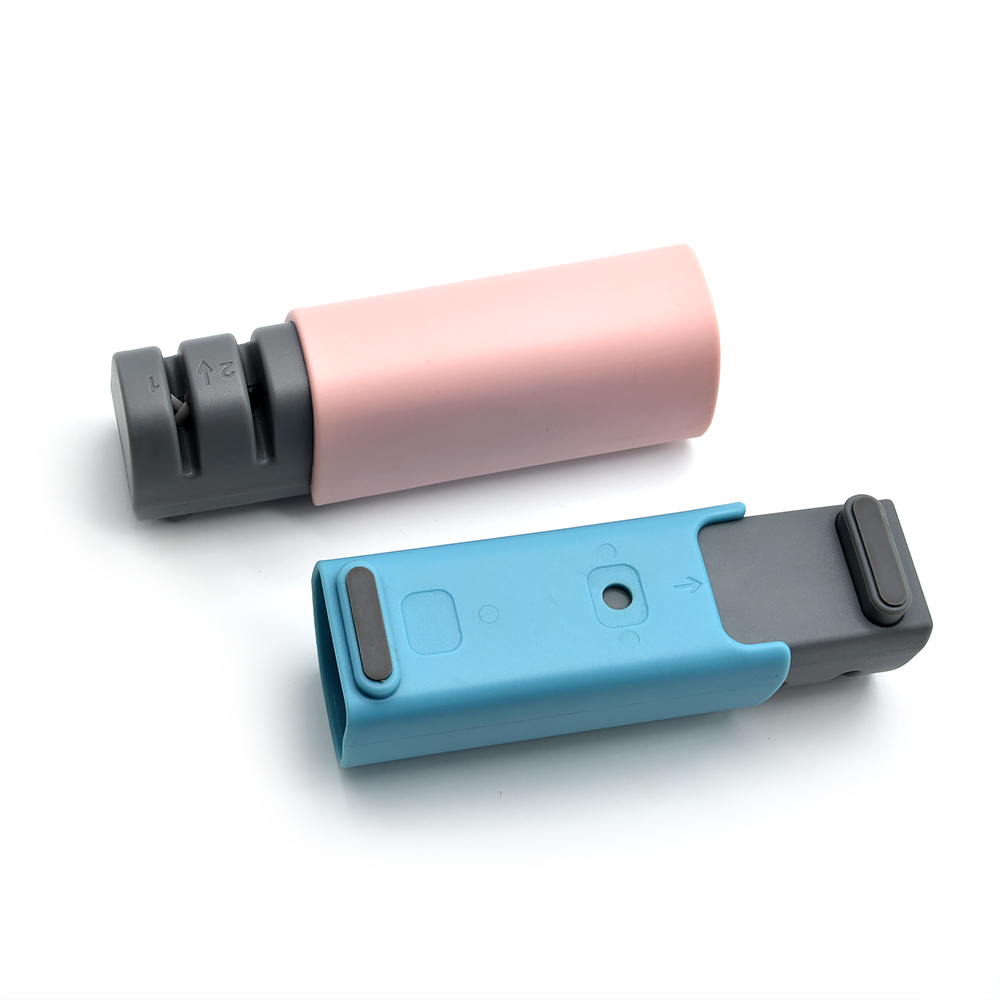
The original product referenced here is a Dual-Stage Compact Knife Sharpener. Its described design includes a coarse sharpening stage using carbide and a fine honing stage using ceramic rods. It also has a compact build, marked stages, and an ergonomic green handle. These are useful points for buyers because they make the product easier to position: it is a space-saving manual sharpener with a simple two-step process. However, buyers should still ask what knife types it is suitable for, what blades should be avoided, and what instructions are included.
Understand Supplier Categories
The term knife sharpener supplier can mean several things. A trading company may offer broad catalog access and flexible sourcing. A factory may provide better control over production details and customization, depending on its capabilities. A wholesale distributor may hold stock for faster delivery but offer less product customization. None of these options is automatically better; the right fit depends on your buying volume, schedule, and quality-control requirements.
If you are searching for an industrial knife sharpener supplier, be especially careful with the word industrial. Some suppliers use it to describe heavy-duty manual products for commercial kitchens, while others may mean powered machines or sharpening systems for workshop environments. Ask the supplier to define the intended use, compatible blade categories, and recommended usage frequency. If the product is a compact manual sharpener, avoid presenting it as suitable for applications the supplier has not documented.
Compare Product Options with a Practical Checklist
A clear comparison table helps purchasing teams avoid vague decisions. Use the checklist below when reviewing a Dual-Stage Compact Knife Sharpener or alternative wholesale knife sharpeners.
| Evaluation point | What to check | Questions to ask the supplier |
|---|---|---|
| Sharpening system | Number of stages and their purpose | Is the coarse stage carbide and the fine stage ceramic rods? Are replacement parts available? |
| User guidance | Marked stages, instructions, warnings | What knives are compatible, and which blade types should not be used? |
| Handling | Grip shape, stability, comfort | Can you provide samples for ergonomic evaluation? |
| Packaging | Retail box, bulk pack, labeling needs | What packaging formats are available, and can artwork be reviewed before production? |
| Quality control | Inspection process and defect handling | What checks are performed before shipment, and how are quality issues resolved? |
| Commercial terms | MOQ, lead time, payment, logistics | What is the current MOQ, production lead time, carton details, and delivery term? |
What to Ask About Wholesale Knife Sharpeners
Bulk buying can reduce per-unit handling costs, but it also increases the risk of receiving products that do not match your market needs. For wholesale knife sharpeners, request samples from the same production materials and design that would be used in the order. Test the product with typical knives used by your customers, and record feedback on grip comfort, ease of use, and clarity of the two-stage process.
For retail buyers, packaging matters almost as much as the sharpener itself. Ask whether the supplier can provide barcode placement, carton labeling, user instructions, and warning text suitable for your sales channel. Do not assume compliance with any market requirement unless the supplier provides current documents and you verify whether they apply to your destination country or region.
OEM and Private-Label Sourcing Considerations
If your goal is OEM or private-label supply, treat product development as a documented project. Start with a specification sheet that lists the product name, color, handle design, sharpening stages, packaging type, labeling needs, and target order quantity. If the ergonomic green handle is part of the model you want, confirm whether that color is fixed or customizable. If the stages are marked, ask whether the markings can be localized or adjusted for your packaging language.
Useful questions include:
- What customization options are available for the product body, handle color, logo, and packaging?
- What is the minimum order quantity for standard products and for customized versions?
- How long do samples, pre-production approval, and mass production normally take?
- Can the supplier provide photos or videos of the packed goods before shipment?
- What happens if the delivered products do not match the approved sample?
Quality and Usability Factors Buyers Should Review
A knife sharpener should be simple, but poor usability can lead to returns and negative reviews. Look at whether users can quickly identify the coarse and fine stages. Check whether the base and handle allow a stable hold during sharpening. Review the instructions for stroke direction, pressure, cleaning, and storage. If the supplier claims long service life, special materials, or performance results, ask for evidence rather than using those claims in your own product listing.
For the Dual-Stage Compact Knife Sharpener described in the source content, the most supportable product positioning is straightforward: a compact manual sharpener with a carbide coarse stage and ceramic rod fine honing stage, designed with marked stages and an ergonomic green handle. That is enough information to create a clear listing, but not enough to make claims about blade compatibility, certification, or quantified durability unless further documentation is supplied.
How to Shortlist a Knife Sharpener Supplier
After collecting quotations, compare suppliers on communication quality as well as price. A reliable supplier should answer product questions directly, identify uncertain details, and provide sample options before a large order. Be cautious if a quotation lacks packaging information, lead time, payment terms, or carton details. Also consider how quickly the supplier responds to technical questions, because that can indicate how future after-sales issues will be handled.
For B2B sourcing, a practical shortlist process is: request product information, order samples, test usability, confirm packaging, review commercial terms, approve a pre-production sample, and arrange inspection before shipment if the order value justifies it. This process is slower than buying from a catalog, but it reduces the chance of inconsistent results.
FAQ
What makes a dual-stage knife sharpener useful?
A dual-stage sharpener separates coarse sharpening from fine honing. In the referenced compact model, carbide is used for the coarse stage and ceramic rods are used for the fine stage. This makes the process easier for users to understand.
Is a compact manual sharpener suitable for industrial use?
It depends on the supplier's documented intended use. A compact manual sharpener may suit kitchens, retail customers, or light commercial use, but buyers should not market it for heavy industrial blades unless the supplier provides clear support for that application.
What should I confirm before placing a wholesale order?
Confirm samples, MOQ, lead time, packaging format, carton information, payment terms, inspection options, and the process for handling defects or shortages.
Can I request private-label packaging?
Many suppliers may offer packaging support, but options vary. Ask about artwork requirements, logo placement, sample approval, printing lead time, and whether custom packaging changes the MOQ.
What product claims should I avoid?
Avoid unsupported claims about material grade, certifications, quantified sharpness, durability, or compatibility with every knife type. Use only claims backed by supplier documentation or your own verified testing.
