




Fruit Cutting Tools Wholesale: Practical Sourcing Guide
Fruit cutting tools are a steady category for kitchenware retailers, supermarket houseware aisles, promotional distributors, and online sellers. Customers buy them because they solve a simple problem: preparing fruit and vegetables faster, more neatly, and with less waste. For wholesale buyers, the opportunity is not only to find attractive products, but to select tools that match real user habits, packaging needs, and after-sale expectations.
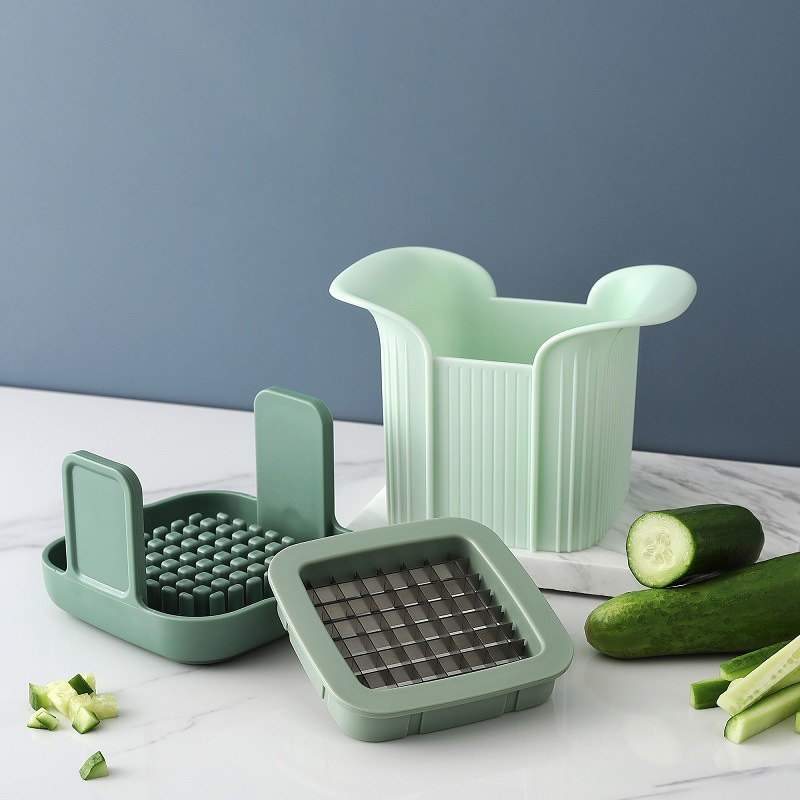
The original product range described includes a multifunctional slicer set in a pastel green design, a specialized cucumber cuber with stainless-steel blades and an integrated container base, and a sage-colored vertical stack utensil holder with a drainage tray. These are useful examples of how a fruit cutting tools wholesale assortment can combine preparation, portioning, and storage. The key is to evaluate each item carefully instead of buying by appearance alone.
Key Takeaways
- Build the assortment around common tasks: slicing, dicing, cubing, peeling, draining, and storage.
- Ask suppliers to confirm materials, blade details, packaging options, spare parts, and care instructions before ordering.
- Compare multifunctional sets with specialized tools; each serves a different customer and price position.
- For wholesale kitchen gadgets, presentation matters, but safety, cleaning, and durability questions are equally important.
Understand the Main Product Types
A balanced fruit cutting tools range usually includes both multi-use and task-specific items. A multifunctional slicer set can appeal to home cooks who want one compact kit for slicing, dicing, and cubing. The described set includes interchangeable attachments, a lightweight body, an ergonomic design, and a nesting format for compact storage. These points are useful for product listings, but buyers should still request samples to check how easily attachments lock in, release, and clean.
Specialized tools serve a different purpose. A cucumber cuber, for example, is designed to create uniform pieces and reduce mess with an integrated container base. This may suit salad preparation, lunchbox ingredients, garnishes, or quick meal prep. Because the original description mentions stainless-steel blades, buyers can refer to that feature, but should ask the supplier to confirm the exact material grade, blade thickness, and recommended use limits.
Compare Assortment Options Before Buying
Wholesale buyers often face a choice between broader sets and single-purpose gadgets. The right answer depends on the sales channel, target customer, and packaging strategy. Use the comparison below as a starting point for assortment planning.
| Product option | Best fit | Buyer checks | Merchandising note |
|---|---|---|---|
| Multifunctional slicer set | Retailers and online stores selling compact meal-prep tools | Attachment fit, grip comfort, storage design, cleaning method | Show the different cut styles clearly on packaging or product pages |
| Fruit peeler and slicer | Daily-use kitchenware assortments and value bundles | Blade sharpness, handle comfort, protective cover, washing guidance | Bundle with bowls, strainers, or small cutting boards |
| Cucumber cuber | Specialty gadget displays, salad prep promotions, social commerce | Container stability, blade alignment, residue removal, user safety | Demonstrate uniform cubes with simple food-prep photos |
| Utensil holder with drainage tray | Countertop organization and add-on sales | Drainage performance, footprint, material claim, cleaning access | Position near slicers to create a complete prep-and-store story |
Supplier Questions That Reduce Risk
When sourcing fruit cutting tools wholesale, avoid assuming that similar-looking products are equivalent. Ask direct questions and document the answers. Important questions include:
- What materials are used for the body, container, blades, and drainage tray?
- Can the supplier provide product dimensions, unit weight, carton size, and packing quantity?
- Are replacement blades or attachments available if the product uses interchangeable parts?
- What care instructions should appear on the package and product page?
- Can packaging be customized for OEM or private label orders, and what artwork files are required?
- What quality checks are performed before shipment, such as visual inspection, assembly checks, or blade protection checks?
- What is the sample process, lead time, and any order quantity requirement?
These questions do not replace compliance review. If you sell in a market with specific food-contact or labeling rules, ask the supplier what documents are available and verify requirements with your own compliance adviser or importer.
Evaluate Samples Like an End User
A sample review should go beyond a quick visual inspection. Open the package, assemble the tool without instructions, and use it on typical fruits or vegetables that customers are likely to prepare. Check whether the tool slips, clogs, flexes too much, or leaves pieces stuck in corners. For an interchangeable slicer, test each attachment and look for sharp edges on the frame as well as on the blade area.
Cleaning is a major factor in customer satisfaction. A product that cuts well but is difficult to wash may receive poor reviews. Check whether food residue collects around hinges, blade slots, or container edges. If the item is not intended for dishwasher use, that instruction should be clear. Do not add dishwasher-safe, food-grade, or other claims to listings unless the supplier has provided reliable support for those statements.
Packaging and Content for Wholesale Sales
Good packaging helps customers understand what the tool does before they buy. For a multifunctional slicer set, show the available cutting functions, the nesting storage layout, and basic safety reminders. For a cucumber cuber, show the integrated container base and the type of uniform cuts it is designed to make. For a utensil holder, highlight the vertical stack format and drainage tray if those features are present in the item being sold.
Online product pages should be practical rather than exaggerated. Include dimensions, included parts, cleaning guidance, and warnings about blade handling. If the product comes in a pastel green or sage color, use consistent color naming, but remember that screen display and production batches may vary. Wholesale buyers should ask whether color matching, barcode labeling, insert cards, or multilingual packaging can be arranged.
Building a Cohesive Kitchen Gadget Range
One advantage of wholesale kitchen gadgets is that they can be sold as a coordinated range. A slicer set, a fruit peeler and slicer, a cucumber cuber, and a utensil holder can address different steps in the same preparation routine. This makes them suitable for seasonal promotions around lunch preparation, healthy snacking, home organization, or compact apartment kitchens.
However, cohesion should not mean forcing every item into one bundle. Some buyers may prefer entry-level single tools, while others want a higher-value set. Test different configurations: individual units, two-piece prep bundles, or a countertop organization set. Track return reasons and customer questions, because they often reveal whether instructions, images, or product selection need improvement.
Practical FAQ
What should I check first when buying fruit cutting tools wholesale?
Start with sample performance, material information, blade protection, packaging clarity, and cleaning instructions. These factors directly affect customer satisfaction and return rates.
Are multifunctional slicer sets better than single-purpose tools?
Not always. Multifunctional sets offer variety and compact storage, while single-purpose tools can be easier to explain and use. A mixed assortment usually serves more customers.
Can I use OEM packaging for these kitchen gadgets?
Many suppliers may offer OEM or private label options, but you should ask about artwork requirements, order quantities, lead time, barcode placement, and packaging sample approval.
What claims should I avoid unless confirmed?
Avoid unverified claims about material grade, dishwasher safety, food-contact compliance, testing results, certifications, or durability. Ask the supplier for documents before using such claims in sales materials.
How can retailers reduce complaints about sharp blades?
Use clear warnings, include safe handling instructions, check whether blade guards or protective packaging are provided, and make cleaning guidance easy to find.
