




Fruit Huller Factory China: Practical Sourcing Guide for Buyers
Fruit preparation looks simple until volume, consistency, labor cost, and hygiene become part of the decision. For a home kitchen, removing strawberry stems may only require a compact handheld tool. For a processor making jams, frozen fruit, juices, or prepared fruit packs, the same basic task can become a production bottleneck. This is why buyers often research a fruit huller factory China market: it offers a wide range of tools and machines designed to remove stems, cores, or similar unwanted parts from fruit.
This guide explains how to evaluate fruit huller options without relying on vague claims. It covers consumer tools, industrial equipment, supplier evaluation, and the questions B2B buyers should ask before placing an order.
What a Fruit Huller Is Designed to Do
A fruit huller is a tool or machine used to remove stems, cores, hulls, or similar portions of fruit while keeping as much usable flesh as possible. The original purpose is efficiency: faster preparation, cleaner output, and less waste compared with casual knife work.
Common use cases include strawberries for desserts and smoothies, tomatoes for processing, and larger fruit applications where coring or trimming is required. The exact design depends on fruit type, production volume, operator skill, and cleaning requirements. A buyer should never assume one huller is suitable for all fruit. Instead, ask the supplier which fruit types the product is intended for and request videos, samples, or trial data where available.
Handheld Strawberry Stem Removers for Kitchen Use
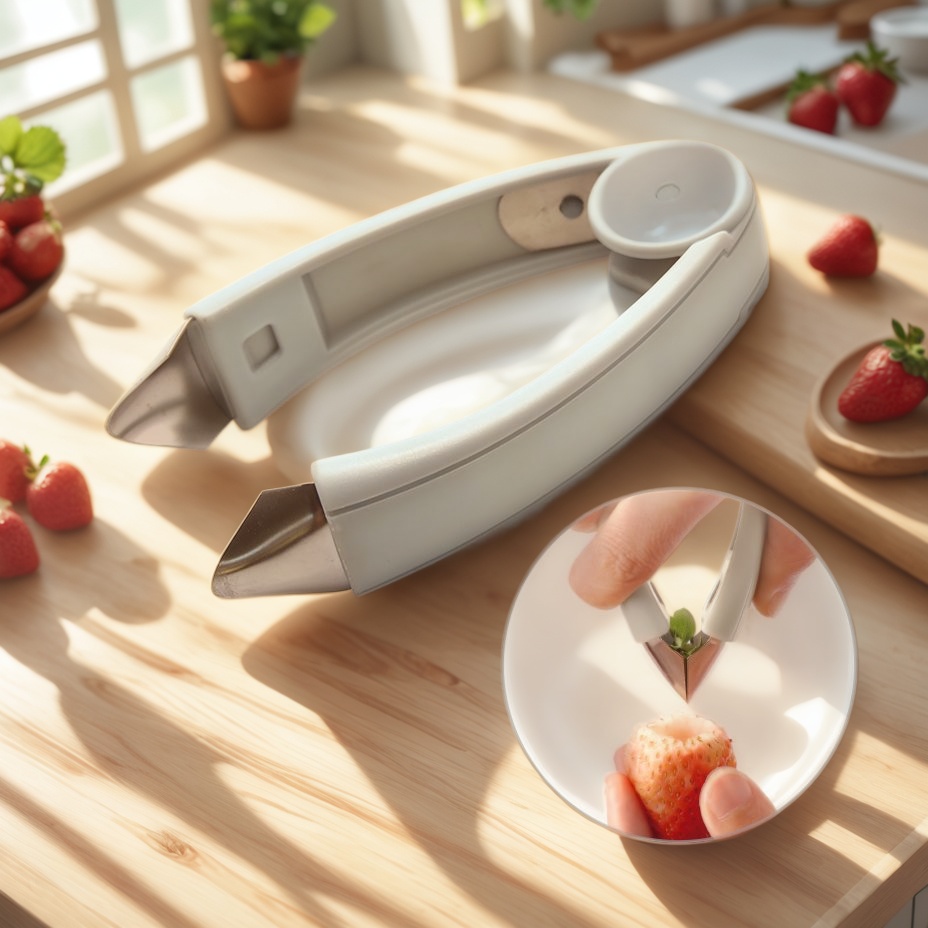
At the consumer level, a strawberry stem remover is a simple example of fruit hulling technology. The source article describes a tool with sharp stainless steel tip blades, an ergonomic handle, and a simple pinch mechanism. This kind of design is intended to remove the green stem area with less waste than cutting off the top of the berry.
For retailers, distributors, and promotional buyers, the selection process should focus on usability and repeatable quality rather than appearance alone. Consider whether the tool is comfortable for different hand sizes, whether the pinch action is smooth, and whether the tips align properly after repeated use. Packaging, barcodes, language requirements, and carton durability should also be discussed with the supplier before ordering.
Industrial Fruit Hullers for Processing Lines
Industrial fruit hullers serve a different purpose. They are used where higher volumes of fruit need to be prepared for products such as jams, juices, canned goods, and frozen foods. The original article notes that industrial machines can be used for fruit such as strawberries, tomatoes, or pineapples, depending on machine design.
For a processing business, the key question is not simply whether a machine can hull fruit. It is whether the machine fits the full production environment. Buyers should ask about compatible fruit size ranges, feeding method, output consistency, cleaning access, changeover time, spare parts, operator training, and how the machine integrates with upstream and downstream equipment. If a supplier cannot explain these points clearly, the buyer may face installation and maintenance problems later.
Handheld vs. Industrial Fruit Huller Comparison
The right product category depends on the end user. A factory that makes both small tools and processing equipment may have very different quality controls for each line. Use the comparison below as a checklist when preparing sourcing questions.
| Selection Point | Handheld Fruit Huller | Industrial Fruit Huller |
|---|---|---|
| Typical buyer | Retailer, wholesaler, kitchenware distributor | Food processor, packing facility, production line buyer |
| Main concern | Comfort, sharpness, safety, packaging | Capacity, consistency, hygiene, maintenance |
| Fruit focus | Often strawberries and small fruits | Depends on machine design and fruit type |
| Key sample check | Grip feel, pinch action, tip alignment | Trial run, waste level, output quality, cleaning access |
| Supplier questions | Materials, packaging, inspection process | Installation, spare parts, training, service support |
How to Evaluate a Fruit Huller Factory in China
When sourcing from a fruit huller factory in China, buyers should separate marketing language from verifiable information. A reliable discussion begins with product application, drawings or photos, sample policy, production process, and inspection standards. Do not assume capacity, certifications, test results, or compliance status unless the supplier provides current documents that apply to the exact product being purchased.
Useful supplier questions include:
- Which fruit types and sizes is this huller designed to handle?
- Can you provide product samples or a demonstration video using the intended fruit?
- What material is used for the blade, tip, handle, frame, or food-contact parts?
- What inspection steps are performed before shipment?
- Can packaging be adapted for retail, wholesale, or OEM requirements?
- What spare parts are recommended for industrial machines?
- What documents are available for the exact model, and are they current?
For OEM or wholesale projects, also clarify artwork files, labeling responsibility, carton marks, lead time, payment terms, and who approves the final pre-production sample. Written confirmation is important because small details can affect import clearance, retail presentation, and customer satisfaction.
Quality Checks Before Placing an Order
Quality control should match the product type. For a handheld strawberry huller, inspection may include checking tip sharpness, alignment, handle finish, spring or pinch action, burrs, surface defects, and packaging accuracy. For an industrial machine, inspection should be more technical and may involve operating tests, safety checks, sanitation access, electrical configuration, and review of manuals and parts lists.
Buyers should request clear photos or videos before shipment, but visual checks are not always enough. If order value is significant, consider a third-party inspection or an in-person factory visit. The inspection checklist should be agreed in advance. Avoid vague standards such as “good quality.” Instead, define acceptable finish, function, labeling, quantity tolerance, and packaging condition.
Common Sourcing Mistakes to Avoid
Many sourcing problems happen because the buyer chooses only by price or product photo. A fruit huller may look simple, but poor alignment, weak handles, rough edges, or difficult cleaning can lead to complaints. For machinery, the cost of downtime can be much higher than the initial price difference.
- Do not buy an industrial machine without confirming the fruit type and size range.
- Do not assume food-contact materials or compliance documents without proof.
- Do not approve mass production before testing a sample or trial unit where practical.
- Do not ignore packaging strength, especially for wholesale or export cartons.
- Do not forget spare parts, manuals, and after-sales communication for machinery.
Key Takeaways
- A fruit huller can be a small kitchen tool or an industrial processing machine.
- Handheld strawberry stem removers should be judged by comfort, cutting action, safety, and packaging.
- Industrial fruit hullers require careful checks on fruit compatibility, cleaning, output, and maintenance.
- When sourcing from China, ask specific supplier questions and verify claims with documents, samples, or trials.
FAQ
What should I ask a fruit huller factory before ordering?
Ask which fruit the product is designed for, what materials are used, what inspections are performed, whether samples are available, and what documents apply to the exact model.
Is a strawberry stem remover the same as an industrial fruit huller?
No. A strawberry stem remover is usually a handheld kitchen tool. An industrial fruit huller is designed for higher-volume processing and requires checks on capacity, cleaning, installation, and maintenance.
Can one fruit hulling machine work for strawberries, tomatoes, and pineapples?
Only if the supplier confirms that the specific machine is designed and tested for those fruit types. Fruit size, firmness, and cutting method can require different designs.
How can buyers reduce sourcing risk?
Use samples, written specifications, pre-shipment inspection, clear packaging requirements, and documented approval steps. For machinery, request operation videos, manuals, spare parts information, and installation guidance.
Should I choose the lowest-priced supplier?
Price matters, but it should be compared with material details, consistency, inspection process, packaging, communication, and after-sales support. The cheapest option may cost more if it causes returns or downtime.
