




Fruit Spoon Factory: Practical Sourcing Guide for Fruit Carving Tools
Fruit spoons and small carving tools are simple products, but they matter in professional food preparation, catering, hospitality, retail kitchenware, and giftable household tool sets. A well-selected fruit spoon can help users create melon balls, shape fruit garnishes, prepare dessert plates, and add decorative cuts without relying on large knives. For importers, distributors, private-label brands, and wholesale buyers, the challenge is not only finding an attractive tool, but also evaluating whether a fruit spoon factory can deliver consistent quality, practical packaging, and clear communication.
The original product description highlights a two-piece fruit carving tool set. One tool has a light purple handle with a deep steel scoop designed for melon balls or round garnishes. The second tool has a soft blue handle and a sharp wavy blade for making decorative patterns in fruit. The two tools can be stored in a modern gray-white teardrop-shaped frame. These details provide a useful starting point for understanding the type of product buyers may compare when sourcing from a factory or supplier.
Key Takeaways
- Assess both the tool head and handle design; comfort, control, and ease of cleaning affect user satisfaction.
- Do not assume material grade, certifications, MOQ, or testing results unless the supplier provides documentation.
- For wholesale or OEM projects, ask about packaging options, color matching, logo placement, inspection standards, and lead times.
- A two-piece set with a scoop, wavy blade, and storage frame can suit retail, hospitality, and promotional kitchenware channels.
Understanding the Product: Fruit Spoon, Melon Baller, and Carving Tool
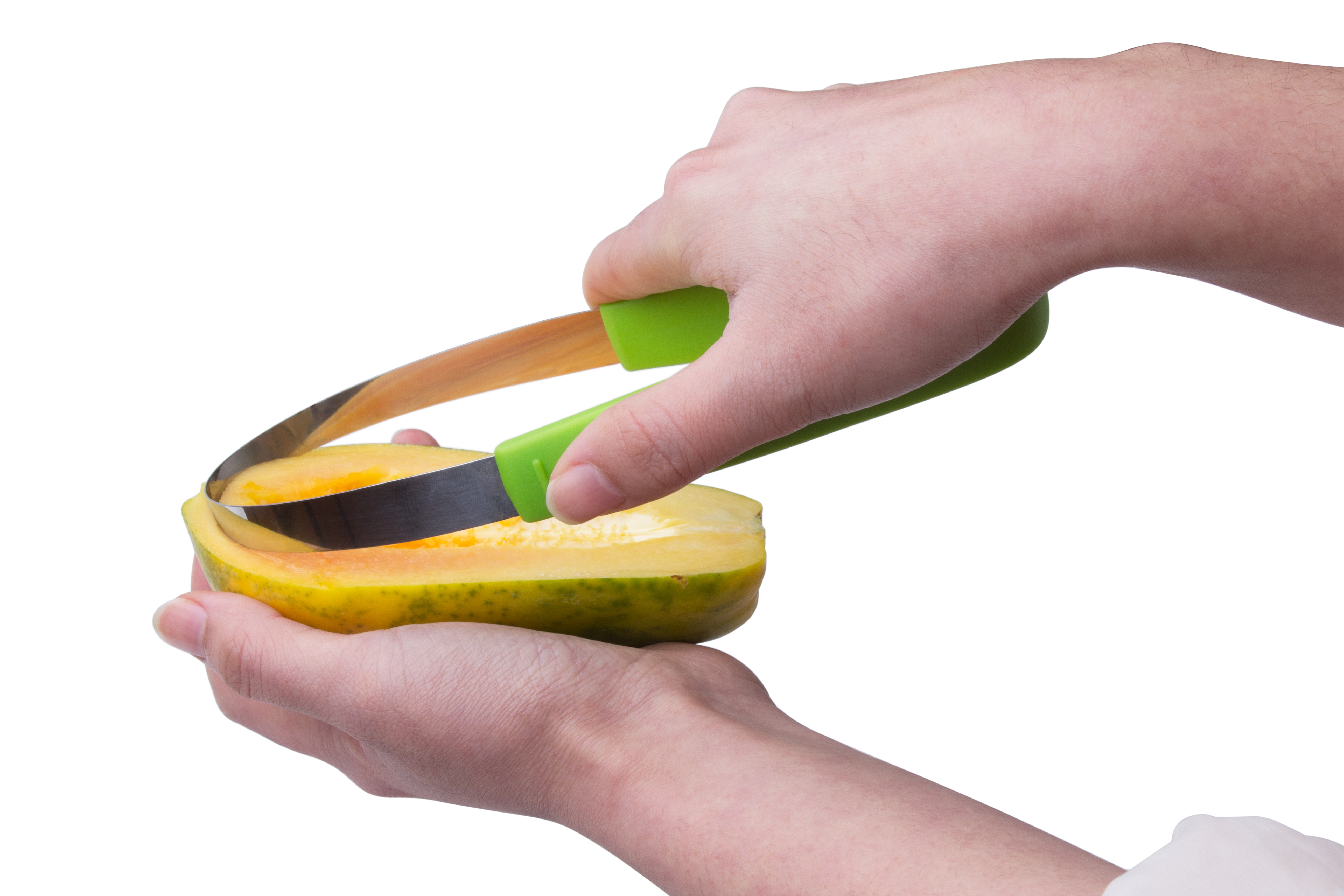
A fruit spoon is often used to scoop round portions from melon, watermelon, papaya, dragon fruit, or other soft fruits. Depending on the design, it may also be described as a melon baller, fruit scoop, or carving spoon. The tool in the referenced set includes a deep steel scoop, which is useful for forming rounded fruit pieces for buffet displays, cocktails, desserts, and lunch boxes.
The companion tool, described with a wavy blade, serves a different purpose. It can cut decorative edges, create patterned fruit surfaces, or add visual texture to platters. For product selection, the key point is that a two-piece set gives users both shaping and decorative cutting functions. This can be more appealing than a single-purpose utensil, especially in retail packaging or kitchen tool bundles.
What Buyers Should Check at a Fruit Spoon Factory
When evaluating a fruit spoon factory, buyers should separate visible product appeal from verifiable production details. A colorful handle and compact storage frame may make the item attractive, but sourcing decisions should also consider quality control, finishing, packaging durability, and communication speed.
Ask the supplier direct questions such as: What material is used for the scoop and blade? Can the supplier provide material documentation if required? How is the edge finished to reduce burrs? What inspection steps are used before packing? Are sample approvals available before mass production? These questions are especially important because buyers should not rely on assumptions about stainless steel grade, food-contact compliance, or durability unless the supplier confirms them with appropriate records.
Feature Comparison Checklist
The following table can help wholesale buyers, retailers, and OEM purchasers compare fruit spoon samples in a structured way.
| Item to Check | Why It Matters | Questions to Ask the Supplier |
|---|---|---|
| Scoop depth and shape | Affects how easily users create round melon balls or garnishes. | Can you provide samples to test with melon or similar fruit? |
| Blade edge and wave pattern | Determines decorative cutting performance and user control. | How is the edge finished and inspected for consistency? |
| Handle comfort | Ergonomic handling reduces hand fatigue during repeated use. | Can handle color, texture, or shape be customized? |
| Storage frame | Improves organization and may increase retail shelf appeal. | Is the gray-white teardrop frame included in standard packing? |
| Packaging | Protects the tools in transit and supports retail presentation. | What packaging formats are available for wholesale or OEM orders? |
| Documentation | Supports responsible sourcing and market requirements. | What test reports or compliance documents can be supplied if needed? |
Design Details That Influence User Experience
For end users, small design choices can determine whether a fruit spoon is used frequently or left in a drawer. The light purple handle in the described set gives the scoop tool a clear visual identity, while the soft blue handle distinguishes the wavy-blade tool. Color separation can help users quickly choose the correct tool during food preparation.
The storage frame is also useful. A compact gray-white teardrop-shaped frame keeps both tools together, reducing the chance that one piece is misplaced. For retailers, this type of organized presentation may also make the product easier to display. For buyers, however, it is important to check whether the frame holds the tools securely, whether it adds too much carton volume, and whether it can withstand shipping without cracking or deforming.
OEM, Wholesale, and Private-Label Sourcing Questions
If you plan to source fruit spoons for wholesale, promotional campaigns, or private-label kitchenware, prepare a detailed request before contacting a factory. Clear requirements reduce misunderstandings and make quotations easier to compare.
- Confirm the product configuration: one scoop only, two-piece set, or set with storage frame.
- Ask whether handle colors can be matched to your brand palette.
- Request information about logo placement options on the handle, packaging, or insert card.
- Clarify packing method, carton size, and whether protective covers are needed for sharp edges.
- Ask about sample cost, sample lead time, production lead time, and order quantity requirements.
- Request the factory's standard inspection process and acceptable quality criteria.
For regulated markets, buyers should also ask what documents the supplier can provide for the intended sales region. Avoid making market claims until documents have been reviewed by the buyer's compliance team or testing partner.
Use and Care Guidance for Better Product Performance
Although this is a sourcing-focused product, use and care guidance can improve customer satisfaction after purchase. Fruit spoons and carving tools should be used on suitable fruit textures rather than very hard foods that may strain the blade or scoop. Users should cut fruit on a stable surface and keep fingers away from the working edge, especially when using the wavy blade.
Cleaning instructions should be confirmed with the supplier before they are printed on packaging. If dishwasher suitability is not documented, buyers should avoid claiming it. A safer general instruction is to wash the tools promptly after use, remove fruit residue from the scoop or blade edge, dry thoroughly, and store the set in its frame when not in use.
Practical FAQ
What is the difference between a fruit spoon and a melon baller?
A melon baller is a type of fruit spoon designed to scoop rounded pieces from melon and other soft fruits. Some fruit spoon sets also include carving or decorative cutting tools, such as a wavy blade.
Is a two-piece fruit carving set suitable for wholesale retail?
Yes, it can be suitable if the set is well finished, packaged securely, and positioned for the right customer segment. Buyers should evaluate samples, packaging strength, and supplier consistency before ordering.
Can a fruit spoon factory make custom colors or packaging?
Many factories may offer customization, but buyers should ask directly about available options, minimum order quantity, color matching method, logo process, artwork requirements, and sample approval steps.
What documents should buyers request?
Request material information, any available test reports, packaging specifications, and quality inspection details. The exact documents needed depend on your market and sales channel.
How should buyers judge sample quality?
Check scoop shape, edge smoothness, blade consistency, handle comfort, frame fit, surface finish, and packaging protection. Testing the tool on real fruit is one of the most practical evaluation methods.
Final Sourcing Advice
A fruit spoon factory should be evaluated on more than product appearance. The described set offers useful functions: a deep scoop for melon balls, a wavy blade for decorative patterns, colored handles for easy identification, and a teardrop-shaped storage frame for organization. For B2B buyers, the next step is to turn those features into a clear sourcing checklist. Request samples, verify materials and documents, compare packaging options, and ask practical production questions before committing to a wholesale or OEM order.
