




Full Tang vs. Partial Tang: Which Kitchen Knife Construction Is Stronger?
When comparing kitchen knife options, many shoppers focus on blade shape, sharpness, handle style, or price. One construction detail is easier to overlook: the tang. The tang is the unsharpened part of the blade that extends into the handle. It affects how force moves from your hand to the cutting edge, how stable the handle feels, and how well the knife can tolerate regular kitchen work.
The short answer is that a full tang knife is generally stronger than a partial tang knife. However, strength is not the only consideration. Weight, comfort, intended use, maintenance, and budget also matter. This guide explains the difference clearly so home cooks, culinary students, and buyers comparing knife lines can make a more informed choice.
Key Takeaways
- A full tang runs through the entire handle, creating a continuous steel structure from blade to handle end.
- A partial tang extends only partway into the handle and is usually better suited to lighter-duty use.
- Full tang knives usually offer better strength, balance, and long-term handle stability.
- Partial tang knives can be lighter and more affordable, but they may be less suitable for heavy chopping or dense ingredients.
- Always check product descriptions, handle construction, and care instructions before choosing a kitchen knife.
What Is a Knife Tang?
The tang is often described as the backbone of a knife because it connects the blade to the handle. When you slice onions, chop herbs, break down poultry, or cut dense vegetables, pressure travels through the blade and into the handle. A well-supported tang helps the knife feel controlled instead of fragile or disconnected.
Tang construction is not always visible. Some handles reveal the steel between two handle scales, while others fully cover it. If the product listing does not clearly state the tang type, ask the seller for construction details before purchasing.
What Is a Full Tang Kitchen Knife?
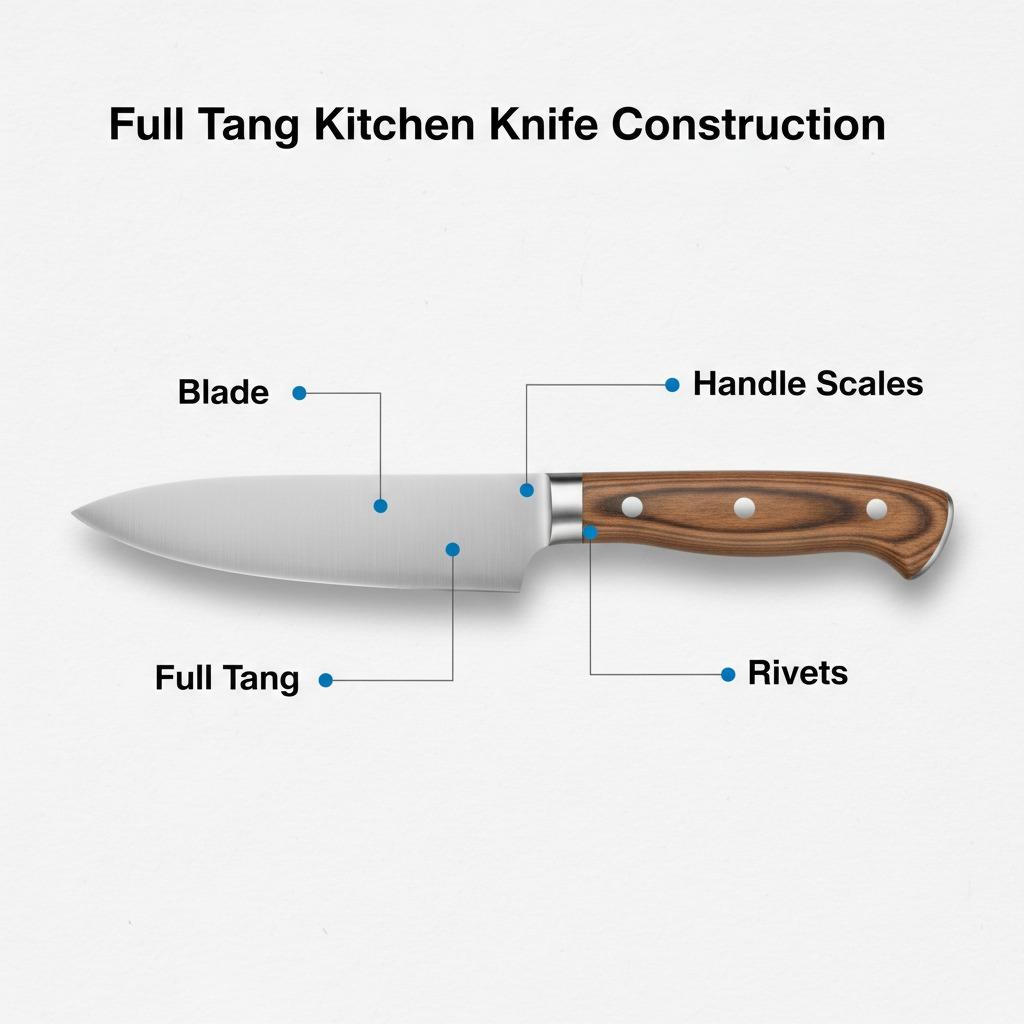
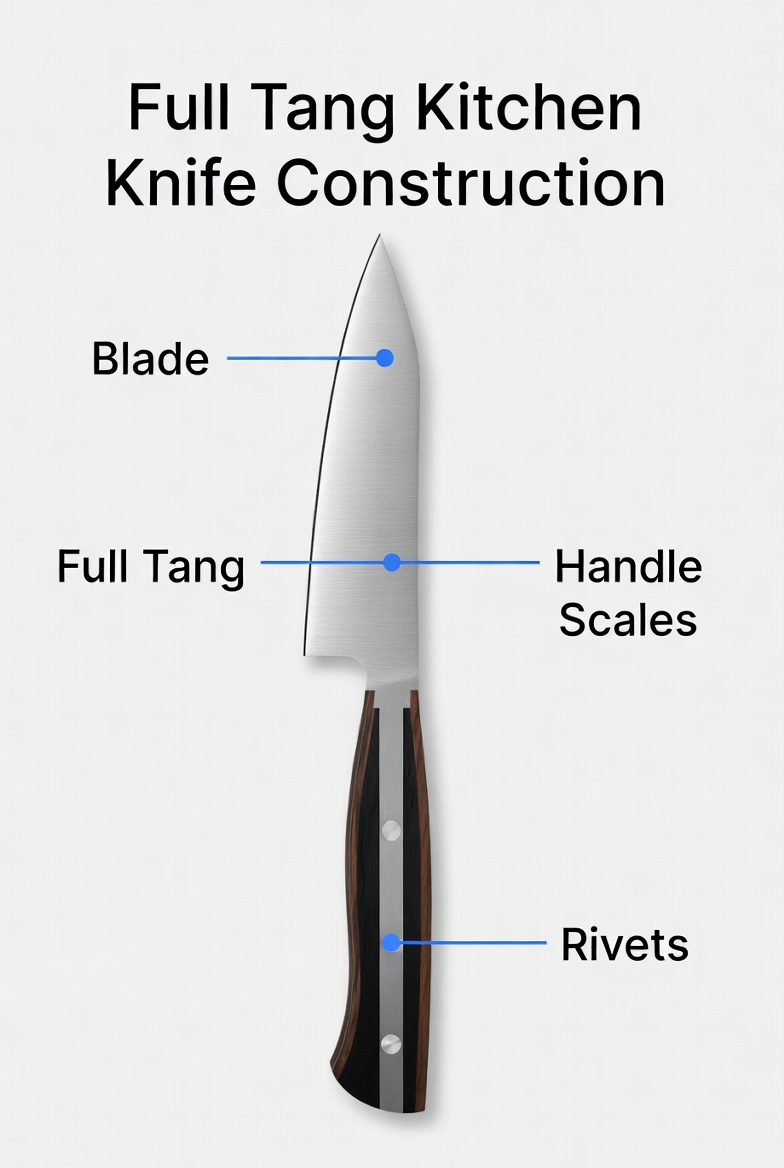
In a full tang kitchen knife, the metal from the blade continues through the full length of the handle. The handle scales are commonly fixed on both sides of the tang with rivets, bolts, or other fastening methods. This creates a strong, continuous structure from the blade tip area back through the handle.
Because the steel extends through the handle, a full tang knife tends to feel solid in the hand. Many cooks prefer this construction for daily prep because it can provide better balance and reduce the risk of handle loosening under repeated pressure. It is especially helpful for tasks that involve force, such as cutting squash, chopping root vegetables, or working through tougher ingredients.
What Is a Partial Tang Kitchen Knife?
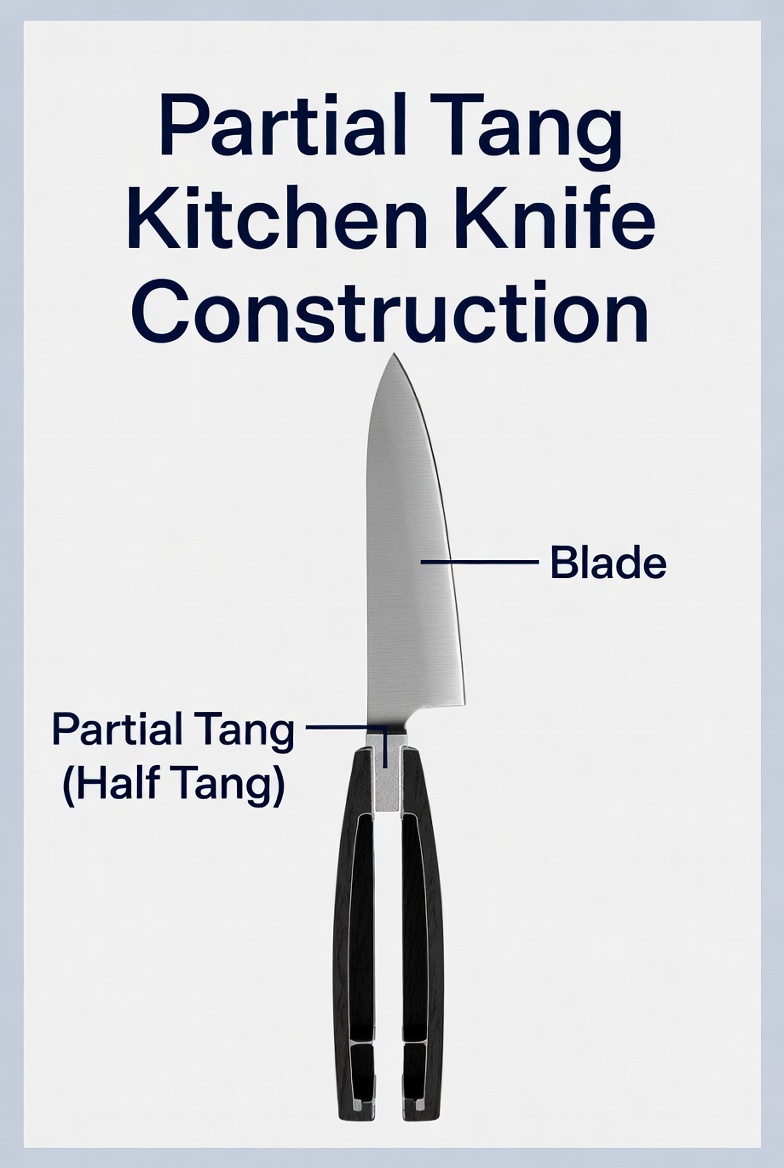
A partial tang extends only part of the way into the handle. Some partial tangs reach roughly halfway, while others may be shorter and narrower. In some designs, the tang may be enclosed by molded plastic, wood, or another handle material, making it harder to see from the outside.
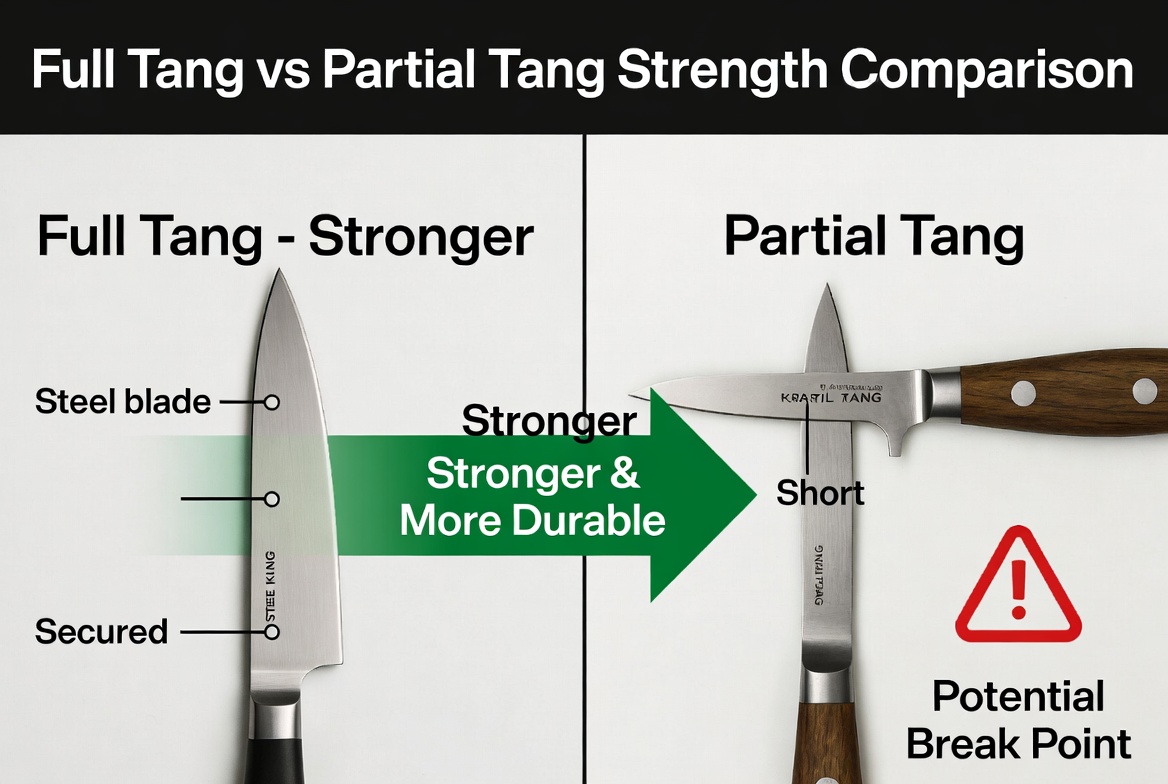
Partial tang construction can be useful for knives designed for light, occasional use. These knives are often lighter and may cost less than comparable full tang models. For simple kitchen tasks such as slicing fruit, trimming herbs, or preparing soft ingredients, a partial tang knife may be adequate. The tradeoff is that the end of the tang creates a potential stress point inside the handle, especially if the knife is used for heavy cutting or twisting motions.
Full Tang vs. Partial Tang Comparison
| Selection Point | Full Tang Kitchen Knife | Partial Tang Kitchen Knife |
|---|---|---|
| Strength | Generally stronger because steel continues through the handle | Suitable for lighter use, but has a possible stress point |
| Durability | Often better for repeated daily prep and firm cutting tasks | May loosen sooner if used heavily or improperly |
| Balance | Usually feels more stable and evenly weighted | Can feel lighter, but may feel less anchored |
| Weight | Often slightly heavier | Often lighter and easier to maneuver for quick tasks |
| Best Use | Daily cooking, dense vegetables, professional-style prep | Occasional cooking, soft ingredients, entry-level use |
| Buying Check | Look for visible tang, rivets, or clear product description | Ask how far the tang extends into the handle |
Which Is Stronger for Everyday Cooking?
For most regular cooking situations, full tang is the stronger construction. The main reason is force distribution. Since the metal continues through the entire handle, pressure is spread along a longer structure. This reduces the concentration of stress at a single hidden point.
Partial tang knives are not automatically poor quality, but they are less forgiving when used beyond their intended purpose. Avoid using a partial tang knife to pry, twist, split bones, or force through very hard foods. Even with a full tang knife, those habits can damage the blade edge, handle, or cutting surface.
How to Choose the Right Tang Type
Use the tang type as one part of your buying decision, not the only factor. A knife should also feel safe, comfortable, and appropriate for the tasks you perform most often. If you cook daily or want one dependable chef’s knife for broad use, full tang is usually the safer choice. If you need a lightweight spare knife for simple prep, a partial tang knife may be acceptable.
- Match the knife to the task: Choose full tang for heavier chopping and frequent use.
- Check the handle: Look for gaps, rough edges, loose rivets, or unclear construction.
- Read the description carefully: Confirm whether the knife is full tang, partial tang, or not specified.
- Ask questions before bulk buying: Retail or hospitality buyers should ask suppliers how the handle is attached and whether samples are available for evaluation.
- Test comfort: A strong knife still needs a handle shape that suits the user’s grip.
Care Tips to Protect Knife Construction
Good care helps both full tang and partial tang knives last longer. Wash knives by hand with mild detergent, dry them promptly, and store them in a knife block, sheath, magnetic strip, or tray that protects the edge. Avoid soaking knives for long periods, because water can affect handle materials and fasteners. Do not use any kitchen knife as a screwdriver, can opener, frozen-food chisel, or pry bar.
Also pay attention to the cutting board. Wood and plastic boards are generally kinder to knife edges than glass, stone, or ceramic surfaces. A dull knife requires more pressure, which can increase stress on both the blade and handle, so regular honing and proper sharpening are part of safe knife care.
Practical FAQ
Is a full tang knife always better?
Not always. It is usually stronger, but a knife should also suit your hand, cutting style, and budget. For daily use, full tang is often preferred.
How can I tell if a knife is full tang?
Some full tang knives show a strip of steel along the handle spine or between handle scales. If the handle is fully covered, check the product description or ask the supplier.
Can a partial tang knife be used safely?
Yes, when used for suitable light tasks and maintained properly. Avoid heavy chopping, twisting, or prying.
Does full tang mean the blade steel is higher grade?
No. Tang construction describes how the blade extends into the handle. It does not confirm steel grade, hardness, sharpness, or corrosion resistance unless those details are specifically provided.
What should wholesale or procurement buyers ask?
Ask for the tang type, handle attachment method, sample availability, care instructions, packaging details, and any verified specifications the supplier can document. Do not assume performance claims without evidence.
Final Recommendation
If strength is your main priority, choose a full tang kitchen knife. It offers a more continuous structure, better support through the handle, and a dependable feel for regular cooking. Partial tang knives can still serve a role for lighter prep or budget-conscious purchases, but they should be selected with realistic expectations. Before buying, confirm the construction, inspect the handle quality, and choose a knife that matches how it will actually be used in the kitchen.
