




Games to Play: Turn Scissor Practice Into a Fun Challenge
Scissor practice is easier when it feels like a game instead of a lesson. For preschool and early elementary children, learning to cut paper supports fine motor strength, hand-eye coordination, bilateral coordination, focus, and early writing readiness. The goal is not speed or perfection at first. The goal is safe handling, steady control, and confidence.
Using appropriate school scissors matters because children need tools sized for smaller hands and classroom-style activities. The original article highlighted child-safe, blunt-tipped scissors designed for young users; parents and teachers should still supervise every activity and match the scissors to the child’s age, hand strength, and skill level.
Key Takeaways
- Start with short, low-pressure cutting games before asking children to cut complex shapes.
- Use paper types that match the child’s ability: strips and cardstock can be easier than floppy paper for beginners.
- Practice should build control, not competition alone; timed games are best for children who already cut safely.
- Always set clear scissor rules, including sitting while cutting and carrying scissors closed with the tips down.
Why Scissor Practice Matters
Cutting is a small classroom task with many developmental benefits. A child must open and close one hand, stabilize paper with the other hand, watch the cutting line, and adjust direction as the blade moves. This combines strength, timing, visual tracking, and coordination.
Those same skills support drawing, coloring, buttoning, using utensils, and eventually handwriting. Scissor games also help children learn patience. A wavy line or circle cannot be rushed; the child has to slow down, turn the paper, and plan the next snip.
How to Choose School Scissors for Practice
Before planning games, check whether the scissors suit the child and the setting. For home, preschool, or classroom use, ask practical questions rather than assuming every pair is the same.
- Are the tips rounded or blunt for beginner use?
- Is the handle comfortable for the child’s hand size?
- Can the child open and close the scissors without strain?
- Are left-handed options needed for any learners?
- Do the scissors cut paper cleanly without requiring force?
- Are adults able to store them safely between activities?
If you are sourcing scissors for a classroom, daycare, craft program, or retail set, ask the supplier about available models, age suitability, packaging options, materials used, and any relevant safety documentation. Do not rely only on color or appearance; the cutting experience and supervision requirements matter more.
Five Scissor Games That Build Real Skills
1. Line Labyrinth Challenge. Draw straight, wavy, zigzag, and spiral paths on paper. Children cut along the path as if guiding a character through a maze. For beginners, use thick marker lines and short paths. For confident cutters, make the lines narrower or add turns.
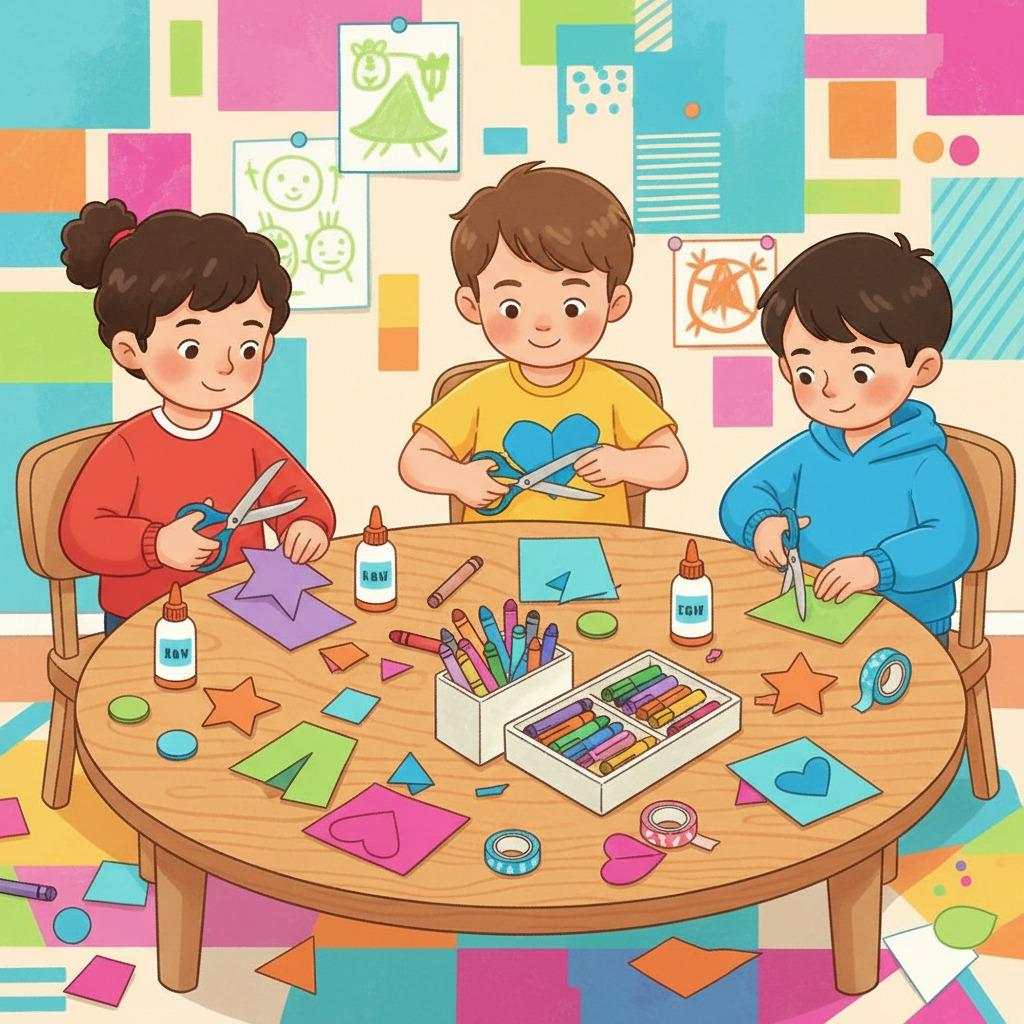
2. Shape Snip Hunt. Print or draw simple shapes such as squares, triangles, circles, and stars. Children cut them out, then hide and find the shapes around the room. After the hunt, use the pieces to make a collage. This game combines cutting, movement, shape recognition, and creativity.
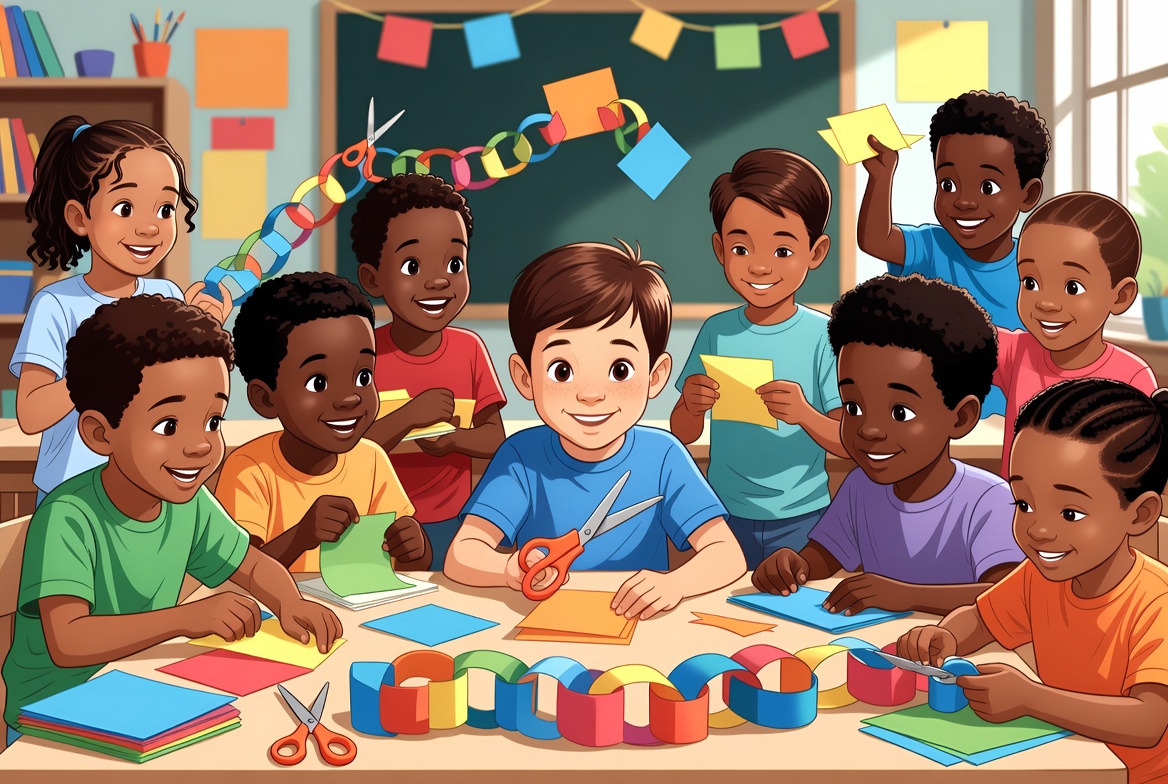
3. Paper Chain Race. Give each child paper strips to cut, then link the strips into a chain with glue or tape. Instead of only rewarding the longest chain, add categories such as neatest cuts, best color pattern, or strongest teamwork. This keeps the activity fair for different skill levels.
4. Snip and Sort Relay. Children cut pictures from old magazines, catalogs, or printed sheets, then sort them into groups such as animals, foods, vehicles, or colors. This is useful for children who are ready to cut around pictures but still need practice turning the paper.
5. Fringe Monster Craft. Give each child a rectangle of paper and ask them to cut many small snips along one edge without cutting all the way through. Add eyes, a mouth, or stickers to turn the fringe into hair, grass, fur, or feathers. This builds repeated open-close motion and stopping control.
Scissor Practice Game Comparison
| Activity | Best For | Materials | Main Skill | Difficulty |
|---|---|---|---|---|
| Line Labyrinth | Ages 4–6 | Paper, markers, school scissors | Following a line | Easy to medium |
| Shape Snip Hunt | Ages 4–7 | Shape templates, glue, paper | Cutting corners and curves | Medium |
| Paper Chain Race | Ages 5–8 | Paper strips, glue or tape | Repeated cutting and endurance | Easy |
| Snip and Sort Relay | Ages 5–7 | Magazines or printouts | Precision and categorizing | Medium |
| Fringe Monster Craft | Ages 4–6 | Colored paper, crayons, stickers | Stopping control | Easy |
Safety Rules for Scissor Activities
Safety should be part of the game routine, not a separate lecture. Children learn best when the rules are short, repeated, and practiced every time.
- Sit down while cutting.
- Keep the scissors pointed away from the body.
- Carry scissors closed, with the tips down.
- Cut only the assigned materials, not clothing, hair, or furniture.
- Return scissors to the storage area when finished.
Adults should stay close enough to guide grip, paper position, and pace. If a child becomes frustrated, pause the game and switch to tearing paper, squeezing a soft ball, or cutting thicker strips. These alternatives can build hand strength without turning practice into a struggle.
How to Track Progress Without Pressure
A simple progress chart can motivate children, but it should celebrate improvement rather than rank children against each other. Create five levels: straight lines, curved lines, zigzags, simple shapes, and picture cutouts. Let children add a sticker when they show better control, safer handling, or more patience.
For group settings, rotate activities weekly. One week can focus on straight lines and paper chains; the next can focus on curves and circles. Short, repeated practice sessions are usually more effective than one long craft session that tires small hands.
FAQ
What age should children start using school scissors?
Many children begin supervised scissor practice around preschool age, but readiness varies. Look for interest, ability to follow safety rules, and enough hand control to open and close the scissors.
What paper is easiest for beginners to cut?
Small strips of construction paper or slightly heavier paper can be easier than thin, floppy sheets. Beginners often do better when the paper is narrow enough to cut with one or two snips.
Should scissor practice be timed?
Only use timers with children who already handle scissors safely. For beginners, accuracy and calm control are more important than speed.
How can left-handed children practice comfortably?
Check whether left-handed scissors are available and observe whether the child can see the cutting line clearly. Forcing an uncomfortable grip can make practice frustrating.
How often should children practice cutting?
Short sessions a few times a week are enough for many children. Five to ten minutes of focused, supervised practice can build skill without fatigue.
Final Thoughts
Scissor practice becomes more useful when it is safe, playful, and matched to the child’s current ability. Games such as line mazes, paper chains, sorting relays, and fringe crafts give children a reason to cut while building real coordination. With suitable school scissors, clear rules, and patient supervision, cutting practice can become a calm, creative part of early learning.
