




Garden Scissors OEM: Professional Manufacturing Insights
For brands, importers, distributors, and retail buyers, sourcing garden scissors through an OEM partner is not only about finding a low unit cost. The better question is whether a supplier can consistently produce tools that match your target customer, packaging plan, quality expectations, and after-sales requirements. Garden scissors are simple in appearance, but small differences in blade geometry, handle comfort, finishing, and inspection can affect how they perform in pruning, trimming, bonsai care, and general horticultural use.
This guide explains how to evaluate a garden scissors OEM project in a practical B2B way. It does not assume that every factory offers the same materials, treatments, testing, or customization. Instead, it focuses on the questions buyers should ask before confirming samples or placing wholesale orders.
Key Takeaways
- Choose a garden scissors supplier based on manufacturing control, sampling support, communication, and quality process, not price alone.
- Confirm blade material, blade treatment, handle construction, finishing, and packaging details in writing before production.
- Use product samples to check cutting feel, hand comfort, alignment, opening resistance, and finishing consistency.
- For OEM branding, ask what customization is available for handle color, logo placement, packaging, and product presentation.
- A reliable sourcing process should include pre-production samples, agreed inspection criteria, and clear responsibility for defects or deviations.
What Garden Scissors OEM Means for Buyers
OEM, or Original Equipment Manufacturing, usually means a factory produces garden scissors that are sold under another company’s brand. Depending on the supplier, OEM service may include existing product models with private labeling, color customization, packaging development, or more detailed adjustments to the tool design.
Before discussing a quotation, define the project scope. Are you adding a basic garden scissor to a seasonal retail range, building a premium pruning tool line, or sourcing a compact item for bonsai enthusiasts? The intended market influences nearly every decision, including blade design, handle feel, packaging, carton strength, and acceptable inspection standard.
It is also important to separate confirmed capabilities from assumptions. If you need specific material grades, coating types, performance tests, or market compliance documentation, ask the supplier to provide written confirmation and supporting documents where applicable. Do not rely on generic phrases such as “high quality” or “professional grade” without measurable details.
How to Evaluate a Garden Scissors Supplier
A garden scissors factory should be assessed through a structured process. Start with communication quality: does the supplier answer technical questions clearly, or only provide a price list? A good OEM conversation should cover samples, product drawings or specifications, packaging files, production tolerance, inspection methods, and shipment planning.
Ask about material sourcing and whether the supplier can identify the blade and handle materials used for the model you are considering. If blade treatments are offered, request details on what treatment is used, what purpose it serves, and how consistency is checked. If testing is mentioned, ask what is tested, how often, and whether results are recorded.
For buyers comparing several suppliers, create a standard checklist so every factory answers the same questions. This prevents an attractive low quote from hiding missing services, unclear packaging, or weak quality control.
Product Features to Review Before Sampling
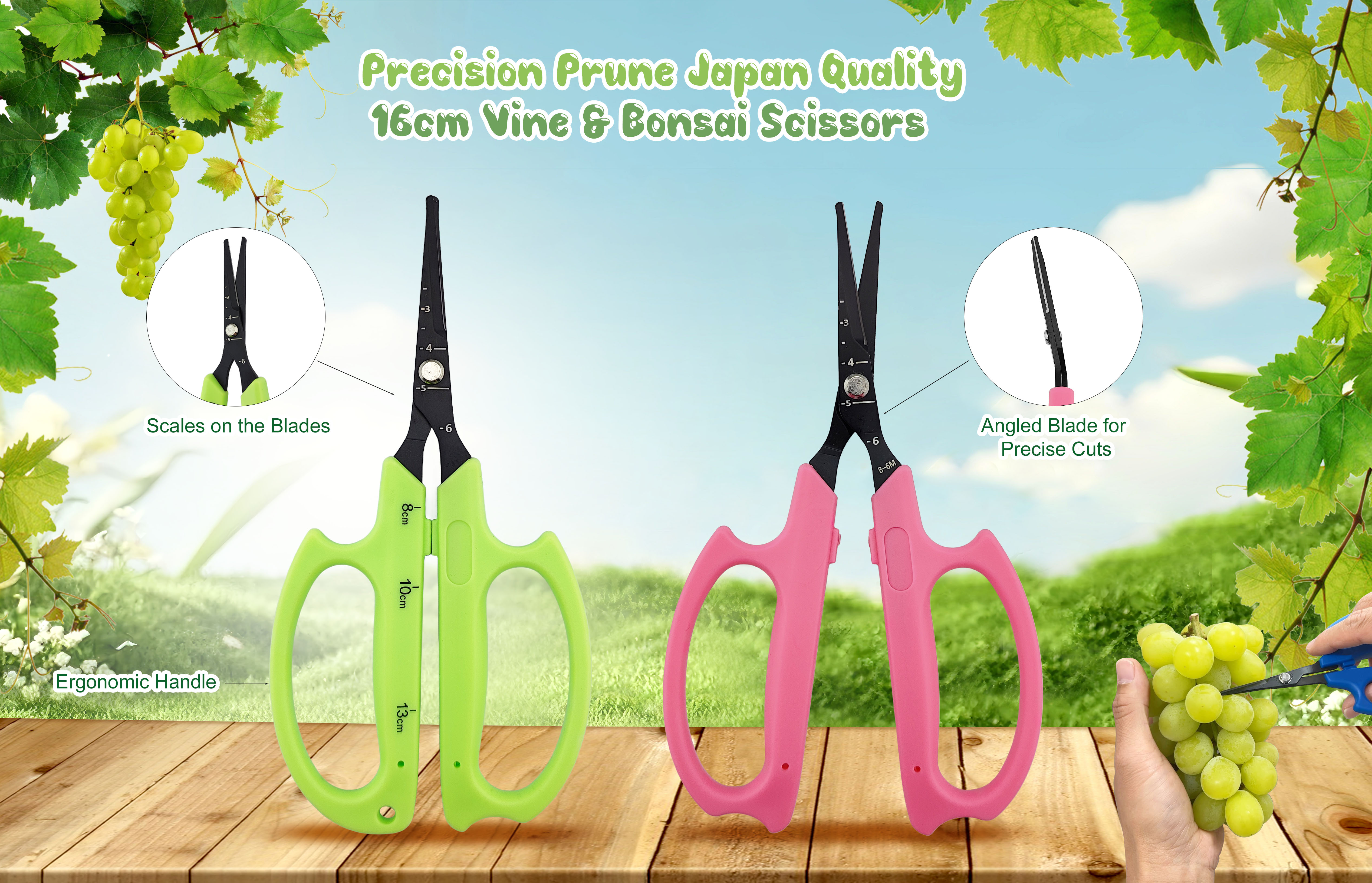
Professional garden scissors are often judged by how cleanly and comfortably they cut. The original product discussion highlights precision, durability, ergonomic design, angled blades, handle color options such as pink and green, branding potential, and an etched scale on the blade. These are useful product points to review, but buyers should still confirm exactly which features apply to the model being quoted.
During sample evaluation, focus on practical use. Open and close the scissors repeatedly to check resistance and smoothness. Inspect whether the blades meet evenly and whether the tips align. Try the tool on materials similar to the customer’s real use, such as light stems, vines, or bonsai trimming tasks, if appropriate. Handle comfort should be assessed by different users because grip preference can vary by hand size and usage time.
If an etched scale is included, check whether it is easy to read and whether it adds value for your audience. For some buyers, measurement markings may support plant care or craft-style garden tasks. For others, a simpler blade appearance may fit the product line better.
Comparison Checklist for OEM Sourcing
| Evaluation Area | What to Ask the Supplier | Why It Matters |
|---|---|---|
| Blade design | Are the blades straight, angled, or shaped for a specific use? | Blade geometry affects cutting access, accuracy, and user preference. |
| Materials | What are the blade and handle materials for this exact model? | Material clarity helps compare quotations fairly and avoid substitutions. |
| Blade treatment | Is any treatment or finish applied, and how is it controlled? | Finishing can affect appearance, maintenance needs, and consistency. |
| Ergonomics | Can samples be tested for grip comfort and opening resistance? | Comfort is important for gardeners who use scissors repeatedly. |
| Customization | Which handle colors, logos, and packaging options are available? | OEM projects often need a clear brand presentation. |
| Quality inspection | What defects are checked before shipment? | Inspection criteria reduce disputes and inconsistent deliveries. |
| Commercial terms | What are the MOQ, lead time, sample cost, and payment terms? | These details determine whether the supplier fits your buying plan. |
OEM Customization: Branding Without Losing Function
Customization can help a garden scissors line stand out, but function should remain the priority. Handle colors, including bright options such as pink and green where available, can support a retail theme or make the tool easier to identify in a gardening kit. Logo placement may be possible on the handle, blade, hang tag, blister card, carton, or instruction insert, depending on the supplier’s process.
Packaging deserves close attention. Garden scissors may be sold through hardware stores, garden centers, online marketplaces, gift sets, or wholesale distribution. Each channel has different packaging needs. E-commerce packaging may require stronger protection against movement and scratching, while retail packaging may need clear product visibility and scannable labeling. Ask the supplier what packaging formats they can produce and what files or artwork specifications they require from your side.
Also confirm whether your chosen customization affects lead time, sample approval, or minimum order quantity. These terms vary by supplier and should be clarified before artwork development begins.
Quality Control Questions to Ask Before Ordering
Quality control should be discussed before mass production, not after a shipment arrives. Buyers should define acceptable and unacceptable conditions for blade alignment, cutting performance, handle appearance, logo accuracy, packaging damage, rust spots, stains, sharp edges, and carton labeling.
Useful questions include:
- Will a pre-production sample be approved before full production starts?
- How does the factory check blade sharpness or cutting performance?
- What visual defects are rejected during inspection?
- How are customized colors matched and confirmed?
- Can the supplier provide production photos or inspection reports if requested?
- What happens if delivered goods do not match the approved sample?
If your market requires specific compliance documents, chemical restrictions, labeling rules, or safety warnings, raise those requirements early. The supplier should confirm what they can provide, and buyers should verify documents through their own compliance process where necessary.
Building a Better Long-Term Supplier Relationship
A good OEM relationship improves with clear records. Keep a specification sheet for every confirmed product, including product photos, material descriptions, dimensions if provided, packaging details, logo files, carton marks, and inspection expectations. This reduces confusion when reordering or when staff changes occur on either side.
After the first order, collect customer feedback. Do users mention hand fatigue, cutting accuracy, packaging damage, or unclear product instructions? Share structured feedback with the supplier so improvements can be discussed. For repeat orders, ask whether the same materials, tooling, colors, and packaging process will be used, or whether any changes are planned.
Practical FAQ for Garden Scissors OEM Buyers
What information should I prepare before requesting a quote?
Prepare target quantity, destination market, desired product style, branding needs, packaging type, quality expectations, and any compliance or labeling requirements. If you have a reference sample, provide photos and key measurements.
Should I choose an existing factory model or develop a custom design?
An existing model is usually simpler for testing a market or adding a product quickly. A custom design may be better when you need a unique handle shape, blade style, or brand-specific presentation, but it may require more sampling and discussion.
How can I compare quotations from different suppliers?
Compare the same details: materials, finish, customization, packaging, inspection scope, sample terms, lead time, and shipment conditions. A lower price may not be comparable if packaging or quality checks are different.
What sample checks are most important?
Check blade alignment, cutting feel, opening and closing smoothness, handle comfort, surface finish, logo quality if customized, and packaging fit. Test samples in realistic garden tasks whenever possible.
Can I request private labeling for garden scissors?
Many OEM suppliers can discuss branding options, but availability depends on the specific factory and product model. Ask about logo method, artwork format, sample approval, MOQ, and whether branding changes the lead time.
Garden scissors OEM sourcing works best when buyers combine product judgment with careful supplier evaluation. By asking precise questions and approving clear samples, brands can reduce risk and build a more consistent horticultural tool program.
