




German Tailor Scissors: Precision in Every Snip
For tailors, fashion students, sewing rooms, alteration shops, and textile workshops, scissors are not a minor accessory. They affect cutting accuracy, fabric waste, hand comfort, and the speed of daily work. German tailor scissors are often searched by buyers who want a dependable cutting tool with a clean edge, balanced handling, and a professional appearance. When the purchase is for a team, school, or wholesale program, the decision also needs to consider consistency, available sizes, left-handed options, packaging, and supplier communication.
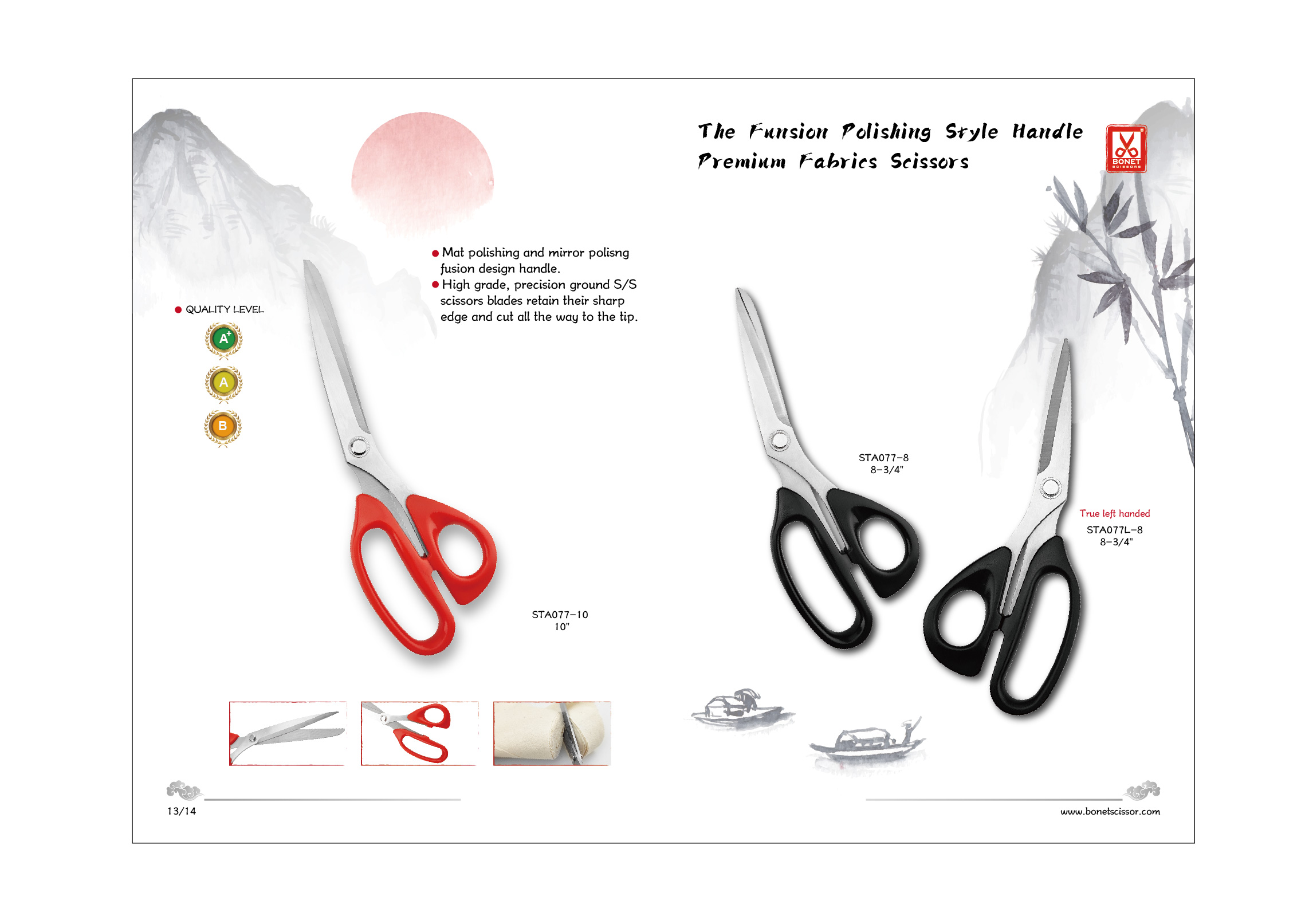
The Fusion Polishing Style Handle Premium Fabrics Scissors presented by Bonet Houseware are positioned for fabric cutting and tailoring use. The original product information highlights high-grade stainless steel blades, precision-ground edges, a handle that combines matte and mirror polishing, red or black color options, 10-inch and 8-3/4-inch sizes, and a true left-handed model. This guide explains how to evaluate such scissors before placing an individual, bulk, OEM, or wholesale inquiry.
Key Takeaways
- Choose tailor scissors according to fabric type, cutting frequency, hand comfort, and operator preference.
- For bulk sourcing, ask the supplier to confirm available sizes, colors, left-handed versions, packaging, branding options, and quality-control process.
- Do not judge fabric scissors by sharpness alone; pivot smoothness, blade alignment, handle comfort, and tip control also matter.
- Proper use and storage extend service life: reserve fabric scissors for fabric and keep them clean, dry, and protected.
What Makes Tailor Scissors Different?
Tailor scissors are designed for cutting fabric on a table or cutting surface, often through long straight sections, curves, notches, and pattern pieces. Compared with general household scissors, they usually need a longer blade, stable pivot action, and a comfortable handle shape that supports repeated cutting. A clean cut from the pivot area to the tip helps prevent fabric from shifting or fraying during preparation.
For professional users, the most important question is not whether the scissors feel sharp during the first cut. It is whether the scissors remain controllable over many cutting sessions. Buyers should test the opening and closing action, the feel of the handle, and the ability to cut near the tip without snagging. If the scissors will be used in a classroom or production room, consistency between units is also important.
Product Features to Review Before Buying
The listed Bonet product is described as a premium fabric scissors design with high-grade stainless steel blades and precision-ground cutting edges. The handle uses a fusion polishing style that combines matte and mirror effects, with red and black color choices. These are useful details for buyers who need both practical tools and a consistent visual style for retail display, sewing kits, training rooms, or workshop supply.
However, B2B buyers should still request clear confirmation before ordering. Ask whether the listed sizes are currently available, whether the left-handed version is in the same finish and color range, and whether product samples can be reviewed before a larger order. If you require private labeling, barcode labels, retail cards, cartons, or special packing, confirm those details with the supplier rather than assuming they are standard.
Size Selection: 10 Inch vs. 8-3/4 Inch
The original product information mentions two size options: 10 inch and 8-3/4 inch. A 10-inch pair is typically more suitable for longer cuts, larger pattern pieces, and heavier workflow where fewer strokes are preferred. The 8-3/4-inch option may be easier to control for detailed work, smaller hands, training use, or general studio tasks.
For a mixed workplace, it can be practical to source both sizes. Pattern makers and experienced cutters may prefer the longer model, while students, sample makers, and alteration staff may appreciate a slightly shorter pair. If purchasing for wholesale, consider asking the supplier which size is most commonly requested and whether mixed-size cartons are available.
Comparison Checklist for Sourcing
| Selection Point | Why It Matters | Questions to Ask the Supplier |
|---|---|---|
| Blade material and edge | Influences cutting feel, durability, and maintenance. | Can you confirm the blade material, edge finish, and sharpening process? |
| Available sizes | Different users need different cutting control. | Are 10-inch and 8-3/4-inch models both available for the order? |
| Left-handed model | Improves comfort and cutting angle for left-handed users. | Is the left-handed version a true left-handed model, and what sizes are offered? |
| Handle finish and colors | Affects grip feel, appearance, and assortment planning. | Are red and black available, and can colors be mixed in one order? |
| Packaging | Important for wholesale, retail, schools, and safe transport. | What standard packaging is used, and are custom packaging options possible? |
| Quality checks | Helps reduce inconsistent cutting performance. | What inspection steps are used for alignment, sharpness, and appearance? |
B2B Buying Guidance for Bulk and OEM Orders
When sourcing bulk tailor scissors, the best approach is to turn product interest into a structured inquiry. Instead of only asking for a price, send a clear specification request. Include the intended market, estimated order quantity, target size mix, color preference, left-handed demand, packaging expectations, and any labeling requirements. This helps the supplier provide a more accurate response and reduces misunderstandings later.
If you are buying for a fashion school, request a sample set and test it with different users. If you are buying for a retail or wholesale program, evaluate the product appearance, packaging durability, and carton information as well as cutting performance. If you are planning OEM branding, ask what artwork files, lead-time details, sample approval steps, and carton markings are required. Avoid assuming certifications, test results, or compliance documents are available unless the supplier provides them in writing for your market.
How to Test Tailor Scissors on Arrival
Incoming inspection does not need to be complicated, but it should be consistent. Open and close each sample several times to feel for smooth movement. Cut through lightweight fabric, medium cotton, and a folded test piece if appropriate for your use. Check whether the scissors cut cleanly near the tip and whether the blades meet evenly. Inspect the handle finish for visible defects and confirm that the size, color, and handedness match the order.
- Confirm item, size, color, and quantity against the purchase order.
- Check packaging condition and product labeling.
- Test cutting from heel to tip on suitable fabric samples.
- Inspect pivot tightness, blade alignment, and handle finish.
- Record any issues with photos and report them promptly.
Use and Care Tips for Longer Service Life
Even high-quality fabric scissors can perform poorly if they are misused. Reserve tailor scissors for fabric only; paper, cardboard, plastic, wire, and adhesive materials can dull or damage the cutting edge. Wipe the blades after use, especially if cutting fabrics that shed fibers or contain sizing. Store scissors closed in a sleeve, drawer, or protective area so the tips and edges are not struck by other tools.
In shared workrooms, label fabric scissors clearly and train users not to borrow them for non-fabric tasks. If the pivot becomes loose or the cutting action changes, inspect the scissors before continued use. For bulk buyers, providing basic care instructions with each unit can reduce complaints and improve user satisfaction.
Practical FAQ
Are German tailor scissors only for professional tailors?
No. They are useful for professional tailors, fashion design students, sewing workshops, craft studios, and serious home sewing users. The key is choosing a size and handle that match the user’s cutting habits.
Which size should a buyer choose for a team?
If the team handles varied tasks, consider both 10-inch and 8-3/4-inch options. Larger scissors support long fabric cuts, while the smaller size can be easier for detailed work or users who prefer lighter handling.
Is a left-handed model important for bulk purchasing?
Yes, if the scissors will be used by multiple people. A true left-handed model can improve comfort, blade visibility, and cutting control for left-handed users. Confirm availability before ordering.
What should wholesale buyers ask before ordering?
Ask about sample availability, size and color mix, packaging, branding options, inspection process, lead time, carton details, and any documents required for your destination market.
How can scissors be kept sharp longer?
Use them only for fabric, avoid hard materials, wipe the blades clean, store them protected, and keep them away from moisture and impact. In shared spaces, clear usage rules are essential.
Final Sourcing Note
German tailor scissors are purchased for precision, comfort, and dependable fabric cutting, but a good sourcing decision also depends on clear communication. Review the product features that are stated, request samples when possible, and ask practical supplier questions before committing to a larger order. For studios, schools, wholesalers, and OEM buyers, this process helps match the scissors to real working conditions rather than relying on appearance or sharpness claims alone.
