




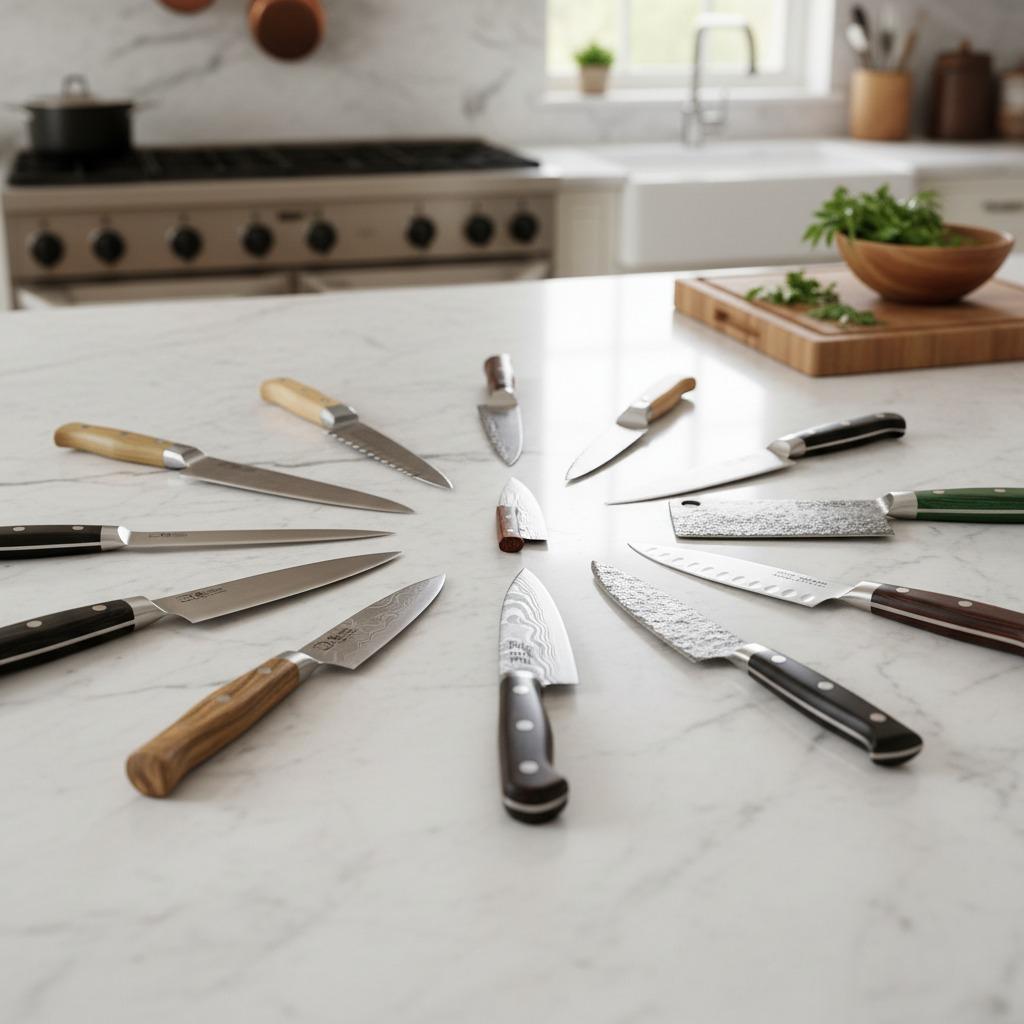

German vs. Japanese Knives: Which One Is Right for You?
German and Japanese kitchen knives are often compared because they represent two different ideas of what a good cooking knife should do. German-style knives are known for strength, weight, and everyday durability. Japanese-style knives are known for thin edges, precision, and clean slicing. Neither style is automatically better; the right choice depends on your ingredients, cutting technique, maintenance habits, and comfort in the hand.
If you are choosing your first serious kitchen knife, replacing a worn chef’s knife, or building a more complete knife drawer, this guide explains the differences in practical terms.
Key Takeaways
- Choose a German-style knife if you want a tougher, more forgiving blade for general chopping and heavier prep.
- Choose a Japanese-style knife if you value a lighter feel, thinner edge, and precise slicing.
- German knives are commonly associated with wider edge angles, while Japanese knives are often sharpened at more acute angles.
- Both styles need proper cutting boards, hand washing, drying, and regular sharpening.
- Many cooks use both: one sturdy knife for hard tasks and one thinner knife for delicate slicing.
A Brief Background: Two Knife Traditions
German knives are closely associated with Solingen, Germany, often called the “City of Blades.” The German approach emphasizes durability, stainless steel performance, and a shape suited to Western cooking methods such as rocking cuts, chopping herbs, and preparing meat and root vegetables.
Japanese knives trace part of their heritage to traditional sword-making regions such as Sakai. They often focus on thin blade geometry, sharp edges, and controlled cutting. Many Japanese-style knives are designed for slicing fish, vegetables, herbs, and other ingredients where clean cuts matter.
These histories help explain why the two styles feel different in use. A German chef’s knife usually feels substantial and stable. A Japanese gyuto, santoku, or similar knife usually feels lighter and more nimble.
German vs. Japanese Knives at a Glance
The biggest differences are blade thickness, edge angle, weight, and how much abuse the knife can tolerate. The table below summarizes the common comparison points. Exact details vary by brand and model, so always check the specifications before buying.
| Feature | German-Style Knives | Japanese-Style Knives |
|---|---|---|
| Typical edge angle | Around 20° per side | Often around 10–15° per side |
| Steel hardness | Often around 56–59 HRC | Often around 60–66+ HRC |
| Blade feel | Heavier and more substantial | Lighter and more agile |
| Blade thickness | Thicker spine and edge geometry | Thinner behind the edge |
| Durability | More forgiving for heavy prep | Sharper feel but more chip-sensitive if misused |
| Best use | Chopping, mincing, meat, root vegetables | Fine slicing, fish, herbs, vegetables |
| Maintenance | Generally easier for beginners | Requires more careful sharpening and storage |
When a German-Style Knife Makes Sense
A German-style chef’s knife is a practical choice for cooks who want one main knife for a wide range of everyday tasks. Its curved belly works well with a rocking motion, especially for chopping herbs, garlic, onions, carrots, and potatoes. The extra weight can also help when cutting dense ingredients.
This style is especially useful if you cook Western recipes, prepare larger batches, or want a blade that can tolerate imperfect technique while you improve your skills. It is not a substitute for a cleaver or bone saw, but it is usually more forgiving than a very thin knife when working through firm produce.
Possible drawbacks are weight and cutting feel. A heavier knife can cause fatigue during long prep sessions, and a thicker blade may not glide through delicate foods as cleanly as a thinner Japanese blade.
When a Japanese-Style Knife Makes Sense
A Japanese-style knife is a strong choice for cooks who want clean, controlled cuts. The thinner edge can move through tomatoes, fish, herbs, and many vegetables with less resistance. For people who value precision, this can make prep feel faster and more accurate.
Japanese knife shapes vary. A gyuto is similar in role to a Western chef’s knife. A santoku is a compact all-purpose knife for slicing, dicing, and chopping. Other Japanese knives are more specialized, especially for fish or vegetable work.
The trade-off is care. A thin, hard edge should not be twisted through hard food, used on frozen ingredients, or slammed into bones. If you often cut tough squash, large root vegetables, or meat with bone, keep a sturdier knife available.
How to Choose Based on Your Cooking Habits
Before focusing on brand names, think about what you cut most often and how you work. Your knife should match your real kitchen routine, not an idealized one.
- List your common ingredients. If you cook many potatoes, carrots, cabbage, and meat, a German-style knife may be more practical. If you slice fish, herbs, tomatoes, and fine vegetables often, Japanese geometry may suit you better.
- Check your cutting motion. Rocking cuts pair well with many German chef’s knives. Push cuts and pull slices often feel natural with Japanese-style blades.
- Consider maintenance. If you want a lower-maintenance everyday knife, German-style may be easier. If you enjoy whetstone sharpening and careful storage, Japanese knives reward that attention.
- Think about weight. Some cooks like a knife that feels solid. Others prefer a lighter blade for speed and control.
- Start with a versatile size. An 8-inch chef’s knife, gyuto, or similar all-purpose knife is a sensible first serious purchase for many home cooks.
Use and Care Tips for Both Styles
No knife performs well if it is treated poorly. Whether you choose German or Japanese, simple care habits will protect the edge and improve safety.
- Use a wood or plastic cutting board instead of glass, stone, or ceramic.
- Hand wash the knife and dry it promptly after use.
- Store it in a knife block, sheath, magnetic strip, or drawer insert so the edge does not hit other tools.
- Do not use a chef’s knife as a can opener, screwdriver, scraper, or bone chopper.
- Sharpen before the knife becomes dangerously dull; a dull blade requires more force and can slip.
Honing and sharpening are not the same. Honing realigns an edge that is slightly bent; sharpening removes metal to create a new edge. Some German knives respond well to regular honing. Many Japanese knives need more careful sharpening with appropriate stones rather than aggressive steel honing.
Common Buying Mistakes to Avoid
One mistake is buying only for sharpness. A knife that feels extremely sharp in a store may still be wrong for your cutting style or care habits. Another mistake is assuming a heavier knife is always stronger or a harder knife is always better. Harder steel may hold an edge longer, but it can also be less forgiving when misused.
Also, do not ignore handle comfort. A good knife should feel secure when your hand is dry or slightly damp. If possible, test the grip, balance, and knuckle clearance before buying. For online purchases, read the dimensions carefully and check the return policy.
FAQ
Are Japanese knives sharper than German knives?
Japanese-style knives are often sharpened at more acute angles, which can make them feel sharper and more precise. However, sharpness also depends on the specific model, steel, factory edge, and sharpening quality.
Are German knives better for beginners?
Often, yes. Their thicker construction and more forgiving edges can be easier for new cooks who are still developing knife skills. Beginners should still avoid bones, frozen food, and unsafe cutting surfaces.
Can one knife handle every kitchen task?
One versatile chef’s knife can handle many tasks, but not everything. A bread knife, paring knife, and a heavier tool for bones or very hard foods may still be useful.
Should I buy both German and Japanese knives?
If you cook often, owning both can be practical. Use a German-style knife for heavier prep and a Japanese-style knife for precise slicing. If you are starting with one, choose based on your most common ingredients.
How often should I sharpen my knife?
It depends on use, cutting board, steel, and technique. When the knife starts crushing tomatoes, slipping on onion skin, or requiring extra force, it is time to sharpen or have it sharpened professionally.
Final Verdict
Choose German-style knives for durability, comfort, and broad everyday use. Choose Japanese-style knives for precision, lightness, and clean slicing. The best knife is the one that fits your cooking habits and that you are willing to maintain properly. For many kitchens, the smartest answer is not German or Japanese; it is using each style where it performs best.
