




Grater Factory Yangjiang: How to Source a Practical Multi-Function Grater Container Set
For importers, wholesalers, private-label kitchenware brands, and promotional product buyers, a grater factory Yangjiang is often part of the sourcing shortlist. Yangjiang is widely associated with kitchen tools, and buyers commonly look there for practical food-preparation items that can serve retail, supermarket, e-commerce, and hospitality channels.
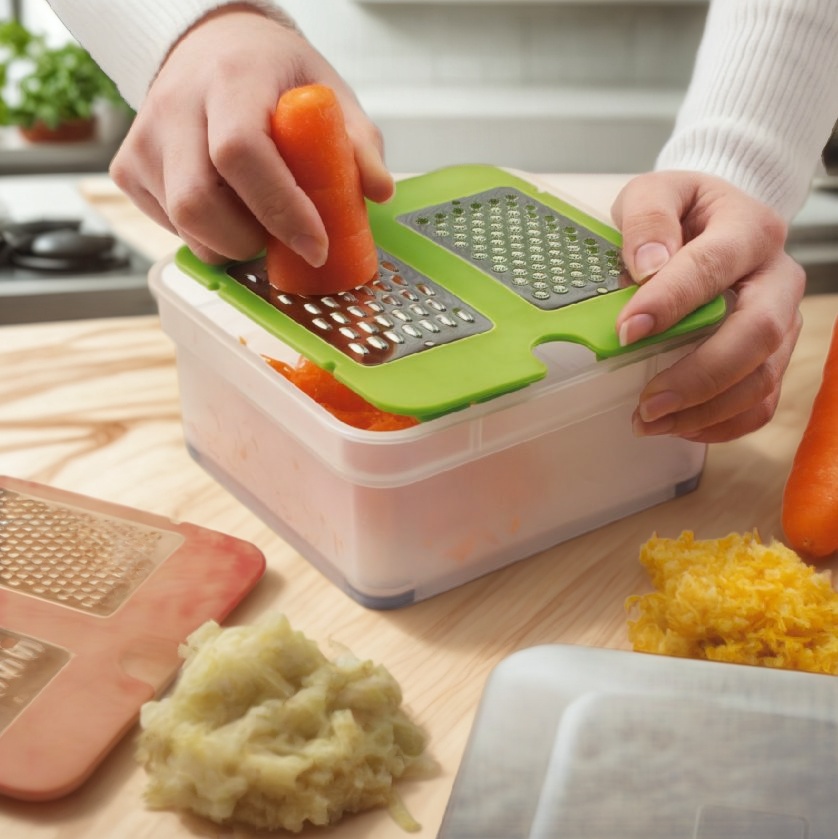
The original product focus is a Multi-Function Grater Container Set. Based on the available information, the set includes two interchangeable stainless steel grater plates, a fine blade for tasks such as citrus zesting or ginger preparation, a coarser blade for foods such as carrots, potatoes, and cheese, silicone frames, and a transparent container designed to catch grated ingredients. The container is also described as having an airtight seal for short-term prepared ingredient storage.
This article rewrites the topic as a buyer-focused guide: what to check, how to compare options, and what questions to ask before placing an OEM, wholesale, or custom packaging order.
Key Takeaways
- Choose a grater set by use case first: retail kitchenware, promotional gift, online bundle, or food-service accessory.
- Verify materials, blade sharpness, frame durability, and container sealing performance with samples before ordering.
- Ask the supplier for documented specifications instead of assuming steel grade, plastic type, MOQ, certifications, or test results.
- For OEM projects, confirm packaging, color options, branding methods, sample lead time, production lead time, and inspection standards in writing.
What the Product Is Designed to Do
A grater container set solves a common kitchen problem: grated food often scatters across the cutting board or countertop. By placing a grater plate directly over a transparent container, the user can shred or zest ingredients into one contained space. This can reduce cleanup and make it easier to measure, store, or transfer prepared food.
The two-plate format is useful because different foods require different cutting textures. A fine grater is better suited to small, aromatic ingredients such as citrus peel or ginger. A coarser grater is more suitable for vegetables and some cheeses. For retailers, this gives the product a broader selling point without requiring a large accessory set.
Why Buyers Look to Yangjiang for Graters
When buyers search for a Yangjiang grater manufacturer, they are usually looking for a supplier that understands kitchen tool production, packaging expectations, and export-style communication. A factory or trading partner may offer standard items, private-label packaging, or modified designs depending on its capabilities.
However, buyers should avoid assuming that every supplier has the same production scope. Before treating any company as a suitable OEM partner, ask direct questions: Does the supplier make the grater plates in-house or source them? Who produces the silicone frame and container? Can they control blade consistency across batches? What inspection process is used for sharp edges, fit, and sealing? These answers matter more than general regional reputation.
Product Features to Verify Before Ordering
The original description provides several useful product details, but buyers still need supplier confirmation before committing to a purchase order. Stainless steel grater plates, for example, are mentioned, but the exact grade is not specified. Silicone frames are mentioned, but the heat resistance, hardness, color fastness, and food-contact documentation are not provided. The transparent container is described as spacious and airtight, but volume, material, and seal test method are not stated.
A professional buyer should request a product specification sheet and compare it with physical samples. Check whether the plates lock securely into the frame, whether the frame is comfortable to hold, whether the container sits stable during use, and whether grated food collects cleanly without clogging under the blade.
Comparison Checklist for Supplier Evaluation
| Evaluation Point | What to Check | Question to Ask the Supplier |
|---|---|---|
| Grater plates | Sharpness, cutting pattern, edge finish, rust resistance claim support | What stainless steel grade is used, and can it be documented? |
| Container | Transparency, wall thickness, stability, capacity, lid fit | What is the container material and tested volume? |
| Seal | Fit, ease of closing, leakage or freshness claims | How is the airtight seal tested during QC? |
| Frame | Grip comfort, plate locking, color consistency | What material is used for the frame, and what color options exist? |
| Packaging | Retail display, barcode area, instructions, carton strength | Can private-label packaging be supplied, and what files are required? |
| Compliance | Food-contact documentation relevant to destination market | Which reports are available, and are they valid for the requested material and model? |
OEM and Wholesale Sourcing Guidance
For wholesale orders, the first step is deciding whether the standard product is acceptable or whether changes are required. Common customization questions include color matching for silicone frames, logo placement, instruction leaflet language, retail box artwork, outer carton marks, and barcode requirements. Do not assume these services are included; ask for cost, lead time, artwork format, and approval process.
For OEM development, define the target user and sales channel. A supermarket buyer may prioritize shelf-ready packaging and simple use instructions. An e-commerce seller may need drop-test packaging, product photography support, and clear size information. A hospitality distributor may care more about durability, replacement rate, and carton efficiency. Each channel changes the sourcing brief.
Commercial details such as MOQ, sample cost, production lead time, payment terms, inspection process, and warranty handling should be confirmed directly with the supplier. If certifications or food-contact reports are required for your market, request copies before mass production and check whether the documents match the exact materials and model being ordered.
Quality Checks for Samples
- Use both grater plates with typical foods such as citrus peel, ginger, carrots, potatoes, and cheese to compare cutting performance.
- Inspect the grater surface for burrs, uneven edges, weak welds or joins, and areas that may trap food.
- Fit each plate into the frame several times to test whether it locks securely without excessive force.
- Close the container lid and check whether the seal is even around all sides.
- Wash and dry the set according to the supplier's care guidance, then inspect for staining, odor retention, or loose parts.
Use and Care Points Buyers Can Communicate to Customers
Clear consumer guidance can reduce returns and improve product satisfaction. Users should select the fine or coarse plate based on the ingredient, place the plate securely before grating, and avoid forcing very hard foods if the product is not designed for them. The container should be emptied before it becomes overfilled, because packed food can reduce grating efficiency.
Care instructions should come from the supplier's verified guidance. If dishwasher safety is not documented, do not print that claim on packaging. If the container is intended for ingredient storage, avoid overstating freshness duration unless the supplier has valid testing or documentation. Practical, accurate instructions are better than broad marketing claims.
FAQ
What should I ask a grater factory in Yangjiang before ordering?
Ask for material specifications, sample availability, packaging options, MOQ, lead time, QC process, food-contact documentation, and whether the factory makes key parts itself or sources them from partners.
Is stainless steel enough information for a grater plate?
No. Stainless steel is a broad category. Buyers should ask for the specific grade, thickness if relevant, surface treatment, and any available material documentation.
Can this type of grater set be used for private-label retail?
Potentially yes, but confirm logo method, packaging design support, barcode placement, instruction language, carton labeling, and approval samples before production.
What makes a grater container set different from a flat grater?
The container catches grated food directly, which can reduce mess and make transfer or short-term storage more convenient. The exact benefit depends on container design and plate fit.
Should buyers rely only on photos when comparing suppliers?
No. Request physical samples and test them with real ingredients. Photos cannot confirm sharpness, grip comfort, seal quality, or long-term durability.
Final Sourcing Advice
A Multi-Function Grater Container Set can be a practical product for buyers seeking a compact kitchen tool with multiple uses. The key is to move beyond general claims and evaluate the exact item: blade performance, frame stability, container quality, sealing function, packaging, and documentation. A capable Yangjiang grater supplier should be able to answer specific questions clearly and support the order with samples, specifications, and agreed quality standards.
