




Grater Factory Yangjiang: How B2B Buyers Should Evaluate Kitchen Tool Suppliers
Yangjiang is widely associated with kitchenware manufacturing, and buyers searching for a grater factory in Yangjiang are often looking for more than a basic food-prep tool. They may need an OEM supplier, a wholesale kitchen tool source, or a partner able to support a full food preparation range. The original appeal is clear: graters are simple products, but modern buyers expect practical design, safer handling, cleaner storage and consistent quality across repeat orders.
This guide explains how to assess a Yangjiang grater manufacturer without relying on vague claims. It focuses on the questions importers, distributors, retailers and private-label buyers should ask before placing an order. If you are comparing grater sets with related kitchen tools, you can also review Bonet Houseware’s product page here: box vegetable peeler set.
Key Takeaways
- Do not judge a grater factory only by appearance; confirm materials, finishing, packaging and inspection processes.
- Ask whether interchangeable surfaces, storage boxes, lids or non-slip parts are standard options or custom features.
- For OEM and wholesale orders, clarify artwork, sample approval, lead time, packing method and replacement policy before production.
- Request product samples and test them with real ingredients such as cheese, carrots, citrus peel and ginger.
Why Yangjiang Is Commonly Considered for Graters
Yangjiang has a long-standing reputation in kitchen tools, so it appears frequently in sourcing searches for graters, peelers, slicers and other food preparation products. For buyers, the advantage is not simply location. It is the possibility of finding suppliers familiar with everyday kitchenware design, export-style packaging and the expectations of retail or wholesale markets.
However, a city name alone does not guarantee a suitable supplier. A grater may look uncomplicated, but small differences affect user experience: the sharpness of the grating surface, the stiffness of the frame, the grip, the angle of use, the ease of cleaning and whether ingredients collect neatly. Buyers should compare factories based on documented capability, approved samples and consistent communication.
Product Design Features to Review
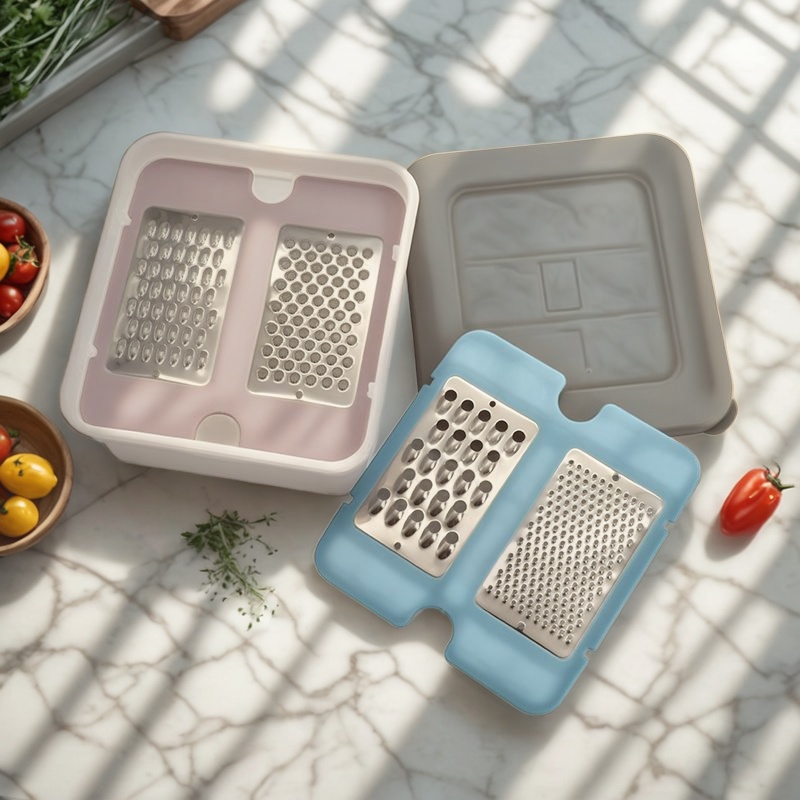
The original article mentioned the trend toward multi-functional graters, including interchangeable surfaces for coarse and fine grating, containers that catch food, secure lids and non-slip components. These are useful design directions, but buyers should verify which features are actually available for the specific item under discussion.
When evaluating samples, look beyond the catalog photo. Check whether the grating surface feels stable in the frame, whether the handle is comfortable, and whether the container fits securely without wobbling. If the product includes multiple grating plates, test how easily they change and whether edges are protected during storage. If a lid is included, confirm whether it is intended for temporary ingredient storage, transport within a kitchen, or simply dust protection.
Supplier Evaluation Checklist
Use a structured checklist when comparing a grater factory in Yangjiang with other kitchen tool suppliers. This helps purchasing teams avoid choosing only by unit price.
| Evaluation Area | What to Check | Questions to Ask |
|---|---|---|
| Product function | Coarse grating, fine grating, zesting, container fit and cleaning | Which functions are standard, and which require custom tooling? |
| Materials | Blade or grating surface, handle, box, lid and non-slip parts | What materials are used for each component, and can they be documented? |
| Sample quality | Sharpness, burrs, frame strength, plate locking and finish | Can pre-production samples be approved before mass production? |
| Packaging | Retail box, color label, barcode, instruction sheet and carton protection | What packaging formats are available for wholesale or private label orders? |
| Quality control | Incoming material checks, in-process inspection and final inspection | What inspection steps are used, and can inspection reports be provided? |
| Commercial terms | MOQ, lead time, payment terms, sample cost and replacement handling | What are the current terms for this exact product and order quantity? |
OEM and Private-Label Sourcing Questions
If your search intent is OEM or wholesale supply, clear communication matters as much as product style. Before requesting a quotation, prepare a short specification sheet. Include the intended market, target retail channel, preferred packaging, order quantity range and any testing or labeling requirements that apply to your business. Avoid assuming that a supplier’s existing catalog item automatically meets your market requirements.
Useful questions include:
- Can the grater design be supplied as an existing item, or does it require a mold change?
- What parts can be customized: color, logo, packaging, instruction sheet or combination set?
- Is the container included in the base quotation, and does it come with a lid?
- How are interchangeable grating surfaces packed to reduce scratches or deformation?
- What is the process for approving artwork and pre-production samples?
- Who is responsible for checking barcode accuracy, carton marks and shipping labels?
These questions are practical because they reduce misunderstandings. A buyer may think they are ordering a complete grater set, while the supplier may quote only the core tool. Written confirmation prevents surprises.
Quality Points Buyers Should Not Ignore
A grater must feel safe and efficient in daily use. During sample review, test the product with several ingredients, not just one. Cheese checks how well the teeth cut and release. Carrot or cucumber checks resistance and stability. Citrus peel checks fine grating performance. Ginger can reveal whether fibers clog the surface.
Inspect the grating surface carefully for rough edges, uneven punching or weak attachment to the frame. Check whether the handle bends under pressure and whether the container slides on a countertop. If the product has a non-slip base, confirm its grip on dry and slightly damp surfaces. Also consider cleaning: sharp corners, deep grooves and tight gaps can trap food residue.
For retail buyers, packaging durability is also part of quality. Ask how the supplier protects grating plates, handles and containers during shipment. A product that works well but arrives scratched, dented or loosely packed can still create returns and customer complaints.
How to Compare a Grater with Related Kitchen Tools
Many buyers source graters as part of a broader kitchen preparation range, such as peelers, slicers, choppers or storage boxes. The original article referenced integrated kitchen solutions, and this can be a useful strategy when the items share a coherent function and packaging story. Still, a set should make sense for the user. Adding unrelated accessories may increase cost without improving value.
When building a kitchen tool line, compare handle shape, color consistency, packaging style and cleaning instructions across products. If a grater is sold with a peeler or container, test the set as a whole. Does the box store the parts neatly? Are the sharp surfaces protected? Can the user understand the functions without complicated instructions? These small details matter in both retail and e-commerce channels.
Practical FAQ
What should I ask first when contacting a grater factory in Yangjiang?
Start with the exact product type, expected order quantity, packaging needs and whether you need OEM customization. Then ask for available samples, current specifications and quotation details for that specific configuration.
Are interchangeable grater plates always included?
No. Some products may include multiple surfaces, while others may have only one grating function. Confirm the number of plates, their uses and how they are stored before comparing prices.
Can a container under the grater be used for storage?
It depends on the product design. If a container and lid are included, ask the supplier what the lid is designed for and test the fit yourself. Do not assume airtight storage unless the supplier provides that specification.
How can buyers reduce quality risks before mass production?
Approve physical samples, define acceptable quality standards in writing, confirm packaging, and request inspection before shipment. For larger orders, consider third-party inspection if required by your purchasing policy.
Who can I contact for product questions?
You can use the contact shown in the original article: sales202@bonetcn.com. Include your target product, quantity, packaging needs and market requirements to receive a more accurate response.
